Nutrition
Nutrition
Nutrition
Eating out is the moment most calorie trackers quietly fall apart. You're either guessing, skipping the log entirely, or picking the most optimistic database entry and hoping for the best. I've done all three.
The problem is that the gap between what you think you ate and what you actually ate at a restaurant is not small. A BMJ study found that people underestimate the calorie content of restaurant meals by an average of 30%. For meals perceived as healthy (salads, grain bowls, "light" options), that underestimation climbs to 40% or more. If you're eating out two or three times a week, that's a gap large enough to erase your entire calorie deficit.
The good news: you don't need a food scale in your bag or a nutrition degree to track restaurant meals accurately. You need five strategies and a willingness to round up rather than down.
Why restaurant meals are so hard to track
The reason isn't laziness. Restaurants are structurally designed to make calorie estimation difficult.
First, there's the cooking fat problem. A grilled chicken breast at home might use a teaspoon of oil. The same dish at a restaurant might have been basted in two tablespoons of butter before it hits your plate, adding 200 calories that never appear on the menu description. Chefs use fat because fat equals flavor. It's completely invisible to you as the diner.
Second, there's the portion size problem. A study published in the Journal of the Academy of Nutrition and Dietetics found that restaurant meals average 1,205 calories (before appetizers, drinks, or dessert). Home-cooked portions are typically a third to a half of that for the same dish.
Third, there's what I call the healthy food trap. We tend to assign fewer calories to foods we perceive as virtuous. A big quinoa salad with avocado, seeds, feta, and a generous pour of olive oil dressing can easily hit 900 calories. Yet the same person who would hesitate before ordering a burger orders that salad without a second thought. The pattern applies just as much to calories as it does to macros.
Check the menu before you leave the house
Pre-logging is the single most effective restaurant tracking strategy, and it costs you about five minutes.
Most chain restaurants (in the US, all chains with 20 or more locations are required by the FDA to publish nutrition information) list their full menu with calories and macros on their website. Before you go, search for the restaurant by name plus "nutrition information," decide what you're ordering, and log it in your tracker. The meal is done before you arrive.
This works for two reasons beyond accuracy. First, you make the decision when you're not hungry, not staring at a menu with the smell of bread in the air. Decision fatigue is real. By the time dinner arrives, your willpower has been through a full day. Pre-committing removes the in-the-moment negotiation entirely. Second, knowing what your meal costs in calories lets you structure the rest of your day around it. If dinner is going to be 900 calories, you can build a lighter lunch and still hit your target without white-knuckling it.
For independent restaurants without published data, Google the restaurant name plus "menu" and check if any nutritional info appears from review sites or the restaurant's own page. If nothing exists, the next strategy takes over.
Break complex dishes into parts
This is the most reliable approach for local, independent, or non-chain restaurants where no nutrition data exists.
The mistake most people make is searching for the dish as a whole: "dal makhani," "chicken korma," "pad thai." These entries in most databases are wildly inconsistent: a single dish can range from 400 to 1,200 calories depending on who submitted the entry and how it was prepared. Searching for a composite dish is essentially picking a number at random.
Instead, deconstruct. Identify the protein source, the carb source, and the fat source, and log each component separately using basic entries you know are accurate.
A plate of grilled salmon with rice and vegetables becomes: 200g cooked white rice (260 kcal) + 150g grilled salmon (250 kcal) + 150g mixed vegetables (60 kcal) + 1 tablespoon of oil for cooking and finishing (120 kcal) = around 690 kcal. That's far more reliable than a single "salmon with rice" database entry.
For portion sizing when you have no scale, use your hand as a built-in reference: your palm equals roughly 100-120g of cooked protein (3-4 oz); a closed fist is about one cup of cooked carbs; your thumb represents one tablespoon of fat. These aren't perfect, but they're consistent. Your hand doesn't change size between restaurants.
One rule I always apply: add 100-150 calories to any restaurant dish that wasn't explicitly steamed or poached. That accounts for the cooking fat, finishing oil, or butter that the kitchen used but didn't advertise.

Order in a way that makes tracking easier
How you order directly affects how accurately you can track. A few principles that make a real difference:
Choose preparation methods you can actually log. "Grilled," "baked," "steamed," and "roasted" translate cleanly into your tracker. "Creamy," "buttered," "fried," and "breaded" don't. Each word signals hidden fat that won't show up in a basic database entry. Registered dietitian Katherine Basbaum puts it plainly: fresh and simple is always easier to log than rich and complex.
Ask for sauces and dressings on the side. A caesar dressing poured by a restaurant kitchen can be 300-400 calories. The same dressing, ordered on the side and applied lightly, might be 80. You get the flavor you wanted, and the calorie count reflects what you actually ate.
Anchor around a protein-forward main. A grilled protein plus a vegetable side gives you a meal structure that's easy to build in any tracker, predictable across cuisines, and keeps calories from drifting up without notice. This approach also keeps protein high, which matters beyond just the calorie count. We cover the reason in our post on how protein supports metabolic health.
Watch the extras before the meal arrives. The bread basket, the chip bowl, the amuse-bouche. These add up before you've ordered. A generous portion of chips and salsa at a Mexican restaurant is 400-600 calories before your main arrives. Decide in advance whether these count.
Use photo logging for menus and plates you can't decode
This is where technology closes the gap that strategy can't.
For local restaurants with no published nutrition data and dishes too complex to deconstruct manually, photo-based logging is the most accurate tool available. A 2024 study in Nutrients found that AI-assisted food logging was comparable in accuracy to trained dietitians estimating from photos. That's a significant upgrade from guessing.
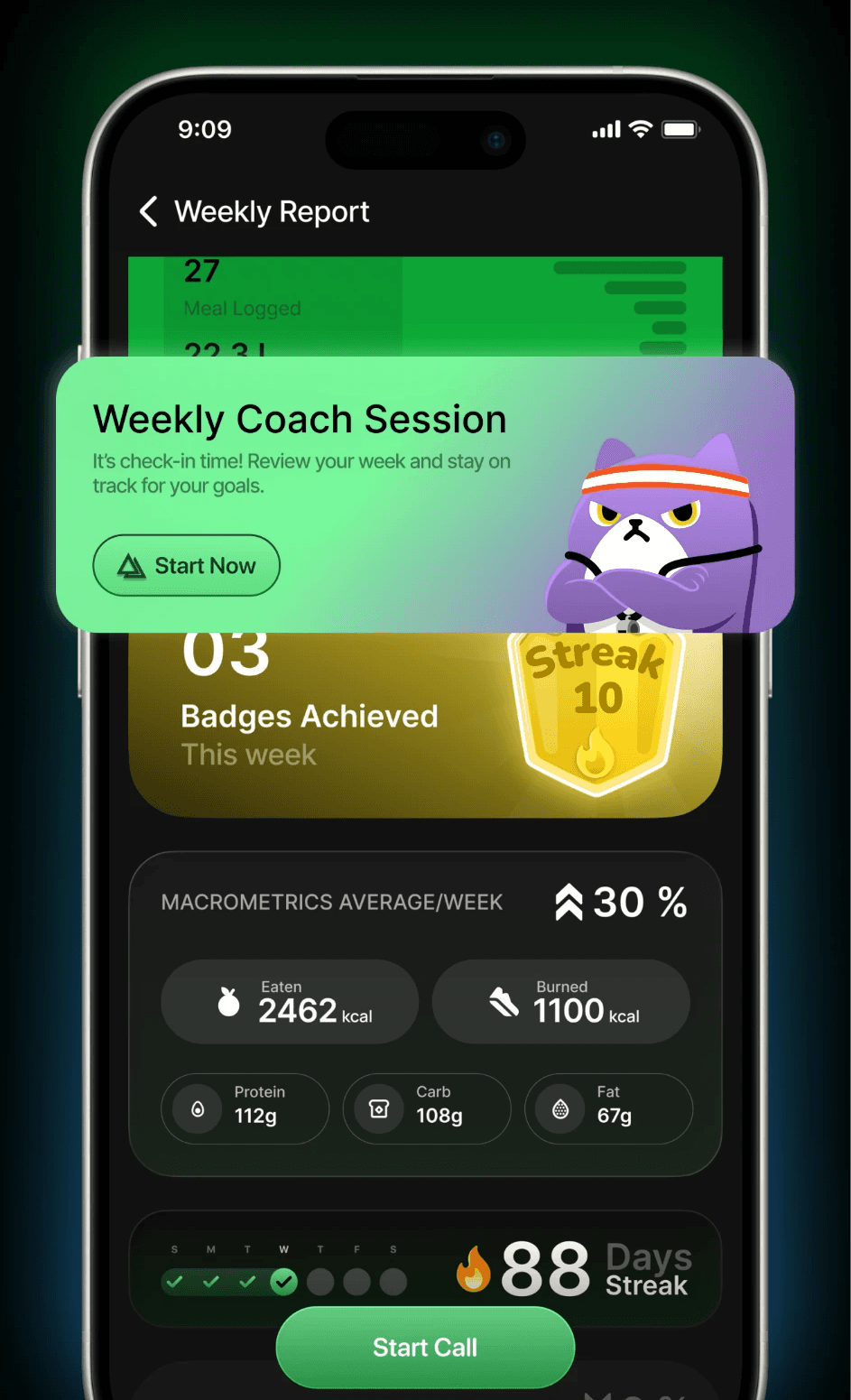
Zorest Macro's Restaurant Menu Analyzer is built specifically for this scenario. Snap a photo of the physical menu, and the app gives you an instant nutrition analysis of the dishes, along with goal-based suggestions for what to order given your daily targets. You're not guessing from a database anymore. You're getting a breakdown of the actual menu in front of you before you order.
If you want to log the meal after it arrives, Zorest Macro's Photo Logging feature works the same way: take a picture of your plate and the AI identifies the components, estimates portions, and logs the macros automatically. For anyone who eats out regularly and finds manual logging impractical mid-meal, this removes the biggest friction point entirely.
Round up, and accept the margin of error
Here's something worth internalizing: perfect restaurant tracking is not possible, and chasing it is a waste of energy.
Even published chain restaurant nutrition data has a margin of error. A 2024 study measuring actual versus reported energy content in English restaurant menus found that the absolute percentage difference between labeled and real calorie counts averaged 21%, with some individual items over 35% off. If the label can be that inaccurate, your manual log doesn't need to be perfect. It needs to be honest and consistent.
Two rules that make consistency easier. First: always round up rather than down. When you're unsure whether a dish is 700 or 900 calories, log 900. This keeps you on the right side of your deficit rather than creeping unknowingly above it. Second: log the meal even when you can't log it accurately. A rough estimate on a logged day is better than no data at all. The insight you lose from a missed meal is greater than the inaccuracy of a good-faith estimate.
Zorest Macro's Chat with AI Coach is useful here too. If you're unsure how to log something you ate, you can describe the meal in natural language and your coach will help you build an accurate entry, including estimating the cooking method and portion sizes based on context.
Final thoughts
Restaurant meals don't have to be a tracking black hole. The strategies that actually work are simple: pre-log from the menu before you go, deconstruct complex dishes into components you can recognize, order in ways that make logging straightforward, use photo logging when you're dealing with a menu your app doesn't know, and round your estimates up rather than down.
None of this requires perfection. It requires consistency. A 10% error rate on a single meal doesn't matter. What matters is that you log it, you stay roughly calibrated, and you don't let one dinner out become an excuse to skip tracking for a week.
If you're curious how many calories each meal should actually contain given your goals, we've covered the full framework in our post on how many calories per meal for energy.
Got questions? Ping me on LinkedIn.
Eating out is the moment most calorie trackers quietly fall apart. You're either guessing, skipping the log entirely, or picking the most optimistic database entry and hoping for the best. I've done all three.
The problem is that the gap between what you think you ate and what you actually ate at a restaurant is not small. A BMJ study found that people underestimate the calorie content of restaurant meals by an average of 30%. For meals perceived as healthy (salads, grain bowls, "light" options), that underestimation climbs to 40% or more. If you're eating out two or three times a week, that's a gap large enough to erase your entire calorie deficit.
The good news: you don't need a food scale in your bag or a nutrition degree to track restaurant meals accurately. You need five strategies and a willingness to round up rather than down.
Why restaurant meals are so hard to track
The reason isn't laziness. Restaurants are structurally designed to make calorie estimation difficult.
First, there's the cooking fat problem. A grilled chicken breast at home might use a teaspoon of oil. The same dish at a restaurant might have been basted in two tablespoons of butter before it hits your plate, adding 200 calories that never appear on the menu description. Chefs use fat because fat equals flavor. It's completely invisible to you as the diner.
Second, there's the portion size problem. A study published in the Journal of the Academy of Nutrition and Dietetics found that restaurant meals average 1,205 calories (before appetizers, drinks, or dessert). Home-cooked portions are typically a third to a half of that for the same dish.
Third, there's what I call the healthy food trap. We tend to assign fewer calories to foods we perceive as virtuous. A big quinoa salad with avocado, seeds, feta, and a generous pour of olive oil dressing can easily hit 900 calories. Yet the same person who would hesitate before ordering a burger orders that salad without a second thought. The pattern applies just as much to calories as it does to macros.
Check the menu before you leave the house
Pre-logging is the single most effective restaurant tracking strategy, and it costs you about five minutes.
Most chain restaurants (in the US, all chains with 20 or more locations are required by the FDA to publish nutrition information) list their full menu with calories and macros on their website. Before you go, search for the restaurant by name plus "nutrition information," decide what you're ordering, and log it in your tracker. The meal is done before you arrive.
This works for two reasons beyond accuracy. First, you make the decision when you're not hungry, not staring at a menu with the smell of bread in the air. Decision fatigue is real. By the time dinner arrives, your willpower has been through a full day. Pre-committing removes the in-the-moment negotiation entirely. Second, knowing what your meal costs in calories lets you structure the rest of your day around it. If dinner is going to be 900 calories, you can build a lighter lunch and still hit your target without white-knuckling it.
For independent restaurants without published data, Google the restaurant name plus "menu" and check if any nutritional info appears from review sites or the restaurant's own page. If nothing exists, the next strategy takes over.
Break complex dishes into parts
This is the most reliable approach for local, independent, or non-chain restaurants where no nutrition data exists.
The mistake most people make is searching for the dish as a whole: "dal makhani," "chicken korma," "pad thai." These entries in most databases are wildly inconsistent: a single dish can range from 400 to 1,200 calories depending on who submitted the entry and how it was prepared. Searching for a composite dish is essentially picking a number at random.
Instead, deconstruct. Identify the protein source, the carb source, and the fat source, and log each component separately using basic entries you know are accurate.
A plate of grilled salmon with rice and vegetables becomes: 200g cooked white rice (260 kcal) + 150g grilled salmon (250 kcal) + 150g mixed vegetables (60 kcal) + 1 tablespoon of oil for cooking and finishing (120 kcal) = around 690 kcal. That's far more reliable than a single "salmon with rice" database entry.
For portion sizing when you have no scale, use your hand as a built-in reference: your palm equals roughly 100-120g of cooked protein (3-4 oz); a closed fist is about one cup of cooked carbs; your thumb represents one tablespoon of fat. These aren't perfect, but they're consistent. Your hand doesn't change size between restaurants.
One rule I always apply: add 100-150 calories to any restaurant dish that wasn't explicitly steamed or poached. That accounts for the cooking fat, finishing oil, or butter that the kitchen used but didn't advertise.
Order in a way that makes tracking easier
How you order directly affects how accurately you can track. A few principles that make a real difference:
Choose preparation methods you can actually log. "Grilled," "baked," "steamed," and "roasted" translate cleanly into your tracker. "Creamy," "buttered," "fried," and "breaded" don't. Each word signals hidden fat that won't show up in a basic database entry. Registered dietitian Katherine Basbaum puts it plainly: fresh and simple is always easier to log than rich and complex.
Ask for sauces and dressings on the side. A caesar dressing poured by a restaurant kitchen can be 300-400 calories. The same dressing, ordered on the side and applied lightly, might be 80. You get the flavor you wanted, and the calorie count reflects what you actually ate.
Anchor around a protein-forward main. A grilled protein plus a vegetable side gives you a meal structure that's easy to build in any tracker, predictable across cuisines, and keeps calories from drifting up without notice. This approach also keeps protein high, which matters beyond just the calorie count. We cover the reason in our post on how protein supports metabolic health.
Watch the extras before the meal arrives. The bread basket, the chip bowl, the amuse-bouche. These add up before you've ordered. A generous portion of chips and salsa at a Mexican restaurant is 400-600 calories before your main arrives. Decide in advance whether these count.
Use photo logging for menus and plates you can't decode
This is where technology closes the gap that strategy can't.
For local restaurants with no published nutrition data and dishes too complex to deconstruct manually, photo-based logging is the most accurate tool available. A 2024 study in Nutrients found that AI-assisted food logging was comparable in accuracy to trained dietitians estimating from photos. That's a significant upgrade from guessing.
Zorest Macro's Restaurant Menu Analyzer is built specifically for this scenario. Snap a photo of the physical menu, and the app gives you an instant nutrition analysis of the dishes, along with goal-based suggestions for what to order given your daily targets. You're not guessing from a database anymore. You're getting a breakdown of the actual menu in front of you before you order.
If you want to log the meal after it arrives, Zorest Macro's Photo Logging feature works the same way: take a picture of your plate and the AI identifies the components, estimates portions, and logs the macros automatically. For anyone who eats out regularly and finds manual logging impractical mid-meal, this removes the biggest friction point entirely.
Round up, and accept the margin of error
Here's something worth internalizing: perfect restaurant tracking is not possible, and chasing it is a waste of energy.
Even published chain restaurant nutrition data has a margin of error. A 2024 study measuring actual versus reported energy content in English restaurant menus found that the absolute percentage difference between labeled and real calorie counts averaged 21%, with some individual items over 35% off. If the label can be that inaccurate, your manual log doesn't need to be perfect. It needs to be honest and consistent.
Two rules that make consistency easier. First: always round up rather than down. When you're unsure whether a dish is 700 or 900 calories, log 900. This keeps you on the right side of your deficit rather than creeping unknowingly above it. Second: log the meal even when you can't log it accurately. A rough estimate on a logged day is better than no data at all. The insight you lose from a missed meal is greater than the inaccuracy of a good-faith estimate.
Zorest Macro's Chat with AI Coach is useful here too. If you're unsure how to log something you ate, you can describe the meal in natural language and your coach will help you build an accurate entry, including estimating the cooking method and portion sizes based on context.
Final thoughts
Restaurant meals don't have to be a tracking black hole. The strategies that actually work are simple: pre-log from the menu before you go, deconstruct complex dishes into components you can recognize, order in ways that make logging straightforward, use photo logging when you're dealing with a menu your app doesn't know, and round your estimates up rather than down.
None of this requires perfection. It requires consistency. A 10% error rate on a single meal doesn't matter. What matters is that you log it, you stay roughly calibrated, and you don't let one dinner out become an excuse to skip tracking for a week.
If you're curious how many calories each meal should actually contain given your goals, we've covered the full framework in our post on how many calories per meal for energy.
Got questions? Ping me on LinkedIn.


Jun 29, 2026
10 min read
Eating out is the moment most calorie trackers quietly fall apart. You're either guessing, skipping the log entirely, or picking the most optimistic database entry and hoping for the best. I've done all three.
The problem is that the gap between what you think you ate and what you actually ate at a restaurant is not small. A BMJ study found that people underestimate the calorie content of restaurant meals by an average of 30%. For meals perceived as healthy (salads, grain bowls, "light" options), that underestimation climbs to 40% or more. If you're eating out two or three times a week, that's a gap large enough to erase your entire calorie deficit.
The good news: you don't need a food scale in your bag or a nutrition degree to track restaurant meals accurately. You need five strategies and a willingness to round up rather than down.
Why restaurant meals are so hard to track
The reason isn't laziness. Restaurants are structurally designed to make calorie estimation difficult.
First, there's the cooking fat problem. A grilled chicken breast at home might use a teaspoon of oil. The same dish at a restaurant might have been basted in two tablespoons of butter before it hits your plate, adding 200 calories that never appear on the menu description. Chefs use fat because fat equals flavor. It's completely invisible to you as the diner.
Second, there's the portion size problem. A study published in the Journal of the Academy of Nutrition and Dietetics found that restaurant meals average 1,205 calories (before appetizers, drinks, or dessert). Home-cooked portions are typically a third to a half of that for the same dish.
Third, there's what I call the healthy food trap. We tend to assign fewer calories to foods we perceive as virtuous. A big quinoa salad with avocado, seeds, feta, and a generous pour of olive oil dressing can easily hit 900 calories. Yet the same person who would hesitate before ordering a burger orders that salad without a second thought. The pattern applies just as much to calories as it does to macros.
Check the menu before you leave the house
Pre-logging is the single most effective restaurant tracking strategy, and it costs you about five minutes.
Most chain restaurants (in the US, all chains with 20 or more locations are required by the FDA to publish nutrition information) list their full menu with calories and macros on their website. Before you go, search for the restaurant by name plus "nutrition information," decide what you're ordering, and log it in your tracker. The meal is done before you arrive.
This works for two reasons beyond accuracy. First, you make the decision when you're not hungry, not staring at a menu with the smell of bread in the air. Decision fatigue is real. By the time dinner arrives, your willpower has been through a full day. Pre-committing removes the in-the-moment negotiation entirely. Second, knowing what your meal costs in calories lets you structure the rest of your day around it. If dinner is going to be 900 calories, you can build a lighter lunch and still hit your target without white-knuckling it.
For independent restaurants without published data, Google the restaurant name plus "menu" and check if any nutritional info appears from review sites or the restaurant's own page. If nothing exists, the next strategy takes over.
Break complex dishes into parts
This is the most reliable approach for local, independent, or non-chain restaurants where no nutrition data exists.
The mistake most people make is searching for the dish as a whole: "dal makhani," "chicken korma," "pad thai." These entries in most databases are wildly inconsistent: a single dish can range from 400 to 1,200 calories depending on who submitted the entry and how it was prepared. Searching for a composite dish is essentially picking a number at random.
Instead, deconstruct. Identify the protein source, the carb source, and the fat source, and log each component separately using basic entries you know are accurate.
A plate of grilled salmon with rice and vegetables becomes: 200g cooked white rice (260 kcal) + 150g grilled salmon (250 kcal) + 150g mixed vegetables (60 kcal) + 1 tablespoon of oil for cooking and finishing (120 kcal) = around 690 kcal. That's far more reliable than a single "salmon with rice" database entry.
For portion sizing when you have no scale, use your hand as a built-in reference: your palm equals roughly 100-120g of cooked protein (3-4 oz); a closed fist is about one cup of cooked carbs; your thumb represents one tablespoon of fat. These aren't perfect, but they're consistent. Your hand doesn't change size between restaurants.
One rule I always apply: add 100-150 calories to any restaurant dish that wasn't explicitly steamed or poached. That accounts for the cooking fat, finishing oil, or butter that the kitchen used but didn't advertise.
Order in a way that makes tracking easier
How you order directly affects how accurately you can track. A few principles that make a real difference:
Choose preparation methods you can actually log. "Grilled," "baked," "steamed," and "roasted" translate cleanly into your tracker. "Creamy," "buttered," "fried," and "breaded" don't. Each word signals hidden fat that won't show up in a basic database entry. Registered dietitian Katherine Basbaum puts it plainly: fresh and simple is always easier to log than rich and complex.
Ask for sauces and dressings on the side. A caesar dressing poured by a restaurant kitchen can be 300-400 calories. The same dressing, ordered on the side and applied lightly, might be 80. You get the flavor you wanted, and the calorie count reflects what you actually ate.
Anchor around a protein-forward main. A grilled protein plus a vegetable side gives you a meal structure that's easy to build in any tracker, predictable across cuisines, and keeps calories from drifting up without notice. This approach also keeps protein high, which matters beyond just the calorie count. We cover the reason in our post on how protein supports metabolic health.
Watch the extras before the meal arrives. The bread basket, the chip bowl, the amuse-bouche. These add up before you've ordered. A generous portion of chips and salsa at a Mexican restaurant is 400-600 calories before your main arrives. Decide in advance whether these count.
Use photo logging for menus and plates you can't decode
This is where technology closes the gap that strategy can't.
For local restaurants with no published nutrition data and dishes too complex to deconstruct manually, photo-based logging is the most accurate tool available. A 2024 study in Nutrients found that AI-assisted food logging was comparable in accuracy to trained dietitians estimating from photos. That's a significant upgrade from guessing.
Zorest Macro's Restaurant Menu Analyzer is built specifically for this scenario. Snap a photo of the physical menu, and the app gives you an instant nutrition analysis of the dishes, along with goal-based suggestions for what to order given your daily targets. You're not guessing from a database anymore. You're getting a breakdown of the actual menu in front of you before you order.
If you want to log the meal after it arrives, Zorest Macro's Photo Logging feature works the same way: take a picture of your plate and the AI identifies the components, estimates portions, and logs the macros automatically. For anyone who eats out regularly and finds manual logging impractical mid-meal, this removes the biggest friction point entirely.
Round up, and accept the margin of error
Here's something worth internalizing: perfect restaurant tracking is not possible, and chasing it is a waste of energy.
Even published chain restaurant nutrition data has a margin of error. A 2024 study measuring actual versus reported energy content in English restaurant menus found that the absolute percentage difference between labeled and real calorie counts averaged 21%, with some individual items over 35% off. If the label can be that inaccurate, your manual log doesn't need to be perfect. It needs to be honest and consistent.
Two rules that make consistency easier. First: always round up rather than down. When you're unsure whether a dish is 700 or 900 calories, log 900. This keeps you on the right side of your deficit rather than creeping unknowingly above it. Second: log the meal even when you can't log it accurately. A rough estimate on a logged day is better than no data at all. The insight you lose from a missed meal is greater than the inaccuracy of a good-faith estimate.
Zorest Macro's Chat with AI Coach is useful here too. If you're unsure how to log something you ate, you can describe the meal in natural language and your coach will help you build an accurate entry, including estimating the cooking method and portion sizes based on context.
Final thoughts
Restaurant meals don't have to be a tracking black hole. The strategies that actually work are simple: pre-log from the menu before you go, deconstruct complex dishes into components you can recognize, order in ways that make logging straightforward, use photo logging when you're dealing with a menu your app doesn't know, and round your estimates up rather than down.
None of this requires perfection. It requires consistency. A 10% error rate on a single meal doesn't matter. What matters is that you log it, you stay roughly calibrated, and you don't let one dinner out become an excuse to skip tracking for a week.
If you're curious how many calories each meal should actually contain given your goals, we've covered the full framework in our post on how many calories per meal for energy.
Got questions? Ping me on LinkedIn.
Jun 29, 2026
8 min read
Jun 29, 2026
10 min read
Jun 29, 2026
6 min read

Jun 27, 2026
3 min read

Jun 20, 2026
8 min read

Jun 19, 2026
6 min read

Jun 17, 2026
12 min read

Jun 17, 2026
6 min read

Jun 29, 2026
10 min read
Jun 29, 2026
6 min read
Jun 27, 2026
3 min read
Jun 20, 2026
8 min read
Jun 19, 2026
6 min read
Jun 17, 2026
12 min read
Jun 29, 2026
10 min read
Jun 29, 2026
6 min read
Jun 27, 2026
3 min read
Jun 20, 2026
8 min read
Don’t miss out on your exclusive FREE Trial with code FREEOCTOBER 💚
Download Zorest
Don’t miss out on your exclusive FREE Trial with code FREEOCTOBER 💚
Download Zorest
Don’t miss out on your exclusive FREE Trial with code FREEOCTOBER 💚
Download Zorest