
MD Psychiatry Resident, MBBS
Share this story
Most people know they should eat more fiber. Fewer people know that not all fiber works the same way. Soluble fibre and insoluble fibre each play unique roles in keeping your body healthy, and understanding the difference can help you make smarter food choices.
Soluble fibre is especially valuable because it supports digestion, lowers cholesterol, improves blood sugar control, and helps you stay full for longer. If you're trying to lose weight, improve gut health, or reduce your risk of chronic disease, it's one of the most important nutrients to include in your diet.
What is soluble fibre?
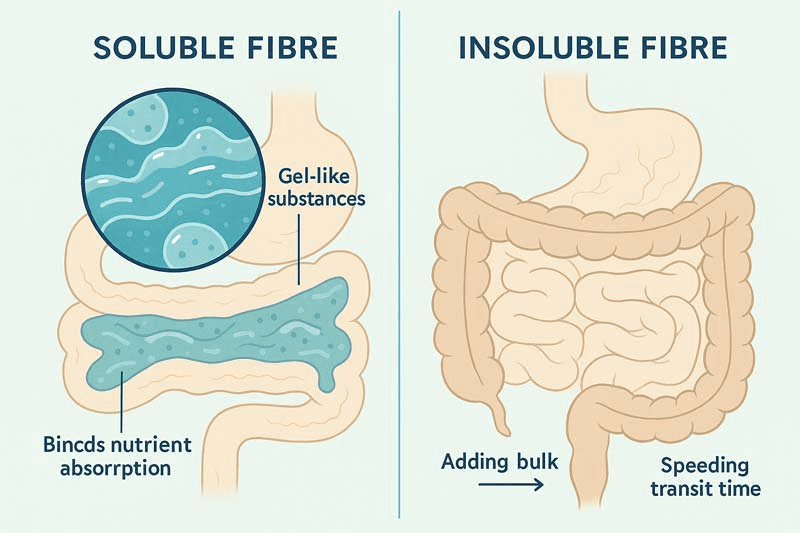
Soluble fibre is a type of dietary fiber that dissolves in water and forms a gel-like substance during digestion.
Unlike carbohydrates that are broken down into glucose, soluble fibre isn't digested by your body. Instead, it slows the movement of food through your digestive system and becomes food for beneficial gut bacteria in your colon.
This simple property explains many of its health benefits.
Common types of soluble fibre include:
Pectin (found in apples and citrus fruits)
Beta-glucan (found in oats and barley)
Gums
Mucilage
Some hemicelluloses
Although these names sound technical, the important takeaway is that they all absorb water and slow digestion.
How is soluble fibre different from insoluble fibre?
Both types of fibre are essential, but they perform different jobs.
Soluble fibre | Insoluble fibre |
Dissolves in water | Does not dissolve in water |
Forms a gel | Adds bulk to stool |
Slows digestion | Speeds movement through the gut |
Helps lower cholesterol | Helps prevent constipation |
Feeds healthy gut bacteria | Supports regular bowel movements |
Think of soluble fibre as a sponge that absorbs water, while insoluble fibre acts more like a broom that sweeps waste through your digestive tract.
Most whole plant foods contain both types, just in different proportions.
Why is soluble fibre important?
The biggest advantage of soluble fibre is that it affects multiple systems in the body at once.
Rather than helping only digestion, it also benefits your heart, metabolism, gut microbiome, and appetite.
Let's look at each benefit.
Supports digestive health
Soluble fibre absorbs water and forms a soft gel inside your intestines.
This process can:
Make stools softer
Improve bowel regularity
Reduce constipation in many people
Help manage mild diarrhea by absorbing excess water
It also acts as a prebiotic, meaning it feeds beneficial bacteria living in your gut.
When these bacteria ferment soluble fibre, they produce compounds called short-chain fatty acids (SCFAs) such as butyrate. These compounds help maintain the intestinal lining, reduce inflammation, and support overall digestive health.
Helps lower cholesterol
One of the best-studied benefits of soluble fibre is its ability to reduce LDL ("bad") cholesterol.
The gel formed by soluble fibre binds to bile acids inside the intestine. Since bile acids are made from cholesterol, your liver has to use more cholesterol to replace them, gradually lowering blood cholesterol levels.
Research consistently shows that eating more soluble fibre—especially from oats, barley, legumes, and psyllium—can reduce LDL cholesterol as part of a heart-healthy diet.
Improves blood sugar control
Because soluble fibre slows digestion, glucose enters the bloodstream more gradually after meals.
Instead of a sharp blood sugar spike followed by a crash, blood sugar rises more steadily.
This makes soluble fibre particularly helpful for people with:
Prediabetes
Type 2 diabetes
Insulin resistance
Even people without diabetes can benefit from steadier energy levels throughout the day.
Helps with weight management
Foods rich in soluble fibre tend to be more filling.
The gel formed in the stomach slows stomach emptying, helping you stay satisfied for longer after eating.
This can naturally reduce hunger between meals and lower overall calorie intake without requiring strict dieting.
High-fibre foods also generally require more chewing and are less calorie-dense than highly processed foods.
Supports a healthy gut microbiome
Your gut contains trillions of bacteria.
Many of these bacteria rely on soluble fibre as their primary fuel source.
When fed regularly, beneficial bacteria produce substances that may help:
Reduce inflammation
Strengthen the immune system
Protect the intestinal lining
Improve overall gut health
Scientists continue discovering new ways the gut microbiome influences overall health, making fibre intake more important than ever.
Best food sources of soluble fibre
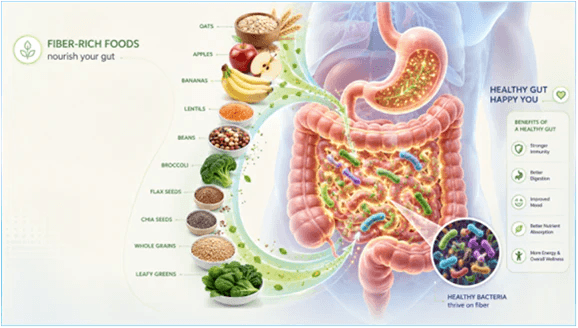
Fortunately, soluble fibre is found in many everyday foods.
Oats
Oats are one of the richest sources of beta-glucan, a soluble fibre known for lowering cholesterol and improving heart health.
Barley
Barley provides similar benefits and works well in soups, salads, and grain bowls.
Beans and lentils
Kidney beans, black beans, chickpeas, and lentils are packed with soluble fibre, protein, vitamins, and minerals.
Fruits
Many fruits contain pectin, especially:
Apples
Oranges
Pears
Peaches
Plums
Eating the skin when appropriate provides even more fibre.
Vegetables
Vegetables with meaningful amounts of soluble fibre include:
Carrots
Brussels sprouts
Sweet potatoes
Broccoli
Seeds
Chia seeds and flaxseeds absorb water dramatically and provide large amounts of soluble fibre along with healthy fats.
Psyllium husk
Psyllium is one of the most concentrated sources of soluble fibre and is commonly used to support regular bowel movements and cholesterol management.
How much soluble fibre do you need?
There is no official recommendation specifically for soluble fibre.
Instead, health authorities recommend total daily fiber intake:
Women: about 25 grams per day
Men: about 38 grams per day
Roughly one-quarter of your daily fiber intake naturally comes from soluble fibre if you're eating a balanced diet rich in fruits, vegetables, legumes, and whole grains.
Unfortunately, many adults consume far less than the recommended amount.
Can you eat too much soluble fibre?
Yes—but it usually happens when people increase fibre too quickly.
Suddenly eating large amounts of fibre can cause:
Bloating
Gas
Abdominal discomfort
Cramping
The solution is simple.
Increase fibre gradually over several weeks and drink enough water throughout the day.
Hydration helps soluble fibre work effectively inside the digestive tract.
Easy ways to eat more soluble fibre
You don't need supplements to increase your intake.
Simple habits often work best:
Start breakfast with oatmeal.
Add beans to soups, curries, or salads.
Snack on apples or pears.
Include lentils several times each week.
Sprinkle chia or flaxseeds onto yogurt or oatmeal.
Choose vegetables with every meal.
Small changes repeated consistently usually have the biggest long-term impact.
Who benefits most from soluble fibre?
Almost everyone benefits from eating more soluble fibre, but it may be especially helpful for people who:
Have high cholesterol
Have type 2 diabetes or prediabetes
Want to lose weight
Experience constipation
Want to improve gut health
Have a family history of heart disease
If you have digestive conditions like inflammatory bowel disease or irritable bowel syndrome, it's worth speaking with a healthcare professional because individual tolerance can vary.
Final thoughts
Soluble fibre is one of the simplest nutrients you can add to your diet with benefits that extend far beyond digestion. By slowing digestion, feeding healthy gut bacteria, lowering cholesterol, stabilizing blood sugar, and increasing fullness, it supports several aspects of long-term health simultaneously.
The good news is that you don't need expensive supplements or complicated meal plans. Eating more oats, beans, fruits, vegetables, and seeds each day can dramatically increase your soluble fibre intake and improve your overall diet over time.
Got questions? Ping me on LinkedIn.