
MD Psychiatry Resident, MBBS
Share this story
TL;DR:
If your sleep schedule feels broken, the fastest way to reset your circadian rhythm is to control light exposure, wake up at the same time every day, avoid late-night stimulation, and gradually shift your sleep schedule. Most people can see meaningful improvements within 3–7 days and a full reset within 1–2 weeks.
Introduction
You know the feeling. It's 2 AM and you're wide awake, yet when the alarm rings at 7 AM, you can barely open your eyes.
A disrupted circadian rhythm can wreck your energy, focus, mood, workout performance, and even your appetite. The good news is that your body clock is surprisingly adaptable. With the right strategy, you can begin resetting it within days.
This guide explains exactly how to fix your circadian rhythm fast and why each step works.
What is a circadian rhythm?
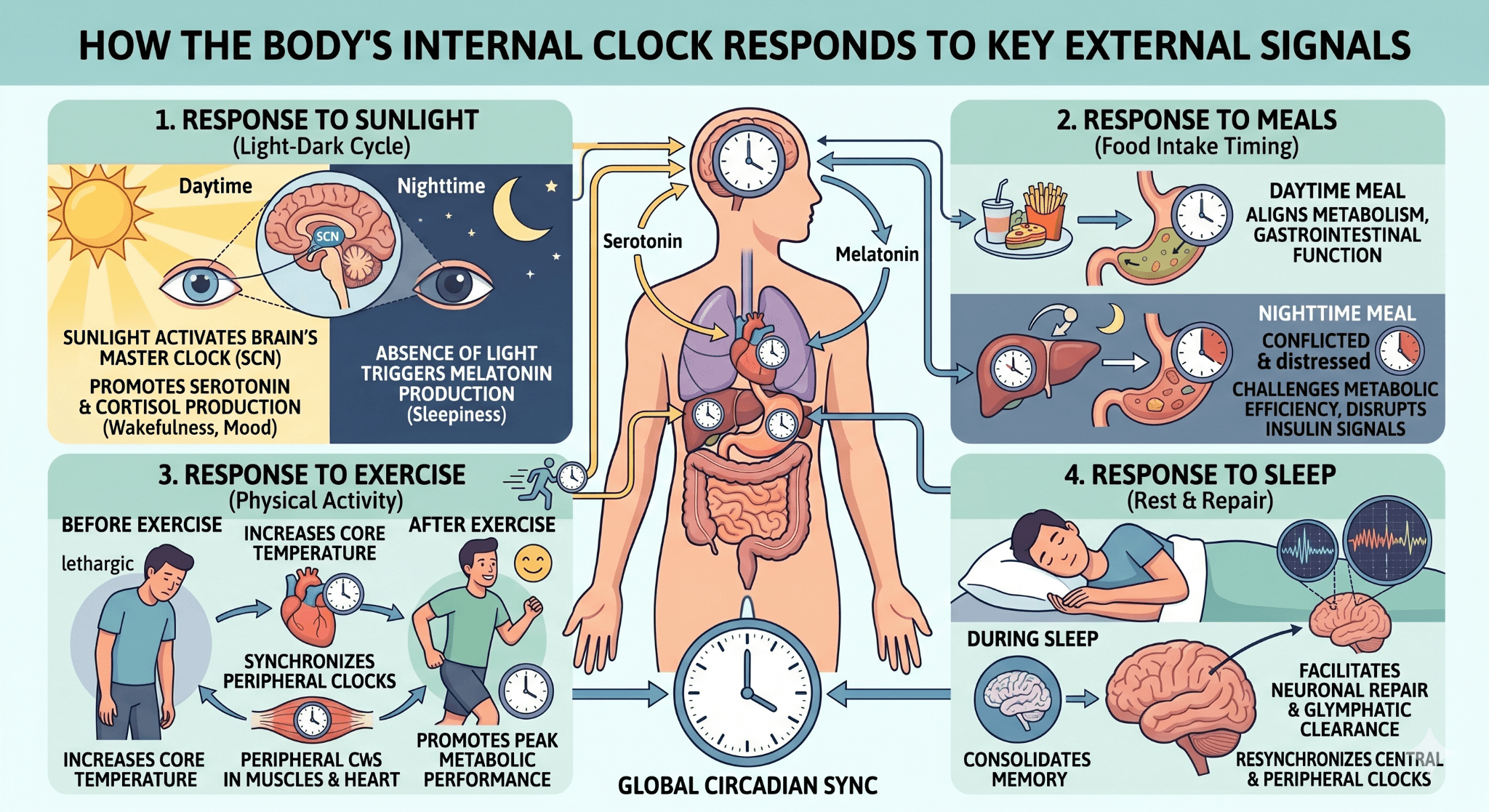
Circadian rhythm is your body's internal 24-hour clock that regulates sleep, wakefulness, hormones, body temperature, and metabolism.
Your brain contains a master clock called the suprachiasmatic nucleus (SCN). This clock responds primarily to light and darkness.
When your circadian rhythm is aligned:
You feel sleepy at night.
You wake naturally in the morning.
Energy levels stay relatively stable throughout the day.
Hunger and digestion follow predictable patterns.
When it's disrupted, your body receives conflicting signals about when to sleep and wake.
Recognize the signs of a disrupted circadian rhythm
The first step is identifying whether your body clock is actually out of sync.
Common signs include:
Difficulty falling asleep before midnight
Waking up tired despite enough sleep
Feeling most productive late at night
Weekend sleep schedules that differ dramatically from weekdays
Afternoon energy crashes
Frequent jet lag symptoms without travel
Dependence on caffeine to stay alert
I experienced this after several weeks of working late-night projects. Even though I was getting seven hours of sleep, I felt exhausted every morning because my sleep timing was misaligned.
Get morning sunlight immediately
Morning light is the most powerful tool for resetting your circadian rhythm.
When sunlight hits your eyes shortly after waking:
Melatonin production stops
Cortisol rises naturally
Your brain receives a strong "daytime" signal
The body's internal clock shifts earlier
Aim for:
10–15 minutes outside on sunny days
20–30 minutes on cloudy days
Exposure within the first hour after waking
According to the National Sleep Foundation and sleep researchers, morning light exposure is one of the most effective methods for correcting delayed sleep schedules.

Wake up at the same time every day
Your wake-up time matters more than your bedtime.
Most people focus on sleeping earlier. But your body clock responds more strongly to consistent wake times.
Choose a realistic wake-up time and stick to it:
Weekdays
Weekends
Holidays
Even if you sleep poorly one night, avoid sleeping in excessively the next morning.
This consistency teaches your brain when the day begins.
Stop exposing yourself to bright light at night
Your brain cannot distinguish between sunlight and many artificial lights.
Bright screens and indoor lighting can delay melatonin release, making it harder to fall asleep.
Two hours before bed:
Dim household lights
Reduce screen brightness
Avoid intense gaming sessions
Limit scrolling on social media
If screen use is unavoidable, consider blue-light reduction settings.
Think of nighttime light as caffeine for your brain. Even when you feel tired, bright light can signal your body to stay awake.
Shift your bedtime gradually
Trying to sleep three hours earlier overnight usually fails.
Instead:
Move bedtime 15–30 minutes earlier each night.
Move wake-up time accordingly.
Maintain consistency.
For example:
Current Bedtime | Target Bedtime |
1:00 AM | 12:30 AM |
12:30 AM | 12:00 AM |
12:00 AM | 11:30 PM |
Small adjustments produce lasting results because your circadian system prefers gradual changes.
Use meal timing to reinforce your body clock
Your digestive system also follows a circadian rhythm.
Late-night eating can confuse the body's timing signals.
To support a faster reset:
Eat breakfast within a couple of hours of waking
Keep meal times consistent
Avoid large meals close to bedtime
Limit midnight snacking
Research suggests that meal timing influences metabolic rhythms and may help synchronize the body's internal clocks.
Exercise at the right time
Physical activity helps regulate sleep timing, but timing matters.
The best options are:
Morning exercise
Early afternoon workouts
Moderate evening activity
Try to avoid extremely intense workouts within two hours of bedtime.
Personally, I notice that a brisk morning walk improves my sleep more than an evening workout, especially when my schedule has drifted later.
Reduce caffeine strategically
Caffeine has a longer lifespan than most people realize.
Its half-life can range from 5–7 hours, meaning a late-afternoon coffee may still affect sleep at night.
For a faster circadian reset:
Avoid caffeine after noon
Reduce energy drinks
Limit excessive coffee intake
You don't necessarily need to quit caffeine. Timing is usually the bigger issue.
Consider melatonin carefully
Melatonin can help, but it is not a magic fix.
Melatonin works best as a timing signal rather than a sleeping pill.
Many sleep specialists recommend:
Low doses
Short-term use
Taking it 1–2 hours before the desired bedtime
Always consult a healthcare professional before starting supplements, especially if you take medications or have underlying medical conditions.
Avoid common mistakes
Many people accidentally delay their recovery.
Common mistakes include:
Sleeping until noon on weekends
Using bright screens in bed
Taking long daytime naps
Drinking caffeine late in the day
Trying to force sleep earlier without adjusting light exposure
A single weekend of sleeping in can undo several days of progress.
How long does it take to fix a circadian rhythm?
Most people notice improvements within a few days.
Typical timeline:
1–3 days: Better morning alertness
3–7 days: Earlier sleep onset
1–2 weeks: Significant rhythm adjustment
2–4 weeks: Stable long-term alignment
The exact timeline depends on how disrupted your schedule is and how consistent you remain.
Final thoughts
Fixing your circadian rhythm isn't about finding a miracle hack. It's about giving your brain consistent signals.
Morning sunlight, a fixed wake-up time, reduced nighttime light exposure, strategic meal timing, and consistent sleep habits work together to retrain your body clock.
Start with one habit today: get outside for morning sunlight within an hour of waking up. That single change often creates a chain reaction that improves sleep, energy, and overall health.