Diet
Diet
Diet
You bought the whey protein. You've been using it. But the question of when to drink it has probably sent you down a rabbit hole of contradictory advice. Post-workout. Pre-workout. First thing in the morning. Before bed. Everyone has a strong opinion.
Here's the thing: most of that debate misses the bigger picture. Timing matters, but not as much as the fitness industry wants you to believe. Let me walk you through what the research actually says, so you can stop overthinking your shake and start putting it to better use.
What is the "anabolic window"?
The anabolic window is the period immediately after exercise when your muscles are believed to be highly receptive to amino acids for repair and growth. For years, conventional gym wisdom put this window at a strict 30 to 60 minutes post-workout. Miss it, and your gains supposedly disappear.
That turned out to be a significant oversimplification.
A meta-analysis published in the Journal of the International Society of Sports Nutrition examined 23 studies involving 525 participants and found no significant difference in muscle gains between groups who consumed protein immediately after training versus those who waited up to two hours. The anabolic window exists. It's just wider than anyone told you.
And there's more. Muscle protein synthesis (the biological process of building new muscle tissue) remains elevated for 24 to 48 hours after resistance training. Your muscles are not a carriage that turns into a pumpkin at midnight.
Post-workout: still the best default window
Even if the window is wide, post-workout timing remains the most practical and well-supported choice for most people.
Whey protein digests fast. After you swallow it, amino acids start hitting your bloodstream within 30 to 60 minutes. Your muscles are primed, your blood flow to muscle tissue is elevated, and leucine (the amino acid that acts as the "on switch" for protein synthesis) gets delivered exactly when your body is most ready to use it.
Think of it this way: your workout lays the foundation. Protein provides the bricks. Wait too long, and the construction crew goes home.
The International Society of Sports Nutrition (ISSN) recommends consuming protein within two hours after your workout to best support muscle growth. That's a comfortable buffer. You don't need to chug your shake in the locker room. A whole-food meal with adequate protein within that window works just as well, if not better.
For most people lifting weights or doing intense exercise, I'd recommend aiming for 25 to 40 grams of whey protein within 60 minutes of finishing your session. That's the practical sweet spot: close enough to capitalize on elevated muscle protein synthesis, and easy enough to actually stick to.
Pre-workout: the case for training fasted
Pre-workout whey makes a real difference in one specific scenario: when you train first thing in the morning without eating.
After 8 to 12 hours of overnight fasting, blood amino acid levels are low. Your body has gone hours without protein. Fasted training under these conditions increases muscle protein breakdown, especially during longer or more intense sessions.
A pre-workout shake of 20 to 25 grams of whey taken 30 minutes before training can prevent this. Whey's high leucine content signals the body to hold off on breaking down muscle tissue for fuel. I've tried training fasted without protein many times. My performance tends to drop noticeably around the 45-minute mark during heavier lifts, and adding a small pre-workout shake fixed that.
That said, if you've already had a protein-rich breakfast one to two hours before training, an additional pre-workout shake adds very little. Your amino acid levels are already covered.
Morning whey: an underrated strategy
Most people eat a carb-heavy, protein-light breakfast. Toast, cereal, a banana. It's familiar, it's quick, and it sets you up for an energy crash by mid-morning.
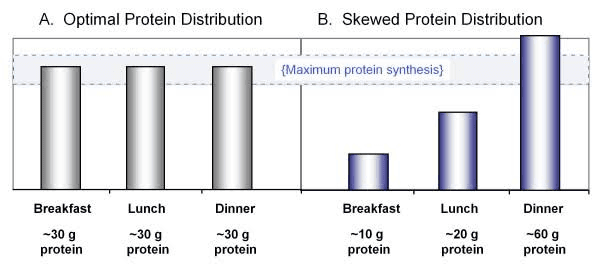
Emerging research suggests that distributing protein intake evenly throughout the day, rather than backloading it at dinner, may support better muscle protein synthesis rates over 24 hours. A 2017 study in Frontiers in Physiology confirmed that spreading protein evenly across meals can enhance total-day muscle protein synthesis more effectively than concentrating it at one time.
Adding whey to your morning routine is the easiest way to front-load protein. A shake blended with oats, milk, and a banana gives you a complete, fast breakfast with 30 grams of protein in about three minutes. No cooking required. Just a blender and five grams of intention.
If hitting your daily protein target is the real challenge, morning whey closes the gap before the day gets away from you.
Before bed: does whey work overnight?
Here is where things get interesting, and where popular advice often gets ahead of the evidence.
Casein protein has long been marketed as the superior pre-sleep option because it digests slowly, keeping amino acids trickling into your bloodstream for six or more hours. Whey, being fast-digesting, gets written off as a poor nighttime choice.
A 2023 randomized controlled trial published in Sports Medicine challenged that directly. Researchers had participants ingest 45 grams of casein, 45 grams of whey, or a non-caloric placebo 30 minutes before sleep, following an evening exercise session. Both protein types elevated overnight protein synthesis significantly compared to placebo. And critically, casein and whey did not differ meaningfully from each other in their ability to stimulate overnight muscle building.
So if whey is what you have, taking it before bed is a valid choice. The key is that you consume something. Protein before sleep beats no protein before sleep, regardless of the type.
What matters more than timing
Here's the honest truth: protein timing matters at the margins. The foundation is what counts.
Research consistently shows that total daily protein intake has a far stronger effect on muscle growth and body composition than the specific time you consume it. Someone hitting 1.6 to 2.2 grams of protein per kilogram of body weight daily, with imperfect timing, will outperform someone obsessing over their 30-minute window while only hitting 0.8g/kg.
The practical framework I follow:
Daily target first. For active adults, aim for 1.6 to 2.2 grams of protein per kilogram of body weight. A 70kg person needs roughly 112 to 154 grams per day.
Spread it across 4+ meals. Research suggests targeting around 0.4g/kg per meal to maximize per-meal protein utilization. For that same 70kg person, that's about 28 grams of protein per meal across four meals.
Use whey to fill gaps. Whole food sources should form the backbone of your protein intake. Whey fills in wherever whole foods fall short, whether post-workout, at breakfast, or before bed.
This is also why protein supports metabolic health in ways that go beyond muscle building. Consistent intake throughout the day supports satiety, thermic effect, and stable blood sugar, and none of that depends on precise timing.
A practical guide: timing by goal
Here's a summary of when to take whey based on what you're working toward:
Goal | Best timing | Why |
Muscle gain | Within 1 to 2 hours post-workout | Capitalizes on elevated MPS and whey's rapid absorption |
Fat loss or cutting | Morning or pre-meal | Suppresses hunger hormones, prevents muscle breakdown in a deficit |
Fasted training | 20 to 30 min pre-workout | Prevents catabolism during training without a full meal |
General health | Morning or alongside low-protein meals | Front-loads daily protein, prevents under-eating it by dinner |
Recovery after evening training | Within 1 hour post-workout or pre-sleep | Sustains overnight synthesis; either casein or whey works |
The honest answer to "when is the best time?" is: the time you'll actually remember to take it, consistently. Consistency beats optimization every single time.
Final thoughts
The anabolic window is real, but it's more of a generous two-hour opening than a strict 30-minute countdown. Post-workout remains the most practical default. Morning whey fills a gap most people don't even realize they have. And pre-sleep protein, whether casein or whey, earns its place when you're training hard and still falling short on daily targets.
Before you fine-tune timing, make sure your daily protein total is solid. Hit your numbers consistently, spread them across your meals, and let whey do exactly what it's designed for: close the gaps.
You bought the whey protein. You've been using it. But the question of when to drink it has probably sent you down a rabbit hole of contradictory advice. Post-workout. Pre-workout. First thing in the morning. Before bed. Everyone has a strong opinion.
Here's the thing: most of that debate misses the bigger picture. Timing matters, but not as much as the fitness industry wants you to believe. Let me walk you through what the research actually says, so you can stop overthinking your shake and start putting it to better use.
What is the "anabolic window"?
The anabolic window is the period immediately after exercise when your muscles are believed to be highly receptive to amino acids for repair and growth. For years, conventional gym wisdom put this window at a strict 30 to 60 minutes post-workout. Miss it, and your gains supposedly disappear.
That turned out to be a significant oversimplification.
A meta-analysis published in the Journal of the International Society of Sports Nutrition examined 23 studies involving 525 participants and found no significant difference in muscle gains between groups who consumed protein immediately after training versus those who waited up to two hours. The anabolic window exists. It's just wider than anyone told you.
And there's more. Muscle protein synthesis (the biological process of building new muscle tissue) remains elevated for 24 to 48 hours after resistance training. Your muscles are not a carriage that turns into a pumpkin at midnight.
Post-workout: still the best default window
Even if the window is wide, post-workout timing remains the most practical and well-supported choice for most people.
Whey protein digests fast. After you swallow it, amino acids start hitting your bloodstream within 30 to 60 minutes. Your muscles are primed, your blood flow to muscle tissue is elevated, and leucine (the amino acid that acts as the "on switch" for protein synthesis) gets delivered exactly when your body is most ready to use it.
Think of it this way: your workout lays the foundation. Protein provides the bricks. Wait too long, and the construction crew goes home.
The International Society of Sports Nutrition (ISSN) recommends consuming protein within two hours after your workout to best support muscle growth. That's a comfortable buffer. You don't need to chug your shake in the locker room. A whole-food meal with adequate protein within that window works just as well, if not better.
For most people lifting weights or doing intense exercise, I'd recommend aiming for 25 to 40 grams of whey protein within 60 minutes of finishing your session. That's the practical sweet spot: close enough to capitalize on elevated muscle protein synthesis, and easy enough to actually stick to.
Pre-workout: the case for training fasted
Pre-workout whey makes a real difference in one specific scenario: when you train first thing in the morning without eating.
After 8 to 12 hours of overnight fasting, blood amino acid levels are low. Your body has gone hours without protein. Fasted training under these conditions increases muscle protein breakdown, especially during longer or more intense sessions.
A pre-workout shake of 20 to 25 grams of whey taken 30 minutes before training can prevent this. Whey's high leucine content signals the body to hold off on breaking down muscle tissue for fuel. I've tried training fasted without protein many times. My performance tends to drop noticeably around the 45-minute mark during heavier lifts, and adding a small pre-workout shake fixed that.
That said, if you've already had a protein-rich breakfast one to two hours before training, an additional pre-workout shake adds very little. Your amino acid levels are already covered.
Morning whey: an underrated strategy
Most people eat a carb-heavy, protein-light breakfast. Toast, cereal, a banana. It's familiar, it's quick, and it sets you up for an energy crash by mid-morning.
Emerging research suggests that distributing protein intake evenly throughout the day, rather than backloading it at dinner, may support better muscle protein synthesis rates over 24 hours. A 2017 study in Frontiers in Physiology confirmed that spreading protein evenly across meals can enhance total-day muscle protein synthesis more effectively than concentrating it at one time.
Adding whey to your morning routine is the easiest way to front-load protein. A shake blended with oats, milk, and a banana gives you a complete, fast breakfast with 30 grams of protein in about three minutes. No cooking required. Just a blender and five grams of intention.
If hitting your daily protein target is the real challenge, morning whey closes the gap before the day gets away from you.
Before bed: does whey work overnight?
Here is where things get interesting, and where popular advice often gets ahead of the evidence.
Casein protein has long been marketed as the superior pre-sleep option because it digests slowly, keeping amino acids trickling into your bloodstream for six or more hours. Whey, being fast-digesting, gets written off as a poor nighttime choice.
A 2023 randomized controlled trial published in Sports Medicine challenged that directly. Researchers had participants ingest 45 grams of casein, 45 grams of whey, or a non-caloric placebo 30 minutes before sleep, following an evening exercise session. Both protein types elevated overnight protein synthesis significantly compared to placebo. And critically, casein and whey did not differ meaningfully from each other in their ability to stimulate overnight muscle building.
So if whey is what you have, taking it before bed is a valid choice. The key is that you consume something. Protein before sleep beats no protein before sleep, regardless of the type.
What matters more than timing
Here's the honest truth: protein timing matters at the margins. The foundation is what counts.
Research consistently shows that total daily protein intake has a far stronger effect on muscle growth and body composition than the specific time you consume it. Someone hitting 1.6 to 2.2 grams of protein per kilogram of body weight daily, with imperfect timing, will outperform someone obsessing over their 30-minute window while only hitting 0.8g/kg.
The practical framework I follow:
Daily target first. For active adults, aim for 1.6 to 2.2 grams of protein per kilogram of body weight. A 70kg person needs roughly 112 to 154 grams per day.
Spread it across 4+ meals. Research suggests targeting around 0.4g/kg per meal to maximize per-meal protein utilization. For that same 70kg person, that's about 28 grams of protein per meal across four meals.
Use whey to fill gaps. Whole food sources should form the backbone of your protein intake. Whey fills in wherever whole foods fall short, whether post-workout, at breakfast, or before bed.
This is also why protein supports metabolic health in ways that go beyond muscle building. Consistent intake throughout the day supports satiety, thermic effect, and stable blood sugar, and none of that depends on precise timing.
A practical guide: timing by goal
Here's a summary of when to take whey based on what you're working toward:
Goal | Best timing | Why |
Muscle gain | Within 1 to 2 hours post-workout | Capitalizes on elevated MPS and whey's rapid absorption |
Fat loss or cutting | Morning or pre-meal | Suppresses hunger hormones, prevents muscle breakdown in a deficit |
Fasted training | 20 to 30 min pre-workout | Prevents catabolism during training without a full meal |
General health | Morning or alongside low-protein meals | Front-loads daily protein, prevents under-eating it by dinner |
Recovery after evening training | Within 1 hour post-workout or pre-sleep | Sustains overnight synthesis; either casein or whey works |
The honest answer to "when is the best time?" is: the time you'll actually remember to take it, consistently. Consistency beats optimization every single time.
Final thoughts
The anabolic window is real, but it's more of a generous two-hour opening than a strict 30-minute countdown. Post-workout remains the most practical default. Morning whey fills a gap most people don't even realize they have. And pre-sleep protein, whether casein or whey, earns its place when you're training hard and still falling short on daily targets.
Before you fine-tune timing, make sure your daily protein total is solid. Hit your numbers consistently, spread them across your meals, and let whey do exactly what it's designed for: close the gaps.

Jun 29, 2026
5 min read
You bought the whey protein. You've been using it. But the question of when to drink it has probably sent you down a rabbit hole of contradictory advice. Post-workout. Pre-workout. First thing in the morning. Before bed. Everyone has a strong opinion.
Here's the thing: most of that debate misses the bigger picture. Timing matters, but not as much as the fitness industry wants you to believe. Let me walk you through what the research actually says, so you can stop overthinking your shake and start putting it to better use.
What is the "anabolic window"?
The anabolic window is the period immediately after exercise when your muscles are believed to be highly receptive to amino acids for repair and growth. For years, conventional gym wisdom put this window at a strict 30 to 60 minutes post-workout. Miss it, and your gains supposedly disappear.
That turned out to be a significant oversimplification.
A meta-analysis published in the Journal of the International Society of Sports Nutrition examined 23 studies involving 525 participants and found no significant difference in muscle gains between groups who consumed protein immediately after training versus those who waited up to two hours. The anabolic window exists. It's just wider than anyone told you.
And there's more. Muscle protein synthesis (the biological process of building new muscle tissue) remains elevated for 24 to 48 hours after resistance training. Your muscles are not a carriage that turns into a pumpkin at midnight.
Post-workout: still the best default window
Even if the window is wide, post-workout timing remains the most practical and well-supported choice for most people.
Whey protein digests fast. After you swallow it, amino acids start hitting your bloodstream within 30 to 60 minutes. Your muscles are primed, your blood flow to muscle tissue is elevated, and leucine (the amino acid that acts as the "on switch" for protein synthesis) gets delivered exactly when your body is most ready to use it.
Think of it this way: your workout lays the foundation. Protein provides the bricks. Wait too long, and the construction crew goes home.
The International Society of Sports Nutrition (ISSN) recommends consuming protein within two hours after your workout to best support muscle growth. That's a comfortable buffer. You don't need to chug your shake in the locker room. A whole-food meal with adequate protein within that window works just as well, if not better.
For most people lifting weights or doing intense exercise, I'd recommend aiming for 25 to 40 grams of whey protein within 60 minutes of finishing your session. That's the practical sweet spot: close enough to capitalize on elevated muscle protein synthesis, and easy enough to actually stick to.
Pre-workout: the case for training fasted
Pre-workout whey makes a real difference in one specific scenario: when you train first thing in the morning without eating.
After 8 to 12 hours of overnight fasting, blood amino acid levels are low. Your body has gone hours without protein. Fasted training under these conditions increases muscle protein breakdown, especially during longer or more intense sessions.
A pre-workout shake of 20 to 25 grams of whey taken 30 minutes before training can prevent this. Whey's high leucine content signals the body to hold off on breaking down muscle tissue for fuel. I've tried training fasted without protein many times. My performance tends to drop noticeably around the 45-minute mark during heavier lifts, and adding a small pre-workout shake fixed that.
That said, if you've already had a protein-rich breakfast one to two hours before training, an additional pre-workout shake adds very little. Your amino acid levels are already covered.
Morning whey: an underrated strategy
Most people eat a carb-heavy, protein-light breakfast. Toast, cereal, a banana. It's familiar, it's quick, and it sets you up for an energy crash by mid-morning.
Emerging research suggests that distributing protein intake evenly throughout the day, rather than backloading it at dinner, may support better muscle protein synthesis rates over 24 hours. A 2017 study in Frontiers in Physiology confirmed that spreading protein evenly across meals can enhance total-day muscle protein synthesis more effectively than concentrating it at one time.
Adding whey to your morning routine is the easiest way to front-load protein. A shake blended with oats, milk, and a banana gives you a complete, fast breakfast with 30 grams of protein in about three minutes. No cooking required. Just a blender and five grams of intention.
If hitting your daily protein target is the real challenge, morning whey closes the gap before the day gets away from you.
Before bed: does whey work overnight?
Here is where things get interesting, and where popular advice often gets ahead of the evidence.
Casein protein has long been marketed as the superior pre-sleep option because it digests slowly, keeping amino acids trickling into your bloodstream for six or more hours. Whey, being fast-digesting, gets written off as a poor nighttime choice.
A 2023 randomized controlled trial published in Sports Medicine challenged that directly. Researchers had participants ingest 45 grams of casein, 45 grams of whey, or a non-caloric placebo 30 minutes before sleep, following an evening exercise session. Both protein types elevated overnight protein synthesis significantly compared to placebo. And critically, casein and whey did not differ meaningfully from each other in their ability to stimulate overnight muscle building.
So if whey is what you have, taking it before bed is a valid choice. The key is that you consume something. Protein before sleep beats no protein before sleep, regardless of the type.
What matters more than timing
Here's the honest truth: protein timing matters at the margins. The foundation is what counts.
Research consistently shows that total daily protein intake has a far stronger effect on muscle growth and body composition than the specific time you consume it. Someone hitting 1.6 to 2.2 grams of protein per kilogram of body weight daily, with imperfect timing, will outperform someone obsessing over their 30-minute window while only hitting 0.8g/kg.
The practical framework I follow:
Daily target first. For active adults, aim for 1.6 to 2.2 grams of protein per kilogram of body weight. A 70kg person needs roughly 112 to 154 grams per day.
Spread it across 4+ meals. Research suggests targeting around 0.4g/kg per meal to maximize per-meal protein utilization. For that same 70kg person, that's about 28 grams of protein per meal across four meals.
Use whey to fill gaps. Whole food sources should form the backbone of your protein intake. Whey fills in wherever whole foods fall short, whether post-workout, at breakfast, or before bed.
This is also why protein supports metabolic health in ways that go beyond muscle building. Consistent intake throughout the day supports satiety, thermic effect, and stable blood sugar, and none of that depends on precise timing.
A practical guide: timing by goal
Here's a summary of when to take whey based on what you're working toward:
Goal | Best timing | Why |
Muscle gain | Within 1 to 2 hours post-workout | Capitalizes on elevated MPS and whey's rapid absorption |
Fat loss or cutting | Morning or pre-meal | Suppresses hunger hormones, prevents muscle breakdown in a deficit |
Fasted training | 20 to 30 min pre-workout | Prevents catabolism during training without a full meal |
General health | Morning or alongside low-protein meals | Front-loads daily protein, prevents under-eating it by dinner |
Recovery after evening training | Within 1 hour post-workout or pre-sleep | Sustains overnight synthesis; either casein or whey works |
The honest answer to "when is the best time?" is: the time you'll actually remember to take it, consistently. Consistency beats optimization every single time.
Final thoughts
The anabolic window is real, but it's more of a generous two-hour opening than a strict 30-minute countdown. Post-workout remains the most practical default. Morning whey fills a gap most people don't even realize they have. And pre-sleep protein, whether casein or whey, earns its place when you're training hard and still falling short on daily targets.
Before you fine-tune timing, make sure your daily protein total is solid. Hit your numbers consistently, spread them across your meals, and let whey do exactly what it's designed for: close the gaps.
Jun 29, 2026
7 min read
Jun 29, 2026
5 min read
Jun 28, 2026
8 min read

Jun 28, 2026
5 min read

Jun 28, 2026
10 min read

Jun 27, 2026
8 min read

Jun 27, 2026
6 min read
Jun 26, 2026
10 min read

Jun 29, 2026
5 min read
Jun 28, 2026
8 min read
Jun 28, 2026
5 min read
Jun 28, 2026
10 min read
Jun 27, 2026
8 min read
Jun 27, 2026
6 min read
Jun 29, 2026
5 min read
Jun 28, 2026
8 min read
Jun 28, 2026
5 min read
Jun 28, 2026
10 min read

Don’t miss out on your exclusive FREE Trial with code FREEOCTOBER 💚
Download Zorest
Don’t miss out on your exclusive FREE Trial with code FREEOCTOBER 💚
Download Zorest
Don’t miss out on your exclusive FREE Trial with code FREEOCTOBER 💚
Download Zorest