
MD Psychiatry Resident, MBBS
Share this story
Fatty liver isn't just an alcohol problem
Many people are surprised when a doctor tells them they have fatty liver disease despite rarely drinking alcohol or avoiding it entirely.
For decades, fatty liver was closely associated with heavy drinking. Today, however, a growing number of cases occur in people who do not consume alcohol at all. This condition is known as non-alcoholic fatty liver disease (NAFLD), recently renamed metabolic dysfunction-associated steatotic liver disease (MASLD) by several medical organizations.
The condition affects roughly 25-30% of adults worldwide, making it one of the most common liver disorders on the planet.
The confusing part is simple:
If alcohol isn't causing the fat buildup, what is?
The answer lies in modern lifestyles, nutrition, metabolism, and genetics.
In this article, we'll explore why non-alcoholic people develop fatty liver, the hidden risk factors many overlook, and what you can do to reverse it before it progresses into serious liver disease.
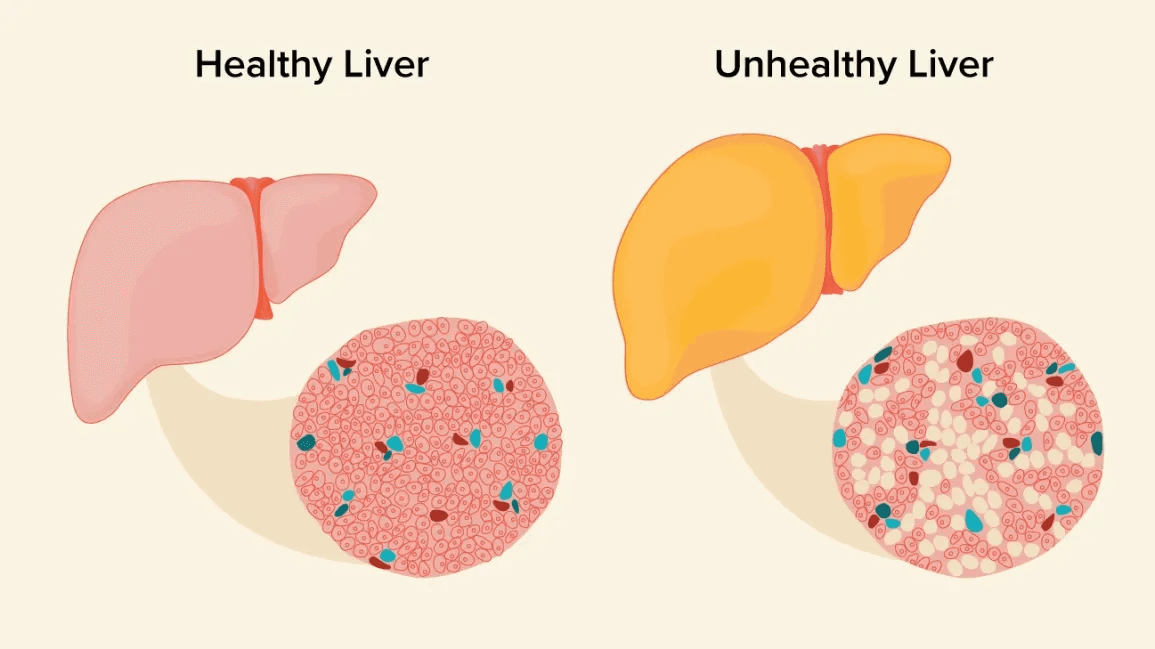
What is non-alcoholic fatty liver disease?
Non-alcoholic fatty liver disease occurs when excess fat accumulates inside liver cells in people who drink little or no alcohol.
A healthy liver contains small amounts of fat. Problems begin when fat makes up more than 5% of the liver's weight.
Initially, this fat buildup may cause no symptoms. Many people discover they have fatty liver only after routine blood work or an ultrasound scan.
NAFLD generally progresses through four stages:
Simple fatty liver (steatosis)
Non-alcoholic steatohepatitis (NASH)
Fibrosis (liver scarring)
Cirrhosis (severe liver damage)
The earlier it is detected, the easier it is to reverse.
Insulin resistance is the biggest driver
If I had to point to one factor behind most non-alcoholic fatty liver cases, it would be insulin resistance.
Insulin is a hormone that helps move glucose from the bloodstream into cells.
When cells become resistant to insulin, the body compensates by producing more of it. Elevated insulin levels signal the liver to store more fat while reducing its ability to burn existing fat.
Over time, fat begins accumulating inside liver cells.
This is why fatty liver commonly appears alongside:
Prediabetes
Type 2 diabetes
Obesity
High triglycerides
Metabolic syndrome
Research consistently shows that insulin resistance is present in the majority of people with NAFLD.
Think of insulin resistance as a traffic jam. Nutrients keep arriving, but the body's ability to process them efficiently slows down. The excess gets stored, and the liver often becomes the storage facility.
Excess sugar can overwhelm the liver
Many people blame dietary fat for fatty liver.
Ironically, excess sugar is often a bigger contributor.
Fructose, a type of sugar found in table sugar and high-fructose corn syrup, is processed primarily by the liver.
When large amounts are consumed regularly through:
Soft drinks
Fruit juices
Sweetened coffee beverages
Energy drinks
Desserts
Packaged snacks
the liver converts much of that excess fructose into fat through a process called de novo lipogenesis.
Studies have repeatedly linked high sugar consumption with increased liver fat accumulation, even when total calorie intake remains similar.
One large soda every day may seem harmless, but over years it can substantially increase liver fat storage.

Being overweight increases risk
Excess body fat, particularly around the abdomen, significantly raises the likelihood of developing fatty liver.
Belly fat is metabolically active. It releases free fatty acids directly into the bloodstream, which eventually reach the liver.
The liver then stores these fatty acids as triglycerides.
What's interesting is that weight gain does not need to be extreme.
Many people develop fatty liver after gaining just 15-20 pounds over several years.
The risk rises further when abdominal fat increases.
This explains why waist circumference is often a stronger predictor of fatty liver than body weight alone.
You can have fatty liver even if you're thin
One of the biggest misconceptions is that only overweight people develop fatty liver.
Doctors increasingly see cases in individuals with normal body weight. This is sometimes called "lean NAFLD."
Several factors contribute:
Low muscle mass
Poor diet quality
High sugar intake
Genetic predisposition
Sedentary lifestyle
Hidden visceral fat
I've seen examples where two people have identical body weights, but one has significantly more fat around internal organs and develops fatty liver while the other does not.
Weight alone never tells the whole story.
Poor diet quality matters more than many realize
Fatty liver is often less about a single food and more about an overall dietary pattern.
Common dietary habits linked to fatty liver include:
Frequent fast-food consumption
Excess refined carbohydrates
Low fiber intake
High intake of ultra-processed foods
Excessive sugary beverages
Frequent overeating
These foods are typically calorie-dense while offering little nutritional value.
Meanwhile, diets rich in:
Vegetables
Fruits
Legumes
Whole grains
Lean protein
Nuts
Olive oil
are consistently associated with lower liver fat levels.
The Mediterranean diet is often recommended because of its strong evidence for improving liver health.
Lack of exercise contributes to fat accumulation
Physical activity affects liver health even if body weight doesn't change.
Exercise helps:
Improve insulin sensitivity
Increase fat burning
Reduce liver fat storage
Preserve muscle mass
Lower inflammation
Research shows that both resistance training and aerobic exercise can reduce liver fat.
One fascinating finding is that people who exercise regularly often show improvements in liver health before significant weight loss occurs.
Your liver responds positively to movement long before the scale changes.
Genetics can increase susceptibility
Sometimes two people eat similarly and have comparable lifestyles, yet only one develops fatty liver.
Genetics helps explain why.
Researchers have identified several gene variants associated with increased liver fat accumulation.
One of the most studied is the PNPLA3 gene.
Individuals carrying certain versions of this gene appear more vulnerable to storing fat in the liver, even at lower body weights.
Genetics does not guarantee fatty liver, but it can increase susceptibility.
Think of genes as loading the gun while lifestyle pulls the trigger.
Certain medical conditions raise the risk
Several health conditions increase the likelihood of fatty liver development.
These include:
Type 2 diabetes
People with diabetes have some of the highest rates of fatty liver due to chronic insulin resistance.
Polycystic ovary syndrome (PCOS)
Women with PCOS often experience insulin resistance, increasing liver fat accumulation.
High cholesterol and triglycerides
Elevated blood lipids can contribute to excessive fat storage in the liver.
Sleep apnea
Poor oxygen delivery during sleep appears linked to increased liver inflammation and fat accumulation.
Hypothyroidism
An underactive thyroid can slow metabolism and influence fat distribution.
Treating these underlying conditions often improves liver health as well.
Why fatty liver should not be ignored
Many people assume fatty liver is harmless because symptoms are often absent.
Unfortunately, that's not always true.
As liver fat accumulates, inflammation may develop.
Over time this can lead to:
Liver scarring
Reduced liver function
Cirrhosis
Liver failure
Increased risk of liver cancer
Fatty liver also increases the risk of:
Heart disease
Type 2 diabetes
Stroke
Kidney disease
In fact, cardiovascular disease remains the leading cause of death among people with NAFLD.
The liver problem rarely stays confined to the liver.
Can non-alcoholic fatty liver be reversed?
The encouraging news is that fatty liver is often reversible, especially in its early stages.
Research suggests that losing 5-10% of body weight can significantly reduce liver fat.
Effective strategies include:
Reducing added sugar intake
Eating more fiber-rich foods
Increasing physical activity
Prioritizing protein intake
Improving sleep quality
Managing insulin resistance
Limiting ultra-processed foods
Even modest lifestyle changes can produce measurable improvements within months.
The key is consistency rather than perfection.
Signs you may want to get checked
Many people have fatty liver without symptoms.
However, some experience:
Persistent fatigue
Mild abdominal discomfort
Elevated liver enzymes
Difficulty managing blood sugar
Increased waist circumference
If you have obesity, diabetes, PCOS, metabolic syndrome, or a family history of liver disease, discussing screening with your healthcare provider may be worthwhile.
Early detection dramatically improves outcomes.
Final thoughts
Non-alcoholic fatty liver develops because of metabolic dysfunction, not alcohol consumption. Insulin resistance, excess sugar intake, abdominal obesity, poor diet quality, inactivity, genetics, and certain medical conditions all contribute to fat accumulation inside the liver.
The good news is that fatty liver is often reversible when caught early. Small, sustainable improvements in nutrition, movement, sleep, and metabolic health can reduce liver fat and protect long-term health.
Your liver is remarkably resilient. Give it the right conditions, and it can recover far more than most people realize.
Got questions? Ping me on Linkedin.