
MD Psychiatry Resident, MBBS
Share this story
Most people believe weight loss is simple: Eat fewer calories than you burn.
So when the scale refuses to move despite eating in a calorie deficit, frustration hits hard.
I've seen this happen countless times. Someone spends weeks tracking meals, skipping desserts, and exercising regularly. Then they step on the scale expecting results, and nothing changes.
The good news?
If you're not losing weight in a calorie deficit, there is usually an explanation. In many cases, the problem isn't your effort, it's a hidden factor that's masking progress or reducing the size of your actual deficit.
Let's break down the most common reasons.
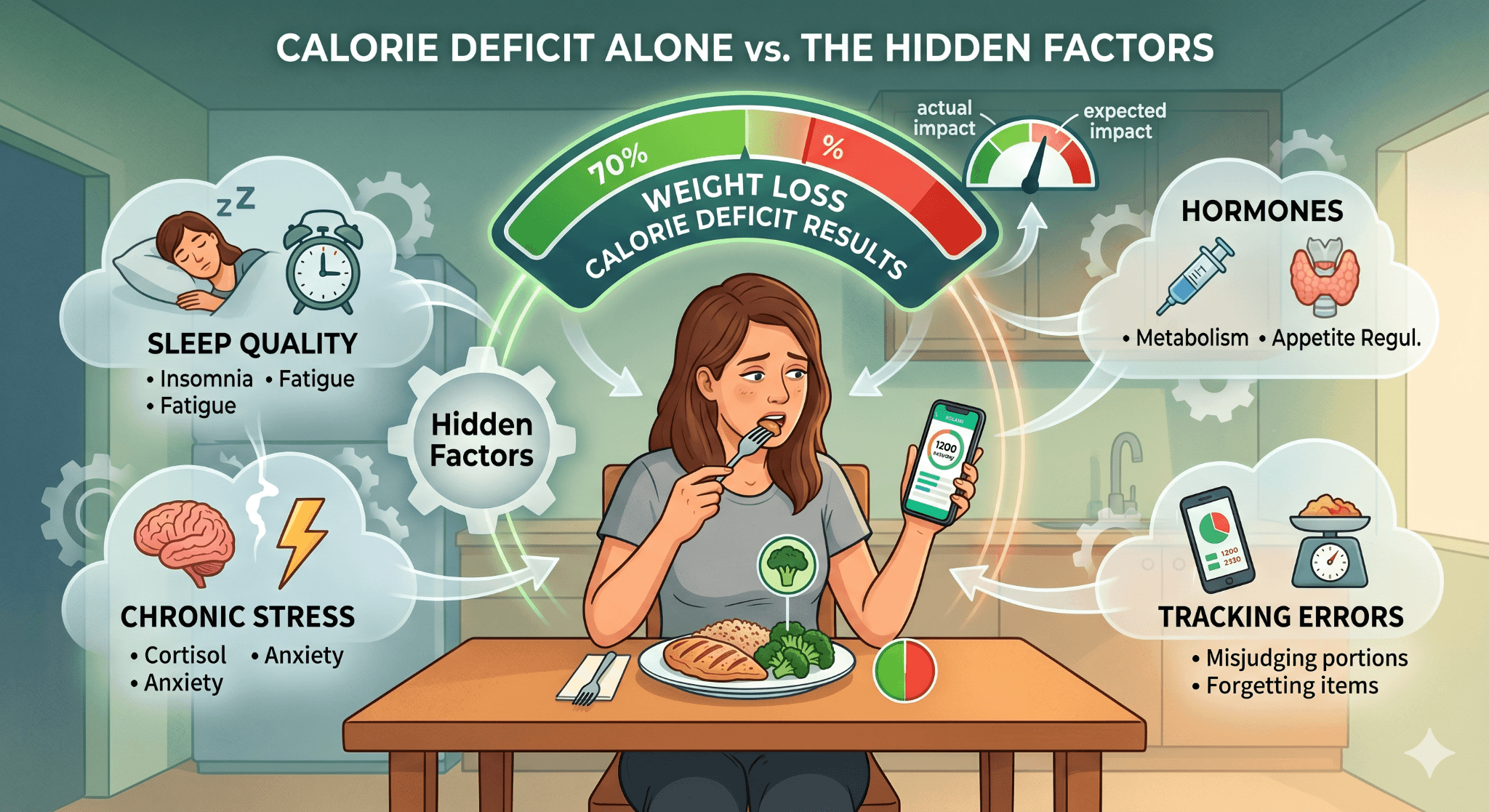
First, are you actually in a calorie deficit?
Most weight-loss stalls happen because the deficit is smaller than people think.
Research consistently shows that people underestimate calorie intake and overestimate calorie burn. Even nutrition-conscious individuals make tracking mistakes.
Common examples include:
Cooking oils that aren't logged
Sauces and dressings
Coffee drinks
Weekend cheat meals
Large portion sizes
"Healthy" snacks that are calorie-dense
A tablespoon of olive oil contains about 120 calories. Two untracked tablespoons every day can erase nearly 1,700 calories from your weekly deficit.
This is where accurate tracking matters.
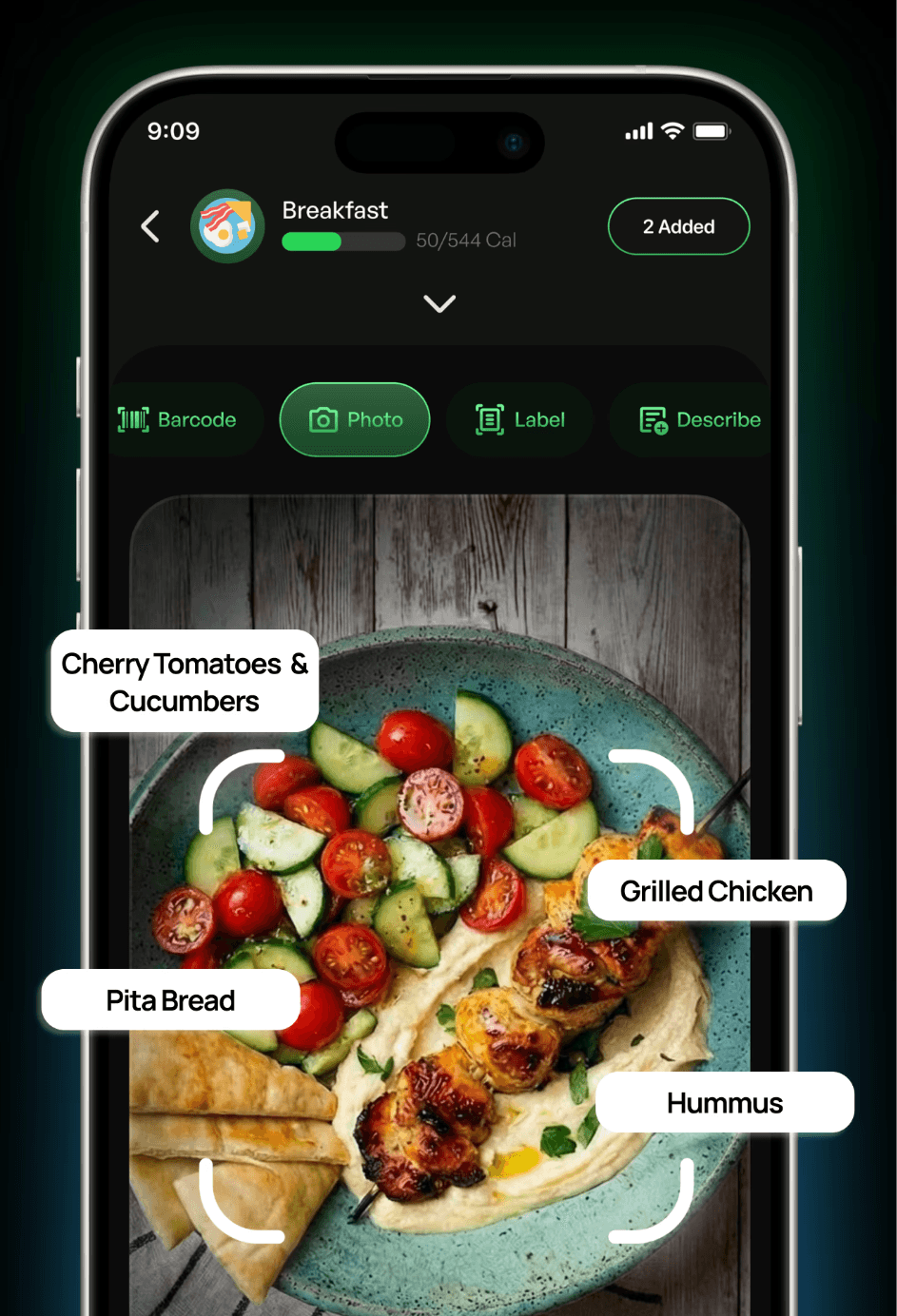
With Zorest Macro, you can log meals using photos, voice, text, barcodes, or nutrition labels. The AI instantly calculates calories and macros using its food database of over 1.9 million foods, reducing common tracking errors.
Your body weighs less than before
Weight loss changes how many calories your body burns.
A 220-pound person burns more calories daily than a 180-pound person.
As your body weight decreases, your calorie requirements decrease too. The deficit that worked two months ago may no longer be large enough today.
Many people continue eating the same amount while expecting the same rate of weight loss.
The solution is simple:
Recalculate your calorie target every few weeks
Monitor progress trends instead of single weigh-ins
Adjust calories gradually if progress stalls
Water retention may be hiding fat loss
Fat loss and scale weight are not always the same thing.
You can lose body fat while temporarily gaining water weight.
Water retention can occur because of:
High sodium intake
Stress
Hormonal fluctuations
Intense exercise
Poor sleep
Increased carbohydrate intake
In some cases, people lose several pounds of fat while the scale barely moves because extra water is masking progress.
This is why relying only on scale weight can be misleading.
Track:
Waist measurements
Progress photos
Clothing fit
Strength improvements
These often reveal progress before the scale does.
You're moving less than you realize
Your body quietly adapts when calories drop.
One of the most overlooked factors is NEAT (Non-Exercise Activity Thermogenesis).
NEAT includes:
Walking
Standing
Fidgeting
Household activities
Daily movement
When dieting, many people unconsciously move less. The body tries to conserve energy.
You may still be doing the same workouts, but burning fewer calories throughout the day.
I've personally experienced this during long dieting phases. My workouts stayed consistent, but my daily step count dropped dramatically without me noticing.
Tracking daily movement often solves this issue.
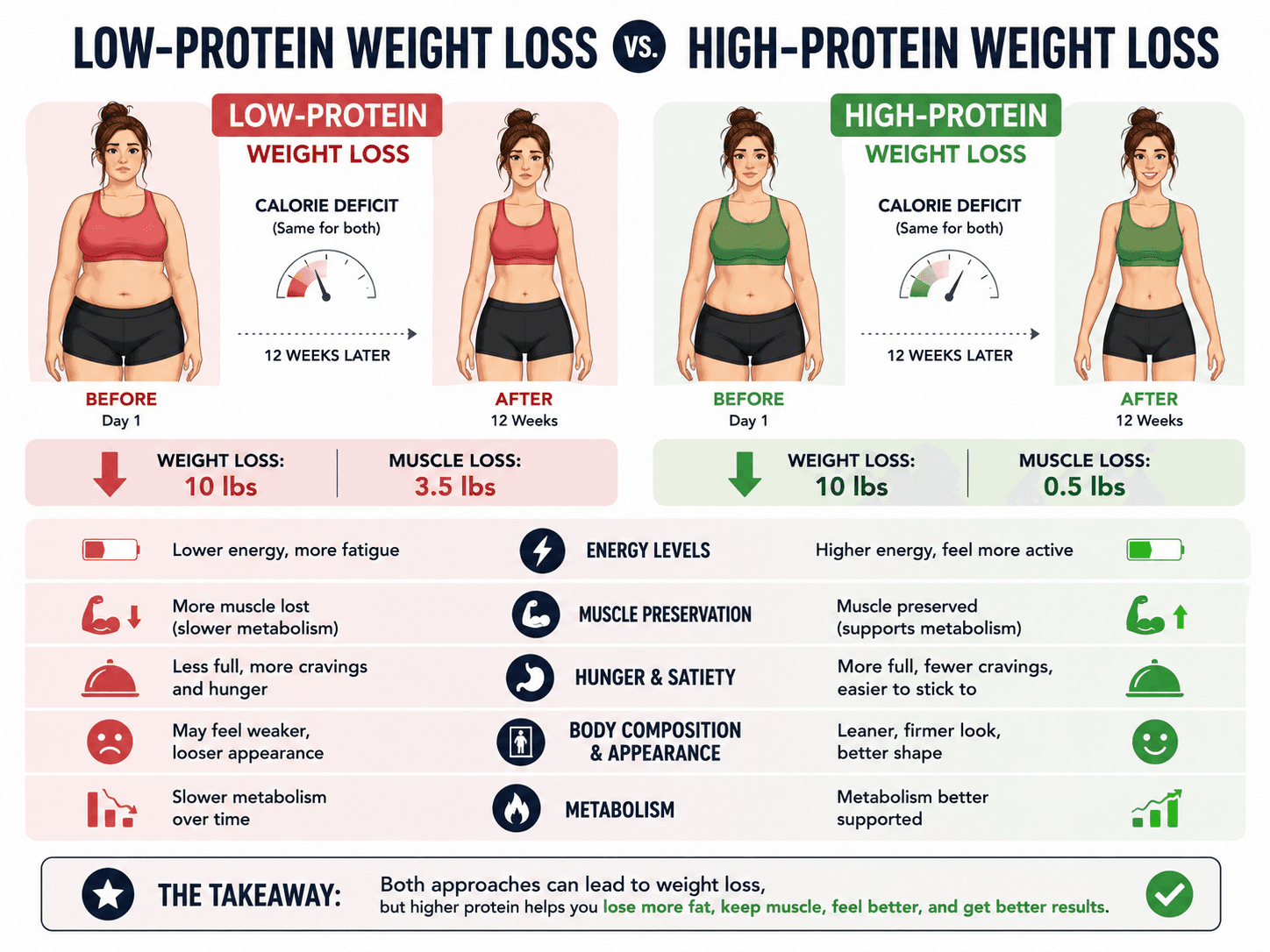
You're not eating enough protein
Protein protects muscle and supports fat loss.
When calories are reduced, the body can lose both fat and muscle.
A higher protein intake helps:
Preserve muscle mass
Increase fullness
Support recovery
Maintain metabolic rate
Many successful fat-loss programs target around 1.6–2.2 grams of protein per kilogram of body weight.
Without enough protein, weight loss can slow because your body loses metabolically active muscle tissue.
Poor sleep is sabotaging your results
Sleep influences hunger, recovery, and calorie control.
Many people focus entirely on food while ignoring sleep.
Sleep deprivation can:
Increase hunger hormones
Reduce satiety signals
Increase cravings
Lower energy levels
Reduce exercise performance
Research links poor sleep with reduced weight-loss success.
If you're sleeping 5–6 hours per night, improving sleep may produce more results than adding extra cardio.
Aim for:
7–9 hours nightly
Consistent sleep schedules
Reduced screen time before bed
Stress may be keeping the scale stuck
Chronic stress affects both behavior and physiology.
High stress levels often lead to:
Emotional eating
Increased cravings
Poor sleep
Reduced recovery
Water retention
Elevated cortisol can make fat loss feel slower and can mask progress through temporary water retention.
If your nutrition is solid but life feels chaotic, stress management may be the missing piece.
Simple tools include:
Walking outdoors
Meditation
Journaling
Strength training
Better sleep habits
You may have reached a normal weight-loss plateau
Plateaus are a normal part of successful fat loss.
Almost everyone experiences them.
Early weight loss often happens quickly because glycogen and water stores decrease. Later stages become slower as the body adapts.
A plateau does not mean failure.
In many cases, consistency is the solution.
Before changing your plan, ask:
Have I been truly consistent for at least 2–4 weeks?
Has my activity level changed?
Have my portion sizes increased?
Am I sleeping well?
Am I tracking accurately?
Often the answer appears quickly.
Could a medical condition be involved?
Sometimes weight-loss resistance has a medical cause.
Potential factors include:
PCOS
Hypothyroidism
Insulin resistance
Menopause-related hormonal changes
Certain medications
If you've been consistently following a calorie deficit for several months without measurable progress, discussing the issue with a healthcare professional may be worthwhile.
How Zorest Macro can help identify the problem
One challenge with fat loss is knowing which variable is causing the stall.
Zorest Macro helps by centralizing multiple pieces of data in one place:
AI meal logging via photo, voice, text, barcode, or food labels
Personalized calorie and macro tracking
Hydration tracking
Daily Meal Planner
Weekly AI Coach Calls
24/7 AI Nutrition Coach chat support
Instead of guessing why progress has slowed, you can identify patterns and make targeted adjustments.

Final thoughts
If you're not losing weight in a calorie deficit, don't assume your body is "broken."
Most stalls come down to one of a handful of factors:
Inaccurate tracking
Reduced calorie needs
Water retention
Lower daily movement
Insufficient protein
Poor sleep
High stress
Normal metabolic adaptation
The scale tells only part of the story.
Focus on consistent habits, accurate tracking, and long-term trends. When you do, fat loss becomes much more predictable.