
MD Psychiatry Resident, MBBS
Share this story
Most people think they burn calories only when they're exercising.
That's not even close to the full story.
In reality, the majority of calories you burn each day come from simply being alive. Your heart beats, lungs breathe, brain works, and muscles maintain posture—all of which require energy even when you're lying on the couch.
Understanding the difference between active calories and resting calories can completely change how you approach weight loss, muscle gain, and fitness tracking. It helps you set realistic expectations, avoid common mistakes, and make smarter decisions about nutrition and exercise.
Let's simplify it.
What are resting calories?
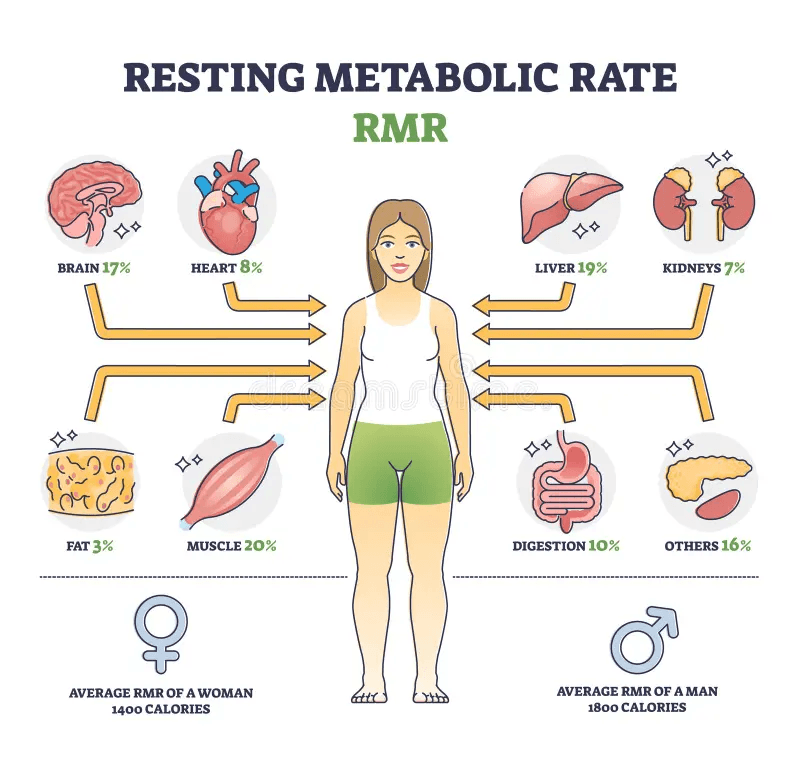
Resting calories are the calories your body burns to stay alive.
Even if you spent an entire day in bed doing absolutely nothing, your body would still need energy to perform essential functions such as:
Breathing
Circulating blood
Maintaining body temperature
Repairing tissues
Supporting brain function
Producing hormones
This calorie burn is often called your Basal Metabolic Rate (BMR) or Resting Metabolic Rate (RMR).
Example
Imagine two people who weigh 180 pounds.
One spends the day sitting at a desk while the other spends the day hiking.
Both individuals will burn roughly the same amount of resting calories because their bodies still need energy for basic survival.
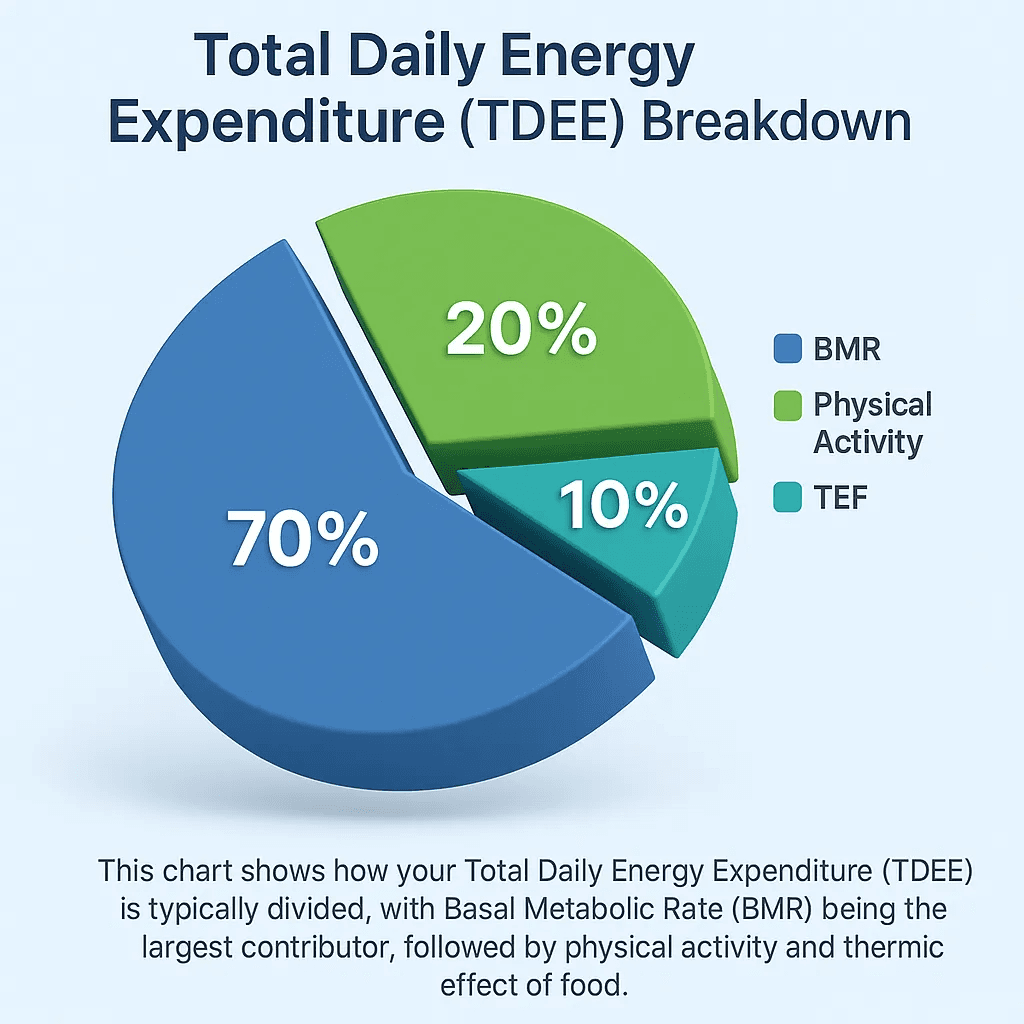
For many adults, resting calories account for 60-75% of total daily calorie expenditure.
What are active calories?
Active calories are the extra calories you burn through movement and physical activity.
This includes:
Walking
Running
Swimming
Strength training
Household chores
Gardening
Playing sports
Even fidgeting
Active calories vary dramatically from person to person because activity levels differ.
Example
A 180-pound person might burn:
250 calories during a brisk 45-minute walk
500 calories during a 45-minute run
350 calories during a strength-training session
Those calories are added on top of resting calories.
Think of resting calories as the "base salary" your body earns every day. Active calories are the "bonus income" generated by movement.
Active calories vs resting calories: the key difference
The simplest way to understand the difference is this:
Resting Calories | Active Calories |
Burned to keep you alive | Burned through movement |
Relatively stable daily | Changes based on activity |
Largest portion of calorie burn | Smaller but highly adjustable |
Occurs 24/7 | Occurs during activity |
Quick example
Let's say your resting calorie burn is 1,800 calories per day.
You also:
Walk 10,000 steps
Complete a gym workout
Do household chores
These activities burn an additional 600 active calories.
Your total calorie expenditure for the day becomes:
1,800 resting calories + 600 active calories = 2,400 total calories burned
This total is commonly known as your Total Daily Energy Expenditure (TDEE).
Why fitness trackers separate active and resting calories
Many people panic when their smartwatch says they burned only 500 calories.
What they often miss is that the watch is showing active calories only.
Devices such as fitness watches and health apps typically separate these numbers because active calories are the variable you can directly influence.
For example:
Resting calories: 1,700
Active calories: 550
Total calories burned: 2,250
If you only look at active calories, you might underestimate your actual energy expenditure.
This misunderstanding often causes people to eat too little or create unrealistic calorie deficits.
Which matters more for weight loss?
Both matter.
But resting calories usually contribute more to total calorie burn.
Let's look at a common example:
Person A
Resting calories: 1,900
Active calories: 300
Total: 2,200
Person B
Resting calories: 1,900
Active calories: 700
Total: 2,600
Person B has more flexibility with food intake because they're moving more.
However, neither person can ignore resting calories because they represent the largest share of daily energy expenditure.
This is why successful weight loss isn't just about endless cardio.
It's also about maintaining muscle mass, which helps support a higher metabolic rate over time.
How to increase active calorie burn
The easiest way to burn more calories is to increase movement throughout the day.
Here are some effective methods:
Walk more
Walking remains one of the most underrated fat-loss tools.
Adding 5,000 extra steps daily can significantly increase weekly calorie expenditure.
Strength train regularly
Building muscle supports long-term calorie burn and improves body composition.
Add cardio strategically
Running, cycling, swimming, and rowing can increase active calorie burn quickly.
Move outside workouts
Many people focus on a 45-minute workout but remain sedentary for the other 15 hours they're awake.
Simple habits help:
Take stairs
Walk during phone calls
Park farther away
Use standing desks occasionally
These small actions accumulate surprisingly large calorie burns over time.
How to support resting calorie burn
You cannot dramatically increase resting calorie burn overnight.
However, you can support it through healthy habits.
Build muscle
Muscle tissue requires more energy to maintain than fat tissue.
More muscle generally means a slightly higher resting calorie expenditure.
Eat enough protein
Protein helps preserve lean mass during weight loss.
Research consistently shows that higher-protein diets improve body composition outcomes.
Avoid extreme dieting
Very aggressive calorie restriction can reduce metabolic rate over time.
Moderate, sustainable deficits usually work better.
Prioritize sleep
Poor sleep can negatively affect hormones that regulate appetite, energy expenditure, and recovery.
Why calorie tracking often confuses people
I've seen this happen countless times.
Someone completes a workout, sees 600 calories burned on their watch, and assumes that's their total daily calorie expenditure.
Then they wonder why their nutrition plan isn't working.
The issue isn't motivation.
It's misunderstanding the numbers.
A complete picture includes:
Resting calories
Active calories
Total calories burned
Food intake
When all four pieces work together, nutrition becomes much easier to manage.
How Zorest Macro helps simplify calorie tracking
One of the biggest challenges with calorie management is collecting accurate information consistently.
Instead of manually calculating calories from every meal, you can use Zorest Macro's AI Meal Logger to log food through photos, voice, text, barcodes, or nutrition labels.
This makes it easier to understand how your calorie intake compares with your estimated energy expenditure.
For people trying to lose fat, gain muscle, or maintain weight, the Daily Meal Planner can also provide meal suggestions based on current goals and progress.
The goal isn't perfect tracking.
It's making better decisions with better information.
Common myths about active and resting calories
Myth 1: Exercise burns most of your calories
For most people, resting calorie burn contributes far more to total daily energy expenditure than exercise.
Myth 2: You can dramatically boost metabolism overnight
Most metabolism-boosting claims are exaggerated.
Consistent habits such as resistance training, adequate protein intake, and good sleep have the greatest impact.
Myth 3: Smartwatch calorie estimates are always exact
Fitness trackers provide estimates, not laboratory measurements.
They are useful for trends but should not be treated as perfect numbers.
Myth 4: More exercise always means better results
Recovery matters.
Excessive exercise combined with inadequate nutrition can impair progress and increase fatigue.
Final thoughts
Active calories and resting calories work together to determine how much energy your body uses every day.
Resting calories keep you alive. Active calories come from movement. Together they form your total daily calorie expenditure.
Understanding this distinction makes calorie tracking far less confusing and helps you build a more realistic fitness strategy.
If you're trying to lose weight, gain muscle, or simply understand your body's energy needs, focus on the complete picture instead of obsessing over workout calories alone.
Small daily habits often outperform extreme fitness efforts in the long run.