
MD Psychiatry Resident, MBBS
Share this story
If you have spent any time in the longevity or wellness space recently, you have likely encountered the term autophagy. It is often heralded as the holy grail of intermittent fasting—a biological reset button that clears out dead cells, slows down aging, and fights disease.
Because the 16:8 method (fasting for 16 hours, eating for 8) is the most popular protocol, a common question naturally arises: is 16 hours fasting enough for autophagy?
It sounds like a straightforward question, but biology rarely operates on a strict clock. As a team dedicated to science-backed nutrition and metabolic health, we look past the hype to see what happens at a cellular level when you put down the fork.
Here is the unvarnished truth about intermittent fasting for autophagy, how long you actually need to abstain from calories, and how to build a routine that drives sustainable results without making you miserable.
What Is Autophagy Fasting? (The Roomba of Your Cells)
To understand the timeline, you first need to understand the mechanism.
When people ask, “what is autophagy fasting?”, they are referring to the intentional restriction of nutrients to trigger a specific metabolic pathway. Autophagy translates literally to "self-eating."
Think of your cells like a busy kitchen. Over time, debris builds up—misfolded proteins, damaged organelles, and metabolic waste. When you are constantly eating, your body is focused on processing incoming energy. It doesn't have time to clean the kitchen.
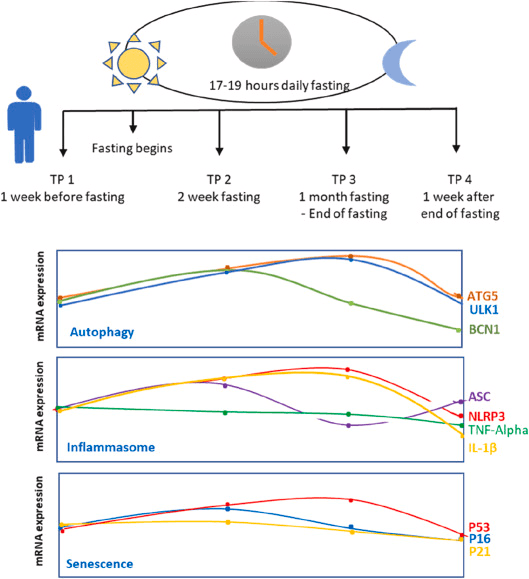
Fasting for cell regeneration changes the priority. When external energy runs out, your body flips a biological switch (specifically, it suppresses mTOR and activates AMPK). It starts scavenging those damaged, senescent cells for spare parts to create new, healthy cells.
The Timeline: How Long Should I Fast for Autophagy?
The 16-hour mark is where most people hang their hats, expecting a massive surge in cellular cleanup. But the physiological reality is a bit more nuanced.
Autophagy is not an "on/off" switch; it is a dial. It happens at a low baseline level all the time, but fasting turns the dial up significantly. So, what is the optimal fasting duration for autophagy? Let's break down the timeline:
12 Hours: You enter the metabolic state of ketosis. Your body has depleted its liver glycogen stores and begins breaking down stored fat into ketones for fuel.
16 Hours: You are deep into fat burning, and the autophagy dial is starting to turn up. However, for most individuals, 16 hours is the warm-up, not the main event.
24 to 48 Hours: This is the sweet spot. Research suggests that significant, deep cellular autophagy peaks between 24 and 48 hours of fasting.
72 Hours: Autophagy remains high, and your body begins generating new immune cells. (Note: Fasts of this length should only be done under medical supervision).
The Verdict: Is 16 hours enough? It depends on your baseline metabolic health, your diet, and your activity level. A 16-hour fast will initiate the early stages of cellular repair, but relying on a 16-hour fast to completely overhaul your cellular age is like expecting a 5-minute jog to prepare you for a marathon.
How to Fast for Autophagy Without Losing Your Mind
If the goal is true cellular renewal, you need a strategy. You cannot just starve yourself randomly and hope for the best. Here is how to fast for autophagy safely and effectively.
1. Deplete Glycogen Faster with Exercise
You don't enter autophagy until your glycogen (stored carbohydrates) is gone. You can accelerate this timeline by exercising in a fasted state. A heavy lifting session or a brisk morning run can force your body to tap into fat stores and upregulate AMPK much faster than sitting on the couch.
2. Guard Your Fast (Beware of the "Dirty Fast")
A splash of heavy cream in your coffee or a handful of BCAAs might keep you in ketosis, but any intake of protein or calories will spike insulin or trigger mTOR, effectively halting autophagy. If you want maximum cell regeneration, stick to water, black coffee, and plain green tea.
Design a Realistic Autophagy Fasting Schedule
Consistency beats extreme, unsustainable efforts. A strategic autophagy fasting schedule doesn't mean starving yourself for 48 hours every week.
Instead, blend protocols for optimal metabolic flexibility:
The Daily Baseline: Practice a standard 16:8 intermittent fasting schedule daily to maintain insulin sensitivity, manage weight, and get that daily "light sweep" of cellular cleanup.
The Deep Clean: Once a month, or once every quarter, implement a longer 24-hour or 36-hour fast to turn the autophagy dial all the way up for deeper cellular regeneration.
Fueling the Rebuild: Why Your Next Meal Matters Most
Breaking your fast properly is just as important as the fast itself. When autophagy cleans out the weak, damaged cells, your body needs high-quality building blocks to create new, healthy tissue.
If you break a 24-hour fast with processed sugars and seed oils, you completely negate the cellular benefits you just worked so hard to achieve. You need lean protein to stimulate muscle protein synthesis and healthy fats to stabilize your blood sugar.
To take the guesswork out of this rebuilding phase, you can map out your foundational metrics using free online tools like the Zorest TDEE Calculator to discover your exact daily maintenance calories.
Once you know your targets, you can track your refeed seamlessly using the Zorest Macro app. Instead of micromanaging your kitchen scale when you are hungry after a fast, simply snap a photo of your meal. The AI instantly breaks down your macros, ensuring you hit your protein targets to rebuild cellular tissue without accidentally overeating.
Real longevity isn't just about how long you avoid food it is about the quality of the nutrition you provide your body when the fast is over.