
MD Psychiatry Resident, MBBS
Share this story
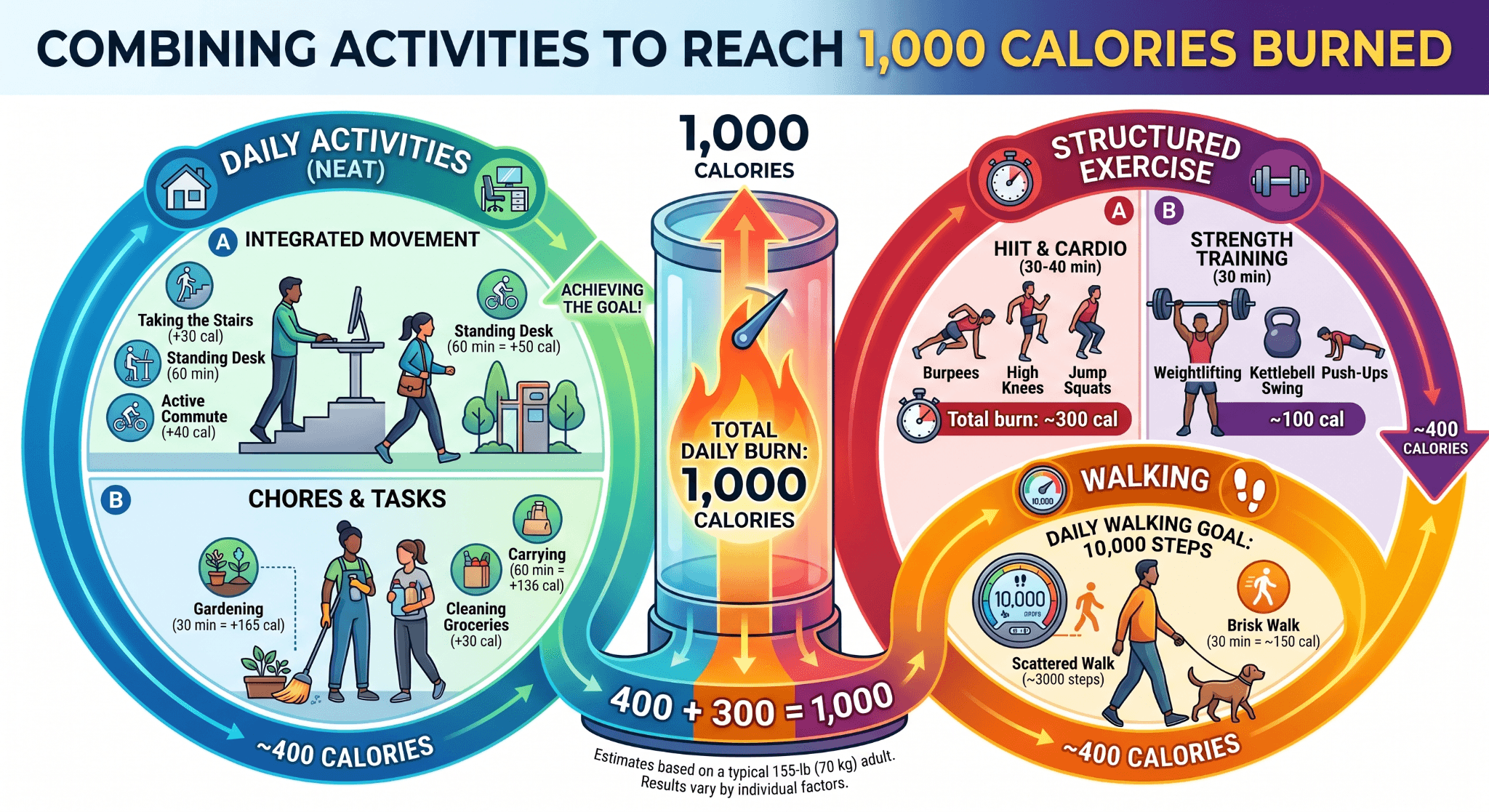
Burning 1,000 calories a day is possible, but not in the way most people think.
Many people imagine a brutal two-hour workout that leaves them exhausted. In reality, the most sustainable way to burn 1,000 calories daily combines exercise, daily movement, and smart lifestyle habits.
I've worked with people who tried to "earn" their weight loss through endless cardio. Most burned out within weeks. The people who succeeded treated calorie burn like a savings account: they accumulated it throughout the day instead of trying to spend it all in one workout.
In this guide, I'll show you realistic ways to burn 1,000 calories per day, who should aim for it, and how to do it without sacrificing muscle or recovery.
Is burning 1,000 calories a day realistic?
Yes, but your body size, fitness level, and activity choices matter.
A 220-pound person burns significantly more calories during the same workout than a 140-pound person. That's why calorie burn estimates vary so much.
For most adults, burning 1,000 additional calories daily requires a combination of:
Structured exercise
Walking and daily movement
Household activities
Standing instead of sitting
Active hobbies
Trying to burn all 1,000 calories through exercise alone is usually unnecessary and difficult to sustain.
How many calories do common activities burn?
Here's what a 180-pound person can expect to burn approximately:
Activity | Calories Burned Per Hour |
Walking (3.5 mph) | 280-350 |
Hiking | 400-600 |
Running (6 mph) | 650-850 |
Cycling (moderate) | 500-700 |
Swimming | 500-700 |
Jump rope | 700-1,000 |
Basketball | 500-750 |
Soccer | 600-900 |
Strength training | 250-450 |
The exact number depends on your weight, intensity, age, and fitness level.
Combine activities instead of relying on one workout
The easiest way to burn 1,000 calories is to spread the work throughout the day.
A realistic example:
Morning
45-minute strength workout: 300 calories
Afternoon
10,000 steps: 400-500 calories
Evening
30-minute walk after dinner: 150 calories
Daily activities
Housework, stairs, errands, standing: 100-200 calories
Total: 950-1,150 calories burned
This approach is far easier than attempting a two-hour high-intensity workout every day.
Walk more to dramatically increase calorie burn
Walking is one of the most underrated fat-loss tools.
People often focus on intense workouts while ignoring the activity that can burn hundreds of calories with minimal recovery cost.
Walking benefits include:
Low injury risk
Easy recovery
Doesn't increase hunger as much as intense cardio
Can be done daily
Improves cardiovascular health
A person walking 15,000-20,000 steps daily may burn 600-1,000 calories depending on body weight and pace.
If you want to estimate your own calorie burn from walking, try the free Steps Calculator:
Use cardio strategically
Cardio can accelerate calorie burn, but more isn't always better.
Many people make the mistake of doing excessive cardio while neglecting strength training.
A better approach:
Moderate cardio
Examples:
Brisk walking
Cycling
Swimming
Hiking
Benefits:
Sustainable
Easier recovery
Lower injury risk
High-intensity cardio
Examples:
Running intervals
Rowing sprints
HIIT circuits
Benefits:
Burns calories quickly
Improves conditioning
Drawbacks:
Higher recovery demands
Greater fatigue
Increased injury risk if overused
For most people, a mix of both works best.
Don't ignore strength training
Burning calories is important, but preserving muscle is equally important.
Without resistance training, weight loss often includes muscle loss.
Strength training helps:
Maintain lean mass
Improve body composition
Increase resting metabolic rate
Improve strength and performance
While lifting weights may not burn as many calories as running, it creates long-term benefits that support fat loss.
A simple 45-60 minute strength session can burn 250-500 calories while protecting muscle.
Increase your NEAT
NEAT (Non-Exercise Activity Thermogenesis) is often the hidden factor behind successful fat loss.
NEAT includes:
Walking around the office
Taking stairs
Cleaning
Gardening
Standing
Carrying groceries
Playing with children
Some people naturally burn hundreds more calories per day through NEAT alone.
Simple ways to boost NEAT:
Walk during phone calls
Park farther away
Use stairs
Set movement reminders
Take 5-minute walking breaks every hour
These small habits add up surprisingly fast.
Should you burn 1,000 calories every day?
Not necessarily.
Whether burning 1,000 calories daily is appropriate depends on your:
Current fitness level
Recovery ability
Calorie intake
Weight-loss goals
Medical history
For many people, creating a moderate calorie deficit through diet plus activity is more sustainable than trying to maximize calorie burn.
For example:
Eat 300 fewer calories
Burn 500 calories through movement
This creates a similar effect to burning 800 calories through exercise alone, with much less effort.
Common mistakes when trying to burn 1,000 calories
Eating back all exercise calories
Fitness trackers often overestimate calorie burn.
If your watch says you burned 1,000 calories, the real number may be lower.
Doing too much cardio
Excessive cardio can increase fatigue and reduce consistency.
Ignoring recovery
Poor sleep and inadequate recovery reduce performance and make fat loss harder.
Neglecting protein
Higher protein intake helps preserve muscle while losing fat.
Chasing calorie burn over fitness
Focus on sustainable habits, not just the biggest number on your smartwatch.
How Zorest Macro can help
If your goal is fat loss, calorie burn is only half the equation.
Using Zorest Macro's AI Meal Logger, you can quickly track meals using photos, text, voice, barcodes, or food labels. This makes it easier to balance calorie intake with activity levels without manually calculating everything.
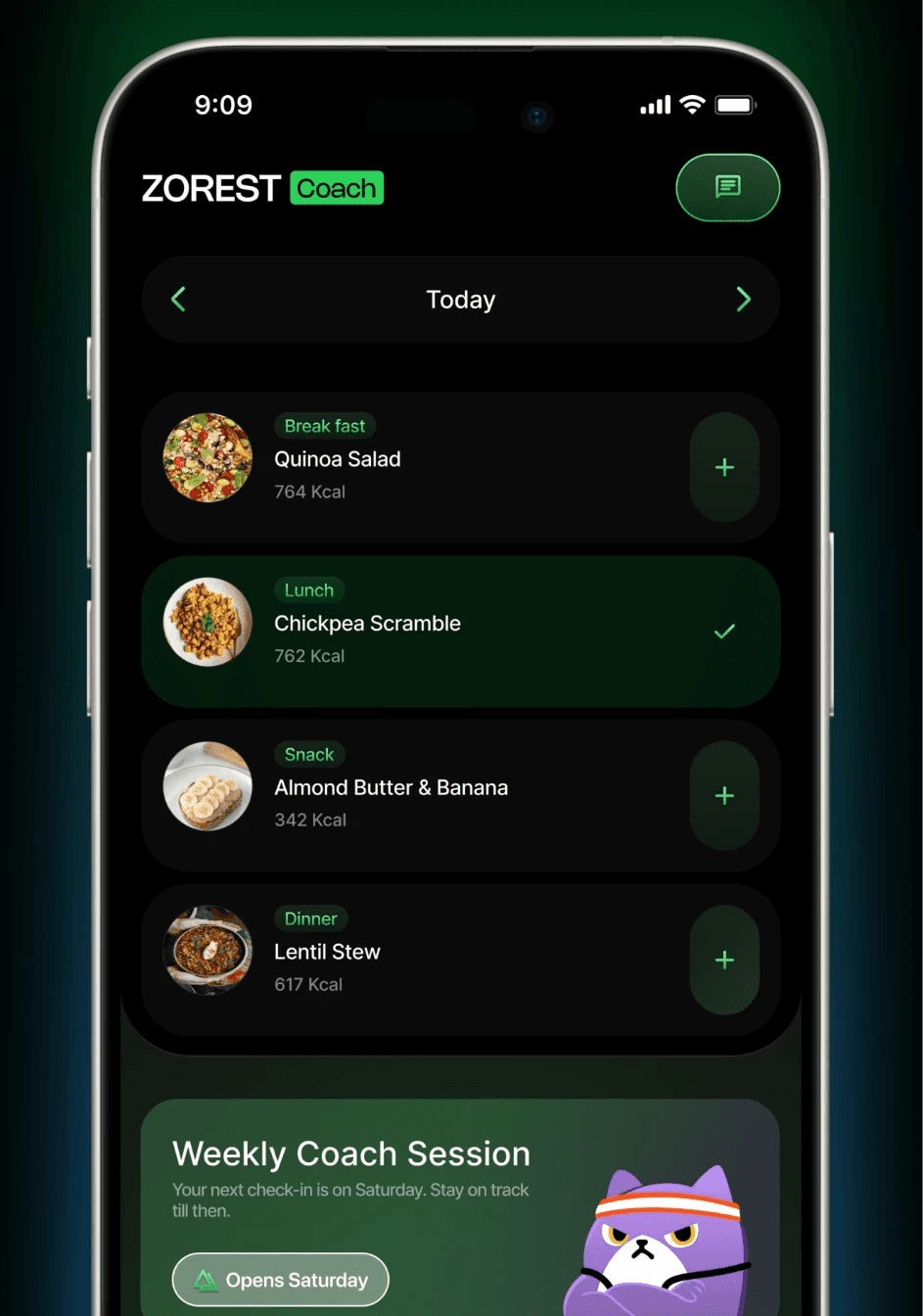
The Daily Meal Planner can also adjust recommendations based on your goals, helping you maintain the calorie deficit needed for weight loss while still eating enough protein to support recovery.
Final thoughts
Burning 1,000 calories a day is achievable, but the smartest approach is rarely an extreme workout.
The people who succeed combine strength training, walking, daily movement, and consistent nutrition habits. Rather than trying to destroy yourself in the gym, think about accumulating calorie burn throughout the day.
Start by increasing your steps, adding regular exercise, and tracking your nutrition consistently. Small actions repeated daily almost always outperform extreme efforts that last only a few weeks.