
MD Psychiatry Resident, MBBS
Share this story
My doctor once handed me a printed cholesterol report with three numbers circled in red and said, "your diet needs to change." That was helpful. What wasn't helpful was the vague advice that followed: eat less fat, eat more fruit. I left the clinic no clearer on why food was moving these numbers or which foods were actually the problem.
The science here is more nuanced than most people realize. Some fats raise cholesterol. Others improve it. Dietary cholesterol from food is far less villainous than we've been led to believe. And sugar — something nobody mentions at a cholesterol check-up — quietly wrecks your triglycerides while you're busy avoiding butter.
This post breaks down exactly what's happening and what to do about it.
What is cholesterol and why does it matter?
Cholesterol is a waxy, fat-like substance that your body needs to build cell membranes, produce hormones, and synthesize vitamin D. Your liver makes all the cholesterol you need (roughly 75% of your body's total). The remaining 25% comes from food.
When doctors talk about cholesterol, they're actually referring to three separate numbers:
LDL (low-density lipoprotein): Often labeled "bad" cholesterol. At high concentrations, LDL deposits into artery walls and contributes to plaque buildup and cardiovascular disease.
HDL (high-density lipoprotein): The "good" cholesterol. HDL picks up excess cholesterol from the bloodstream and transports it back to the liver for clearance. Higher is better.
Triglycerides: A type of blood fat. Elevated triglycerides combined with low HDL and high LDL form what's known as the atherogenic triad: the trio most strongly associated with heart attack risk.
Diet influences all three. But not all dietary choices move them in the same direction.
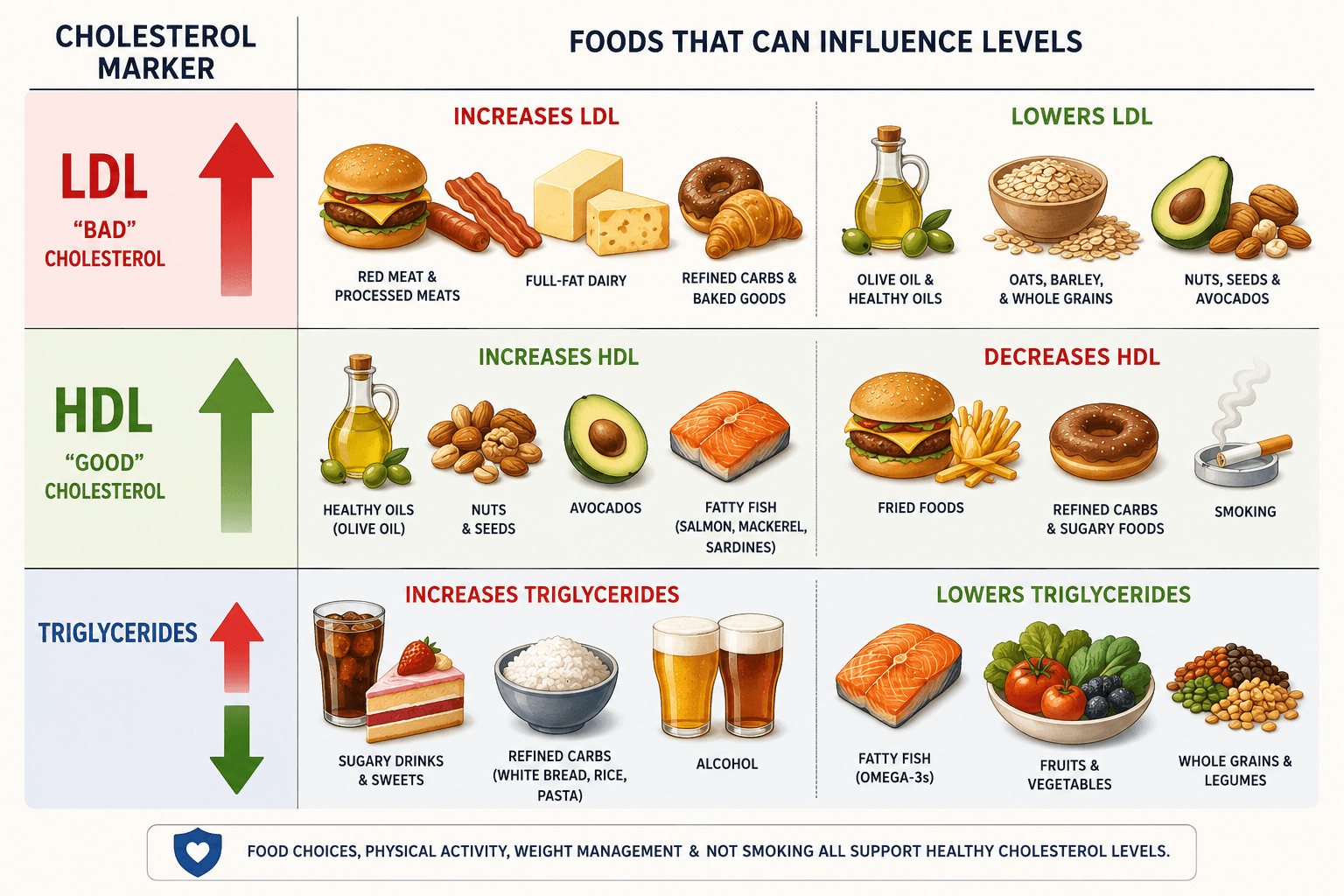
Saturated fat: the biggest dietary driver of LDL
The single most impactful thing you can eat for LDL is saturated fat. This is well established in the literature.
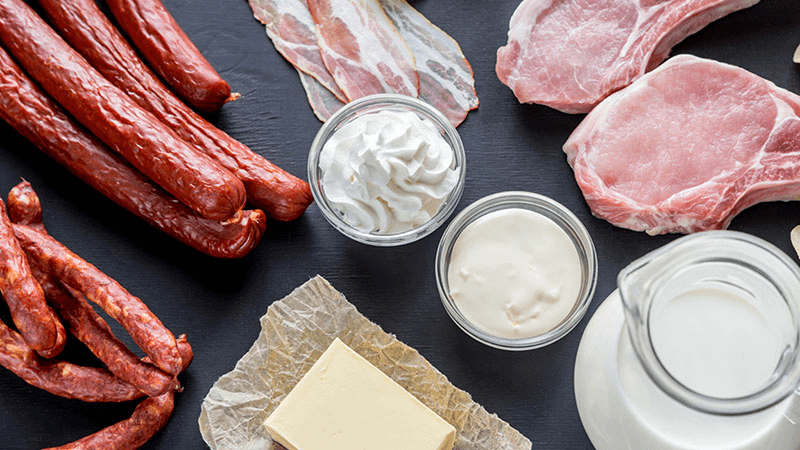
Saturated fat is found in butter, cheese, beef, lamb, pork, full-fat dairy, palm oil, and coconut oil. When you eat it, your liver reduces the number of LDL receptors it produces. Fewer receptors means less LDL gets cleared from the bloodstream. It accumulates. Saturated fat also increases LDL production directly.
A 2025 randomized crossover trial from the University of South Australia tested the independent effects of a high-saturated fat diet versus a high-dietary-cholesterol diet on LDL levels. Saturated fat came out as the significantly stronger driver of elevated LDL. Not eggs. Not dietary cholesterol.
This matters because people often blame the wrong thing. They switch from butter to olive oil while continuing to eat bacon, sausage, and processed cheese daily, then wonder why their LDL hasn't budged.
The practical target: most dietary guidelines recommend keeping saturated fat below 10% of total daily calories. For someone eating 2,000 calories, that's around 22 grams per day. A single fast food burger can hit 12–14g on its own.
Trans fats: a uniquely bad category
If saturated fat raises LDL, trans fat does that and lowers HDL simultaneously.
Research from the NEJM showed that replacing oleic acid in the diet with trans fatty acids increased LDL cholesterol and decreased HDL. That's a double hit on cardiovascular risk. Trans fats also appear to promote atherosclerosis through mechanisms beyond cholesterol alone, including disruption of sphingolipid metabolism, as 2024 research from the Salk Institute found.
Trans fats occur naturally in small amounts in meat and dairy, but the industrial version (created by partially hydrogenating vegetable oils) is the dangerous one. This is the form that dominated processed foods for decades. The FDA banned artificial trans fats in the US in 2018, but products manufactured before the ban may still be in circulation. The tell-tale sign on an ingredient label: "partially hydrogenated oil."
If you see those words anywhere in a packaged food, put it back.
Dietary cholesterol is less of a problem than you think
For decades, dietary guidelines capped daily cholesterol intake at 300 mg. The reasoning seemed logical: eating cholesterol raises blood cholesterol. But the relationship is far more complicated.
Your body compensates. When you eat more dietary cholesterol, your liver tends to reduce its own production. When you eat less, it compensates upward. This feedback loop means that for most people, dietary cholesterol from food sources has a relatively modest effect on LDL compared to saturated fat.
The 2015 Dietary Guidelines for Americans quietly dropped the 300mg daily ceiling, acknowledging the evidence no longer supported it. A subsequent analysis of the DIETFITS trial found that within a healthy diet context, changes in dietary cholesterol intake had minimal association with LDL changes over 12 months.
This is why eggs, long vilified for their cholesterol content, have been substantially rehabilitated by recent research. A large egg contains roughly 185mg of dietary cholesterol, but the saturated fat content is only about 1.6g. For most people with healthy metabolisms, eggs do not meaningfully raise LDL. The 2025 University of South Australia RCT mentioned above specifically confirmed this: a high-dietary-cholesterol (high-egg) diet drove significantly less LDL elevation than a high-saturated fat diet.
There are exceptions. A subset of people called hyper-responders show steeper LDL increases from dietary cholesterol. If you have a family history of high cholesterol or have been diagnosed with familial hypercholesterolemia, this applies to you more. But for the general population, eggs are not the enemy.
Sugar and refined carbs: the triglyceride problem
This is the part of the cholesterol conversation that gets systematically ignored.
Sugar and refined carbohydrates spike triglyceride levels: white bread, white rice, sweetened beverages, pastries, and instant oatmeal are the main offenders. The mechanism: your liver converts excess fructose into fatty acids, which are packaged into VLDL particles and released into the bloodstream, driving up triglycerides.
There's a secondary problem. Research from Harvard's nutrition department found that replacing saturated fat with refined carbohydrates lowers LDL cholesterol, but also lowers HDL cholesterol and raises triglycerides. The net cardiovascular effect is roughly as harmful as eating too much saturated fat in the first place.
This is the trap people fall into when they go "low fat." Removing fat from food means replacing it with something, and manufacturers typically use sugar or refined starch to preserve palatability. A "97% fat-free" yogurt can contain 20g of added sugar. A low-fat granola bar can have more refined carbohydrates than a bowl of actual rice.
The smarter move when cutting saturated fat is to replace it with unsaturated fats (olive oil, avocado, nuts, seeds) rather than carbohydrate. That swap consistently improves the full lipid profile.
Foods that actively lower LDL
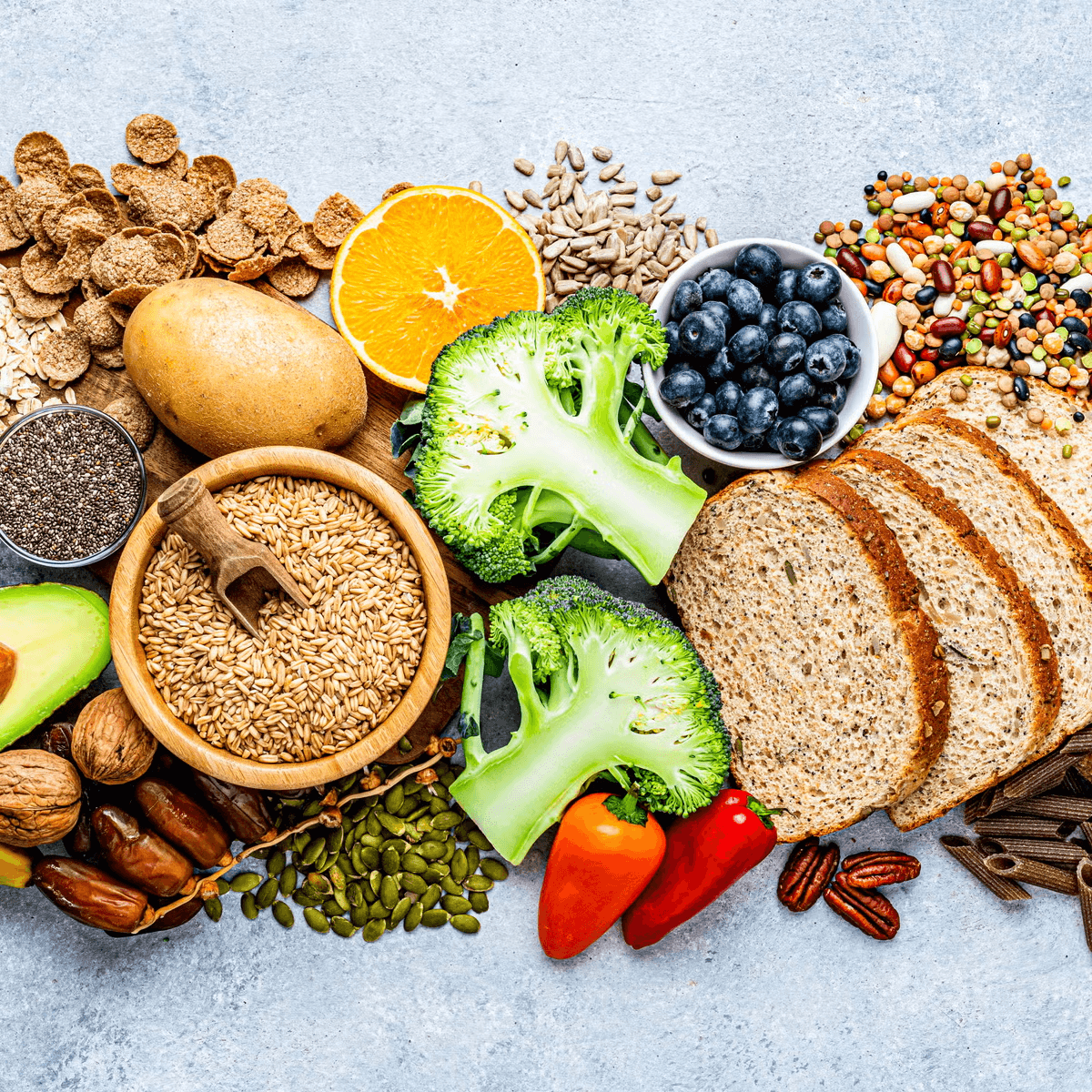
Certain foods don't just avoid harm — they actively pull LDL down. Three categories are particularly well-supported by evidence.
Soluble fiber
Soluble fiber forms a gel-like substance in the gut that binds to bile acids and promotes their excretion. Since bile acids are made from cholesterol, the liver draws more cholesterol from the bloodstream to replace them. LDL drops as a result.
A meta-analysis of 67 controlled trials found that 2–10g of soluble fiber per day produced small but statistically significant reductions in both total cholesterol and LDL. Oat beta-glucan is one of the most well-researched forms. Regulatory agencies in the US, Canada, and Europe all allow a health claim that 3g of oat beta-glucan daily can help reduce blood cholesterol. More recent evidence also suggests soluble fiber influences gut bacteria to suppress a key cholesterol transporter in the small intestine called NPC1L1, which is interestingly the same target as the cholesterol medication ezetimibe.
Good sources: oats, barley, legumes (lentils, chickpeas, black beans), apples, and psyllium husk.
If you want to understand more about how fiber affects your gut beyond cholesterol, we've covered that in our post on the gut-brain connection.
Omega-3 fatty acids
Omega-3s have a modest direct effect on LDL, but they significantly lower triglycerides and may raise HDL. The Mayo Clinic notes that omega-3 fatty acids don't directly affect LDL cholesterol levels but may help lower triglycerides and increase HDL. The American Heart Association recommends at least two servings of fatty fish per week on that basis.
Good sources: salmon, sardines, mackerel, walnuts, flaxseed, and chia seeds.
Plant sterols
Plant sterols and stanols are compounds found naturally in plants that structurally resemble cholesterol. They compete with dietary cholesterol for absorption in the gut, reducing how much enters the bloodstream. Adding 2g of plant sterols to your diet daily can lower LDL by 5–15% according to Mayo Clinic data.
Good sources: fortified margarine, some fortified orange juices, and naturally in nuts, seeds, and legumes.
The overall dietary pattern that works
Single foods don't rescue a bad diet. What matters more than any individual food choice is the overall dietary pattern.
The Mediterranean diet, built around vegetables, legumes, whole grains, olive oil, nuts, and moderate fish, consistently reduces LDL and triglycerides while maintaining or improving HDL. Multiple large trials including PREDIMED have shown significant reductions in cardiovascular events in people following this pattern, regardless of whether they were also on medication.
Practically, what does that look like on a plate?
Replace butter with olive oil when cooking
Swap red meat for fish, legumes, or poultry most days of the week
Choose whole grains over refined versions at every meal
Eat a handful of nuts daily: walnuts, almonds, or pistachios
Eat two or more servings of fatty fish per week
Add legumes (lentils, chickpeas) to at least three to four meals per week
Limit processed snacks, pastries, and sugary drinks
This pattern doesn't require you to count every gram of saturated fat. It's built on food swaps and baseline habits that, if maintained over weeks and months, produce measurable changes in your lipid profile.
I've seen this work in practice. When I started eating sardines instead of deli meat for lunch and swapped white rice for lentils two nights a week, my next blood panel showed a 14-point drop in LDL over three months with no other changes. Consistent small swaps compound.
Final thoughts
The cholesterol-diet relationship is more specific than "eat less fat." The culprits are saturated fat, trans fat, and excess refined carbohydrates. Dietary cholesterol from whole food sources like eggs is largely secondary. And several foods (oats, legumes, fatty fish, nuts) don't just avoid harm, they actively pull LDL down.
You don't need a perfect diet. You need a better default diet. Most of the changes above are low-effort substitutions, not deprivations.
Got questions? Ping me on LinkedIn.