
MD Psychiatry Resident, MBBS
Share this story
TL;DR
BMI (Body Mass Index) is a quick screening tool that estimates whether your weight is appropriate for your height. It helps identify potential health risks linked to being underweight, overweight, or obese. But BMI is not a perfect health score. It doesn’t measure muscle mass, body fat percentage, or metabolic health.
The smartest way to use BMI is as a starting point, not a final verdict.
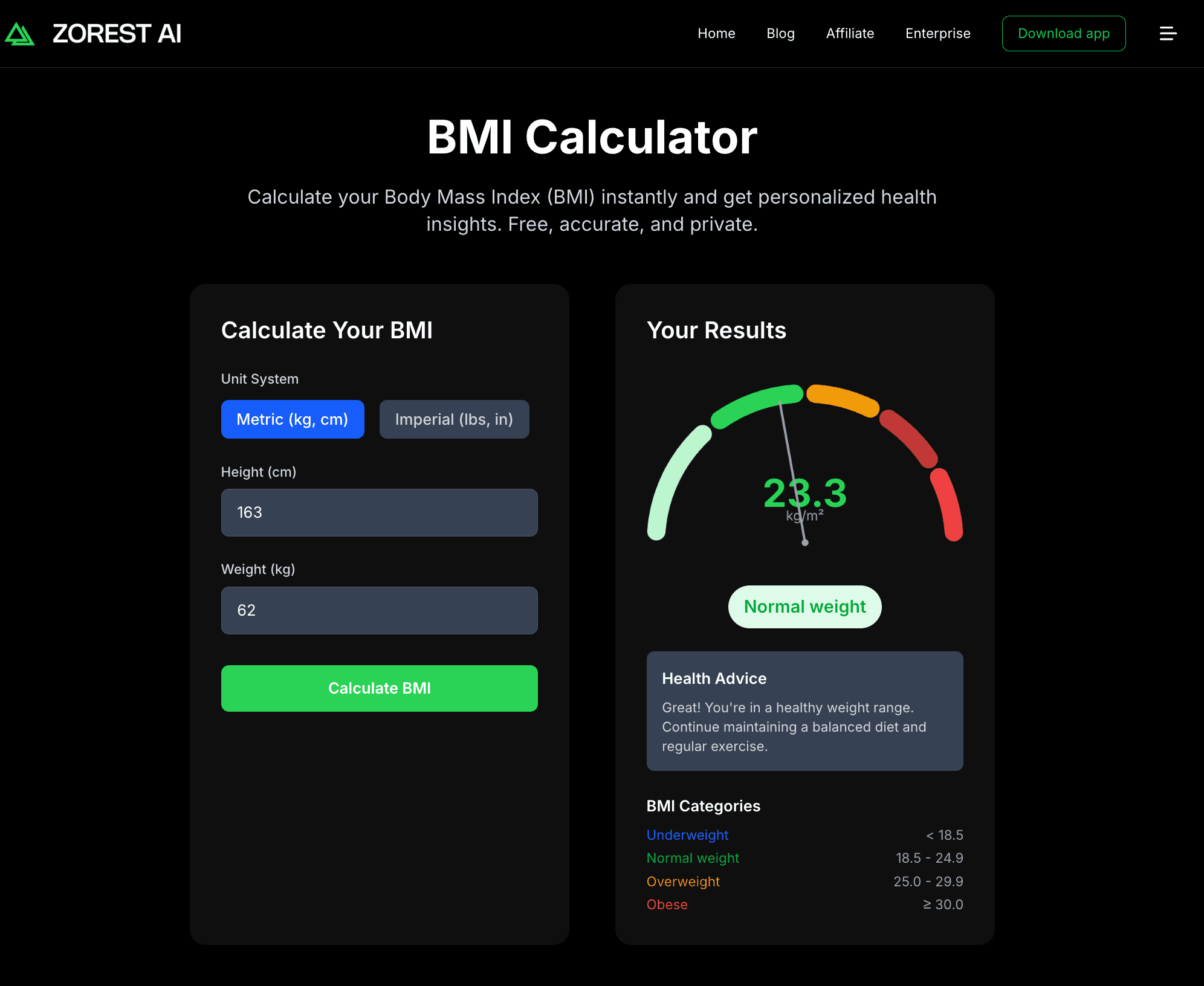
You can calculate your BMI instantly using Zorest’s free BMI calculator:
Free BMI Calculator by Zorest Tools
If you want to improve your BMI sustainably, Zorest Macro helps you track meals, plan nutrition, monitor hydration, and build habits that actually last.
BMI explained
Most people encounter BMI for the first time during a doctor’s appointment, a fitness challenge, or while Googling (or maybe now asking ChatGPT) “Am I overweight?”
Then comes the confusion.
One says BMI is outdated. Another says it predicts disease risk. Some athletes are labeled “obese” despite having visible abs. Meanwhile, many people with “normal” BMI still struggle with poor health markers.
So what’s the truth?
BMI is useful, but only if you understand what it can and cannot do.
Used correctly, BMI gives you a fast snapshot of weight-related health risk. Used blindly, it can oversimplify your health journey.
What is BMI?
Body Mass Index (BMI) is a mathematical formula that estimates whether your body weight falls within a healthy range for your height.
The formula is:
BMI = \{weight (kg)}{height (m)^2}
For example:
A person weighing 70 kg with a height of 1.75 m would have a BMI of approximately 22.9.
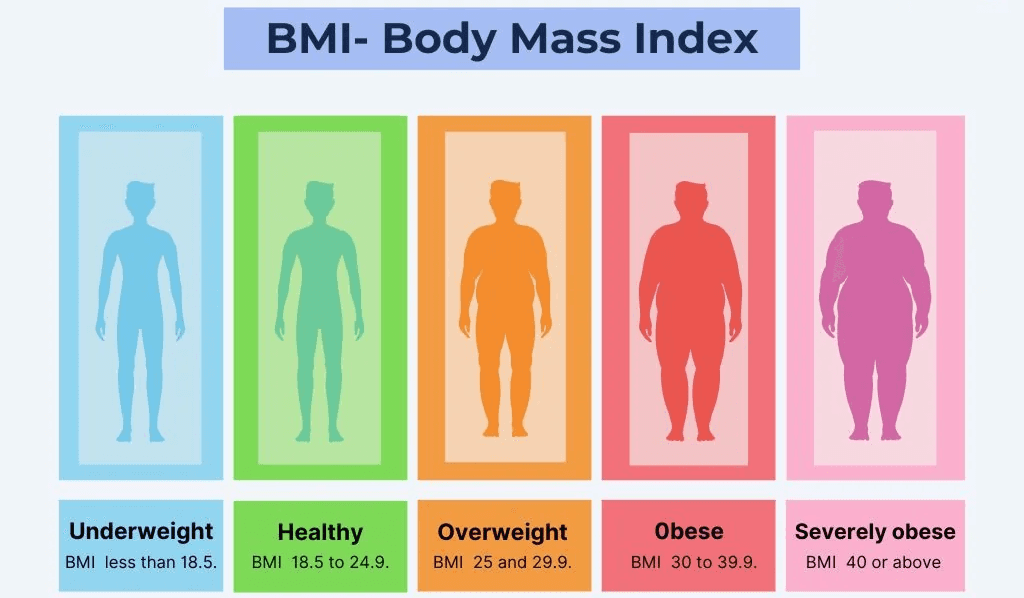
BMI categories are generally classified as:
BMI Range | Classification |
Below 18.5 | Underweight |
18.5–24.9 | Normal weight |
25–29.9 | Overweight |
30+ | Obesity |
The concept was developed in the 1830s by Belgian mathematician Adolphe Quetelet. Surprisingly, it was never originally designed as an individual health diagnostic tool. It was intended to analyze populations.
Yet nearly two centuries later, BMI remains one of the most widely used health screening tools globally.
Why?
Because it’s fast, cheap, and surprisingly useful at scale.
Why BMI still matters
BMI survives because it correlates reasonably well with long-term disease risk in large populations.
Research consistently shows higher BMI levels are associated with increased risk of:
Type 2 diabetes
High blood pressure
Cardiovascular disease
Sleep apnea
Fatty liver disease
Certain cancers
According to the CDC, obesity-related conditions contribute to hundreds of thousands of preventable deaths annually in the United States.
BMI helps healthcare systems identify trends quickly. That matters.
If a country notices obesity rates climbing rapidly, policymakers can intervene earlier through public health programs, food policy, and preventive care.
On an individual level, BMI can also act like an early warning light on your car dashboard.
Not a diagnosis. Not the whole engine report. But definitely something worth checking.
Where does BMI fail?
Here’s the problem most people never hear:
BMI does not distinguish between muscle and fat.
A muscular athlete and a sedentary office worker could technically have the same BMI while having completely different health profiles.
For example:
A bodybuilder with high muscle mass may fall into the “overweight” category.
Someone with low muscle and high visceral fat may appear “normal” by BMI standards.
This is why many experts criticize BMI when used alone.
BMI also ignores:
Fat distribution
Waist circumference
Ethnicity differences
Age-related body composition changes
Fitness levels
Metabolic markers
I learned this firsthand years ago while helping a friend prepare for a fitness photoshoot. His BMI technically classified him as overweight. But his body fat percentage was under 12%.
Meanwhile, another friend had a “healthy BMI” yet struggled with high triglycerides, insulin resistance, and chronic fatigue.
Same BMI story.
Very different health realities.
That’s why context matters.
Why body fat distribution matters more than most people realize
Not all body fat behaves the same way.
Visceral fat the fat stored around your organs is far more dangerous than subcutaneous fat stored under the skin.
High visceral fat is strongly linked to:
Insulin resistance
Heart disease
Chronic inflammation
This explains why waist circumference often predicts health risk better than BMI alone.
Many doctors now recommend combining BMI with:
Waist measurements
Blood pressure
Blood sugar
Lipid panels
Activity levels
How to use BMI correctly?
BMI works best when you use it as a directional tool, not an identity.
A healthy approach looks like this:
Calculate your BMI
Observe trends over time
Pair it with other health markers
Focus on sustainable habits instead of chasing a number
You can calculate your BMI instantly here:
Zorest Free BMI Calculator
What I like about using BMI this way is that it removes emotional drama from the process.
The biggest mistake people make after checking BMI
Most people immediately try to lose weight as fast as possible. That usually backfires.
Extreme dieting often leads to:
Muscle loss
Hunger spikes
Energy crashes
Rebound weight gain
A smarter strategy is improving body composition gradually.
That means:
Preserving muscle
Reducing excess fat
Improving recovery
Building consistent eating habits
This is where tracking becomes useful. Not obsessive tracking. Useful tracking.
Final thoughts
BMI remains one of the simplest tools for identifying weight-related health risk. It’s imperfect, but still useful when interpreted correctly.
Use BMI as:
A screening tool
A trend tracker
A conversation starter with your healthcare provider
Not as a source of shame.
And if you want a practical way to improve your nutrition habits without turning food into a math exam, tools like Zorest Macro can make the process dramatically easier.
Start by checking your BMI here:
Zorest BMI Calculator
Then focus on the habits behind the number.
Because sustainable health changes rarely happen through motivation alone. They happen through systems you can actually maintain.