طبيبة مقيمة في الطب النفسي، MD، MBBS
شارك هذه القصة
You finally cleaned up your diet. No more processed junk, no more skipping vegetables, no more white bread. You made the switch to whole grains, loaded up on broccoli, swapped chips for almonds, and started eating lentils like a responsible adult.
And then your stomach staged a full revolt.
Bloating. Cramping. Gas bad enough to clear a room. It's demoralizing, especially when you're doing everything you're supposed to do. Here's the good news: this isn't your body rejecting health food. It's your gut adjusting to it. The two things look identical from the outside, but they lead to completely different outcomes. Here's how to tell them apart, what's causing it, and how to make the transition a lot less miserable.
Your gut bacteria weren't ready for the upgrade
The most important thing to understand is that your gut microbiome, the trillions of bacteria living in your digestive tract, has been shaped by what you've eaten for years, maybe decades.
If your previous diet was high in refined carbs and low in fiber, your microbiome built itself around that. Researchers have found that the bacteria living in people's guts can shift dramatically within three to four days of a significant change in diet, which sounds great in theory, but that fast-shifting has a catch. The bacteria that currently dominate your gut are specifically adapted to your old diet. When you suddenly introduce a flood of fiber, cruciferous vegetables, legumes, and fermented foods, those bacteria scramble. Some die off. New species multiply. Others ferment whatever you just ate and produce gas as a byproduct.
Beneficial shifts can also revert within two days of stopping a new dietary pattern, which is part of why consistency matters so much, and also why the adjustment phase feels unstable. You're not running a steady system; you're running one in active transition.
The short version: your gut is not broken. It's restructuring. The discomfort is largely proof that something is actually changing.
Too much fiber, too fast
This is the most common cause of stomach issues when people start eating healthier, and it's almost entirely about pace.
Fiber is essential. It helps regulate bowel movements and feeds beneficial gut bacteria. Soluble fiber, found in oats, apples, and beans, slows digestion and keeps you full, while insoluble fiber adds bulk and helps prevent constipation. Every piece of dietary guidance you've ever read is correct on this front. But "correct" and "comfortable immediately" are two different things.
A typical U.S. diet includes about 15 grams of fiber per day, far less than the daily recommended allowance. The recommended daily intake sits at around 25–38 grams. If someone jumps from 15 to 35 grams of fiber overnight, their digestive system doesn't have the bacterial infrastructure to handle it yet. High-fiber diets can induce compositional changes in the gut microbiome, including increases in fiber-degrading bacteria like Bifidobacterium and Lactobacillus, but building those populations takes a few weeks.
Until then, undigested fiber reaches the large intestine mostly intact. The bacteria already living there ferment it the only way they know how: by producing gas. Lots of it. Gas production in response to high-fiber foods is completely normal, and many people become gassy after eating fermentable fibers, especially if they're not accustomed to eating a lot of fiber. Normal doesn't mean pleasant, but it does mean temporary.
The fix: Increase fiber by about 5 grams per week rather than overhauling everything at once. And critically, increase water intake simultaneously. Fiber without adequate hydration can lead to the opposite problem: constipation. Fiber needs water to move efficiently through the digestive tract.
The cruciferous vegetable problem
Broccoli, cauliflower, Brussels sprouts, cabbage, kale: these are the foods that show up in every "eat healthier" guide. They're also among the most common causes of bloating and gas in people who've recently changed their diet.
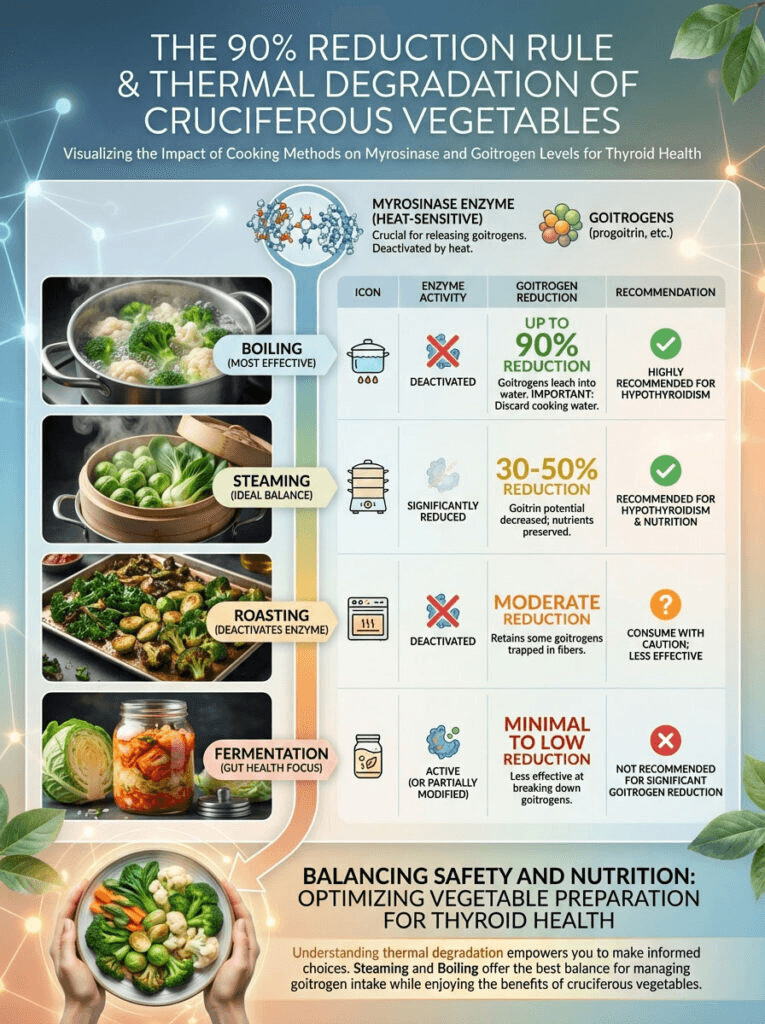
The culprit is a compound called raffinose. Humans lack the enzyme needed to digest raffinose in the small intestine, so it passes through undigested. When it reaches the large intestine, gut bacteria ferment it, producing gas and bloating as a result. Cruciferous vegetables also contain glucosinolates, sulfur-containing compounds that are responsible for their cancer-protective properties but also produce hydrogen sulfide gas during bacterial fermentation. That's the notoriously unpleasant smell that comes with them.
For people with IBS or visceral hypersensitivity, the extra gas produced by cruciferous vegetables is enough to cause painful bloating and significant discomfort. Not because these vegetables are bad, but because the gut's pain signals are amplified.
The mistake most people make is eating these raw. Cooking cruciferous vegetables (steaming, roasting, or boiling until tender) breaks down the fiber structure and reduces the amount of raffinose that reaches the colon intact. Cooking reduces the amount of undigested material reaching the large intestine, decreasing bacterial fermentation and gas production. Raw kale salads might photograph beautifully, but if you're in a gut-adjustment phase, steamed broccoli is your friend.
If you have IBS, it's worth reading our deep dive on specific foods to navigate carefully, where several cruciferous staples appear for related reasons.
Beans, lentils, and the oligosaccharide issue
Beans and lentils are excellent protein and fiber sources. They're also among the top gas-producing foods on the planet. This isn't a paradox — it's chemistry.
Beans are rich in oligosaccharides, complex sugars like raffinose and stachyose, which humans lack the enzyme to digest. These sugars reach the colon undigested and are fermented by bacteria, producing gas as a byproduct. Lentils, chickpeas, and black beans are common culprits. Lentils also carry their own FODMAP load, particularly green and brown varieties. If you've switched to a plant-based or Mediterranean-style diet and suddenly find you're uncomfortable after every meal, lentils and beans are the first place to look.
There's a practical fix that most recipes skip: soaking. Soaking dried beans overnight and discarding the soaking water removes a significant portion of the oligosaccharides before you ever cook them. Canned beans, rinsed thoroughly, are lower in gas-producing sugars than dried beans cooked without soaking. Red lentils, if you're building up tolerance, are lower in FODMAPs than their green and brown counterparts.
The goal isn't to eliminate legumes. They're nutritionally too valuable to cut permanently. The goal is to introduce them gradually, in smaller portions, while your gut microbiome builds the bacterial populations that handle them more efficiently over time.
Fermented foods can also cause early discomfort
Yogurt, kefir, kimchi, sauerkraut: fermented foods are widely promoted as gut-health staples, and the evidence supports this at the population level. But for some people, especially those introducing them for the first time, the probiotics in fermented foods can cause a temporary increase in bloating and gas.
This happens because introducing new bacterial strains disrupts the current microbial balance before equilibrium is reached. The gut microbiome might need time to balance out during the transition to a diet rich in fermented foods. The response isn't allergic or intolerant. It's competitive. New bacteria are establishing themselves, and the adjustment can produce some of the same symptoms you'd associate with eating "the wrong things."
If this happens, the approach is the same as with fiber: go slower. Start with a tablespoon of sauerkraut a day rather than a full serving of kimchi alongside kefir alongside yogurt on the same afternoon. The variety can come later once your microbiome has adjusted to each addition.
Hidden FODMAPs in foods you'd never suspect
FODMAPs — Fermentable Oligosaccharides, Disaccharides, Monosaccharides, and Polyols — are a category of carbohydrates that ferment rapidly in the gut. They're not harmful for most people, but in individuals with IBS or functional gut disorders, they're a reliable trigger for bloating, cramping, and diarrhea.
What surprises people is that many high-FODMAP foods are foods usually labeled "healthy." Garlic, onions, apples, pears, watermelon, honey, wheat, barley, cashews, and pistachios all carry meaningful FODMAP loads. Some fruits like apples, pears, and watermelon are high in fructose and fiber, which can cause bloating, especially in people with fructose intolerance. Quinoa, often positioned as a clean-eating staple, contains saponins that can irritate the gut lining in sensitive individuals.
The FODMAP framework is most clinically relevant for people with diagnosed IBS, but it's a useful framework for anyone whose gut reacts badly to foods they can't explain. If you've cleaned up your diet and feel worse, not better, running a rough mental audit against high-FODMAP foods is a practical first diagnostic step. Our guide on the SIBO diet covers the overlap between FODMAP restriction and bacterial overgrowth, which is worth reading if your symptoms are severe rather than just transitional.
When this isn't just a transition phase
Most healthy-diet-related stomach issues resolve within two to four weeks as the gut microbiome adjusts. If they don't, it's worth asking a different question.
Persistent bloating after meals, chronic pain, alternating constipation and diarrhea, or symptoms that worsen consistently with a specific food group may indicate a true intolerance, an underlying gut disorder like IBS or SIBO, or, less commonly, a genuine food allergy. Almost half of all food allergies start after age 18, so it's not safe to assume that a food you've always tolerated will always be fine. Nut flours, dairy alternatives, and legume-based pastas, all common components of healthier diets, are potential allergen vehicles for adults who've never had issues before.
The gut-brain axis also plays a role that often gets overlooked here. Stress, anxiety, and emotional disruption affect gut motility and visceral sensitivity, which means that the period when you're making significant lifestyle changes, often a stressful one, is exactly when your gut is most reactive. If you want to understand the mechanism behind that, the gut-brain connection goes deeper than most people realize.
How to make the transition actually work
The most effective approach is phased rather than wholesale.
Week 1: Add one new high-fiber food per day rather than restructuring your entire plate. Pick the single highest-value addition, for example replacing white rice with brown rice, and hold everything else steady.
Week 2: Add a serving of legumes, starting with the lowest-FODMAP option (red lentils or canned chickpeas, rinsed well). Monitor how your gut responds before adding more.
Week 3: Introduce cruciferous vegetables in cooked form first. Give your body two weeks with cooked versions before experimenting with raw salads.
Ongoing: Increase water intake proportionally to fiber increases. A rough guide: add around 250ml of water per additional 5 grams of fiber per day.
If you're still experiencing discomfort at week four or beyond, a food and symptom diary is useful not as a long-term tracking burden but as a two-week diagnostic tool. Patterns emerge quickly when you write them down.
Final thoughts
A stomach that hurts after you start eating better is counterintuitive and, frankly, unfair. In most cases, though, the healthier diet isn't the problem. Your gut just has a lot of catching up to do, and catching up takes time it was never given.
The research is consistent here: gut microbiome composition is surprisingly responsive to dietary change, and shifts begin within three to four days. The bacteria don't take weeks to start moving; they just need a few weeks to settle. The discomfort is loudest at the start and diminishes steadily as your microbiome diversifies to match your new eating pattern.
Go slower than feels necessary, drink more water than you think you need, and cook your cruciferous vegetables. By week three or four, most of the noise quiets down. And then you get to keep all the benefits.
Got questions? Ping me on LinkedIn.