
MD Psychiatry Resident, MBBS
Share this story
How to Do a Decline Bench Press
The flat bench press gets most of the attention. But if your goal is to build a stronger, fuller chest—especially the lower portion of the pectorals—the decline bench press deserves a spot in your routine.
Many lifters avoid the decline bench because it looks awkward or intimidating. Others simply don't know how to set it up correctly. The result? Missed muscle-building potential.
In this guide, I'll show you exactly how to do a decline bench press, which muscles it works, common mistakes to avoid, and how it compares to popular variations like the close grip bench press.

What is a decline bench press?
A decline bench press is a chest exercise performed on a bench angled downward, typically between 15 and 30 degrees.
Because your torso is positioned below your hips, the pressing angle shifts more emphasis toward the lower fibers of the chest while still recruiting the shoulders and triceps.
Many lifters find they can lift slightly heavier weights on the decline bench compared to the incline bench because the shoulder joint is placed in a more favorable position.
Muscles worked during the decline bench press
The decline bench press primarily targets:
Lower pectoralis major (lower chest)
Triceps brachii
Anterior deltoids (front shoulders)
Secondary muscles include:
Serratus anterior
Core stabilizers
Forearm muscles for grip
Think of the decline bench press as a chest-focused movement that shifts some stress away from the shoulders and onto the chest and triceps.
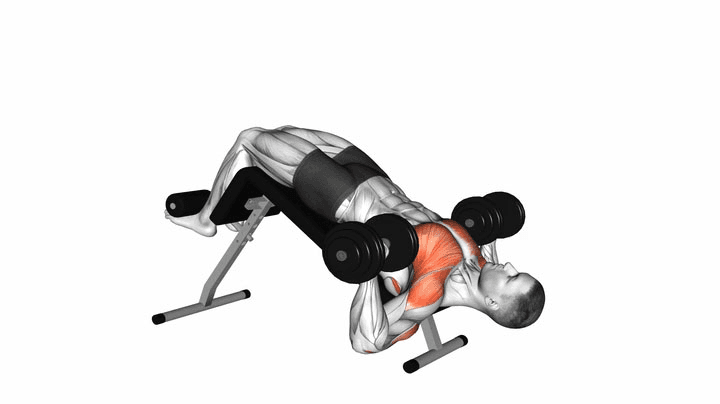
Benefits of the decline bench press
Better lower chest development
The decline angle places the line of force directly through the lower chest fibers.
If you've ever felt your upper chest or shoulders take over during flat bench pressing, decline pressing can help improve overall chest balance.
Reduced shoulder strain
One reason many experienced lifters like the decline bench press is that it often feels easier on the shoulders.
Because the arms move through a slightly different path, the shoulder joint experiences less stress compared to steep incline pressing.
Potentially stronger pressing performance
Many athletes can handle heavier loads on the decline bench than on the incline bench.
This makes it useful for developing pressing strength while accumulating more training volume.
Useful variation for breaking plateaus
If your flat bench progress has stalled, introducing decline presses can provide a new training stimulus and help build strength through different angles.
How to do a decline bench press correctly
Proper setup matters more than most people realize.
Follow these steps carefully.
Step 1: Set the bench angle
Adjust the bench to a decline of approximately 15–30 degrees.
A steeper angle isn't necessarily better and may become uncomfortable.
Step 2: Secure your legs
Place your feet under the bench pads.
Your legs should be locked in securely before lifting the bar.
This prevents your body from sliding down during the exercise.
Step 3: Position your body
Lie back with:
Eyes directly under the bar
Shoulder blades pulled together
Chest lifted
Lower back maintaining a natural arch
Keep your head flat against the bench.
Step 4: Grip the bar
Place your hands slightly wider than shoulder width.
Your wrists should remain straight and stacked above your forearms.
Step 5: Unrack the bar
Lift the bar out of the rack while keeping your shoulders tight.
Move the bar directly above your chest.
Step 6: Lower under control
Lower the bar toward the lower chest or upper abdominal area.
Keep elbows approximately 45–75 degrees from your torso.
Avoid flaring them excessively.
Step 7: Press upward
Drive the bar back to the starting position.
Push through your chest and triceps while maintaining upper-body tightness.
Step 8: Repeat
Perform the desired number of repetitions while maintaining control throughout the set.
[Image: Step-by-step decline bench press setup and execution]
Common decline bench press mistakes
Bouncing the bar off the chest
Using momentum reduces muscle engagement and increases injury risk.
Touch the chest lightly and press smoothly.
Letting elbows flare outward
Extreme elbow flare places unnecessary stress on the shoulders.
Maintain a controlled elbow position.
Using too much weight
Many lifters load the bar excessively because they feel stronger on decline presses.
Prioritize technique before chasing heavier numbers.
Lifting hips off the bench
Your glutes and upper back should remain in contact with the bench throughout the movement.
Skipping a spotter
Getting trapped under a bar on a decline bench is more difficult than on a flat bench.
Whenever possible, use a spotter.
Decline bench press vs flat bench press
Both exercises build chest strength and size, but they emphasize muscles slightly differently.
Feature | Decline Bench Press | Flat Bench Press |
Main Focus | Lower chest | Overall chest |
Shoulder Stress | Lower | Moderate |
Weight Potential | Often higher | Standard |
Athletic Transfer | Moderate | High |
Beginner Friendly | Moderate | High |
For most people, flat bench pressing should remain the foundation of chest training.
The decline bench works best as a complementary exercise.
How to do close grip bench press
Many people searching for decline bench information also want to learn how to do close grip bench press movements.
The close grip bench press is a variation where your hands are positioned closer together on the bar.
This setup shifts more work onto the triceps.
Step-by-step close grip bench press
Lie on a flat bench.
Place hands approximately shoulder-width apart.
Unrack the bar.
Lower it toward the lower chest.
Keep elbows tucked closer to the body.
Press the bar back to lockout.
The movement should feel controlled and smooth throughout.
Close grip bench press muscles worked
The primary muscles worked during a close grip bench press are:
Triceps brachii
Pectoralis major
Anterior deltoids
Compared with a traditional bench press, the triceps contribute significantly more.
This makes the exercise popular among powerlifters looking to improve lockout strength.
Close grip bench press dumbbell variation
A close grip bench press dumbbell variation offers several unique benefits.
Instead of holding a barbell, hold two dumbbells close together while pressing.
Benefits include:
Greater range of motion
Improved shoulder comfort
Better muscle symmetry
Increased stabilization demands
To perform it:
Lie on a flat bench.
Hold dumbbells with palms facing each other.
Keep the weights close together.
Lower slowly.
Press back up while maintaining control.
Many lifters with shoulder discomfort find dumbbells more comfortable than barbells.
How often should you do decline bench press?
For most lifters, training the decline bench press 1–2 times per week is sufficient.
General recommendations:
Beginners: 2–3 sets
Intermediate lifters: 3–4 sets
Advanced lifters: 4–5 sets
A rep range of 6–12 repetitions works well for muscle growth.
For strength development, use heavier weights in the 3–6 rep range.
Who should use decline bench press?
The decline bench press is particularly useful for:
Bodybuilders seeking complete chest development
Lifters with shoulder discomfort during incline pressing
Athletes looking to add variety to pressing movements
Intermediate and advanced trainees
However, beginners can make excellent progress with flat bench pressing before adding specialized variations.
Final thoughts
The decline bench press is one of the most underrated chest exercises in the gym. It effectively targets the lower chest, places less stress on the shoulders, and can help build pressing strength.
Focus on proper setup, controlled repetitions, and gradual progression. Combine it with flat bench presses, incline presses, and triceps-focused movements like the close grip bench press for complete upper-body development.
Whether your goal is strength, muscle growth, or improved chest symmetry, the decline bench press is a valuable tool worth mastering.
Got questions? Ping me on Linkedin.