

طبيبة مقيمة في الطب النفسي، MD، MBBS
شارك هذه القصة
You eat your protein. You lift your weights. But nothing seems to change. The frustration is real — and the missing piece is usually not effort, it's understanding. Protein synthesis is the biological engine behind every gram of muscle you've ever built. Once you understand how it works, you can stop guessing and start doing things that actually move the needle.
What protein synthesis actually is
Protein synthesis is the process by which your body builds new proteins from amino acids.
Every structural and functional protein in your body — from muscle fibers to enzymes to hormones — is produced this way. The process involves two linked steps: transcription (copying genetic instructions from DNA into messenger RNA) and translation (ribosomes reading that mRNA and assembling amino acids into a protein chain). Think of it like a construction crew reading blueprints and assembling a building from raw materials.
For most readers here, the relevant version is a specific type: muscle protein synthesis (MPS) — the process by which your body repairs and rebuilds skeletal muscle tissue, primarily in response to exercise and dietary protein.
Why MPS is the number that actually matters
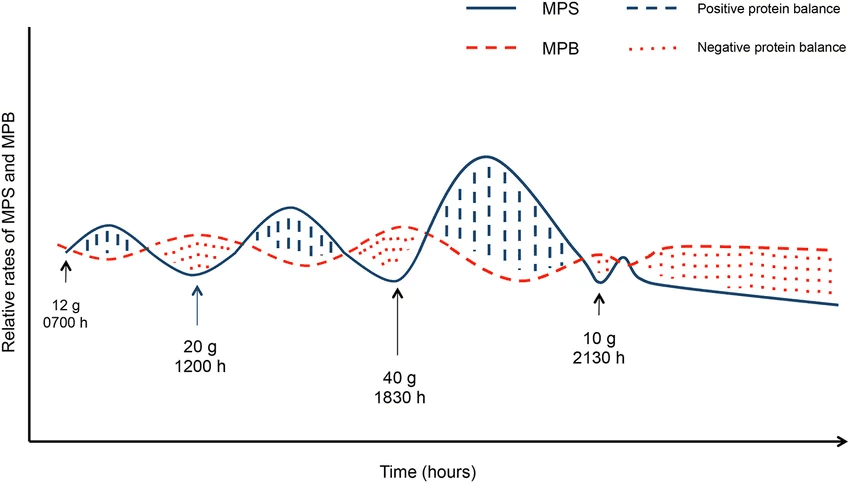
Your muscle tissue is constantly turning over. Old proteins break down through a process called muscle protein breakdown (MPB), and new ones are assembled to replace them. The net result — muscle gain, maintenance, or loss — is simply the balance between the two.
The goal for anyone trying to build or preserve muscle is to keep MPS consistently higher than MPB. Research published in the Journal of Physiology confirms that both resistance exercise and dietary protein independently stimulate MPS, and the combination produces a significantly larger effect than either alone. [Source: https://www.ncbi.nlm.nih.gov/pmc/articles/PMC2764181/]
What triggers muscle protein synthesis
Two things reliably elevate MPS above baseline.
Resistance training
When you lift weights, you create mechanical stress that damages muscle fibers at a microscopic level. This triggers a repair signal that activates MPS — which, over repeated training sessions, results in stronger and larger muscle tissue.
The elevated MPS response from a single session lasts approximately 24–48 hours post-exercise. [Source: https://pubmed.ncbi.nlm.nih.gov/22289536/] That window is useful for planning training frequency: full-body sessions every 48 hours, for example, catches each muscle group right when it's most primed for protein-driven rebuilding.
Dietary protein (specifically essential amino acids)
Amino acids aren't just raw material — they're also the signal itself. When essential amino acids (EAAs) enter the bloodstream, they activate a key regulatory pathway called mTORC1, which acts like an "on" switch for the protein synthesis machinery. [Source: https://pubmed.ncbi.nlm.nih.gov/16365087/]
Among the EAAs, leucine is the primary trigger. Research suggests a minimum of 2–3 g of leucine per meal is needed to maximally stimulate MPS in healthy adults. [Source: https://pubmed.ncbi.nlm.nih.gov/22293524/] That roughly corresponds to 30–40 g of high-quality protein from sources like chicken breast, eggs, or Greek yogurt.
Why protein quality changes the equation
Not all protein sources stimulate MPS equally — and this is where the nuance actually matters in practice.
Animal proteins (chicken, beef, dairy, eggs, fish) tend to be richer in leucine and are absorbed more rapidly, which makes them more effective per gram at triggering the MPS signal. Plant proteins aren't disqualified, but they typically contain lower leucine concentrations and have reduced amino acid bioavailability, meaning you generally need a higher total intake from plant sources to produce the equivalent anabolic response. [Source: https://pubmed.ncbi.nlm.nih.gov/24477298/]
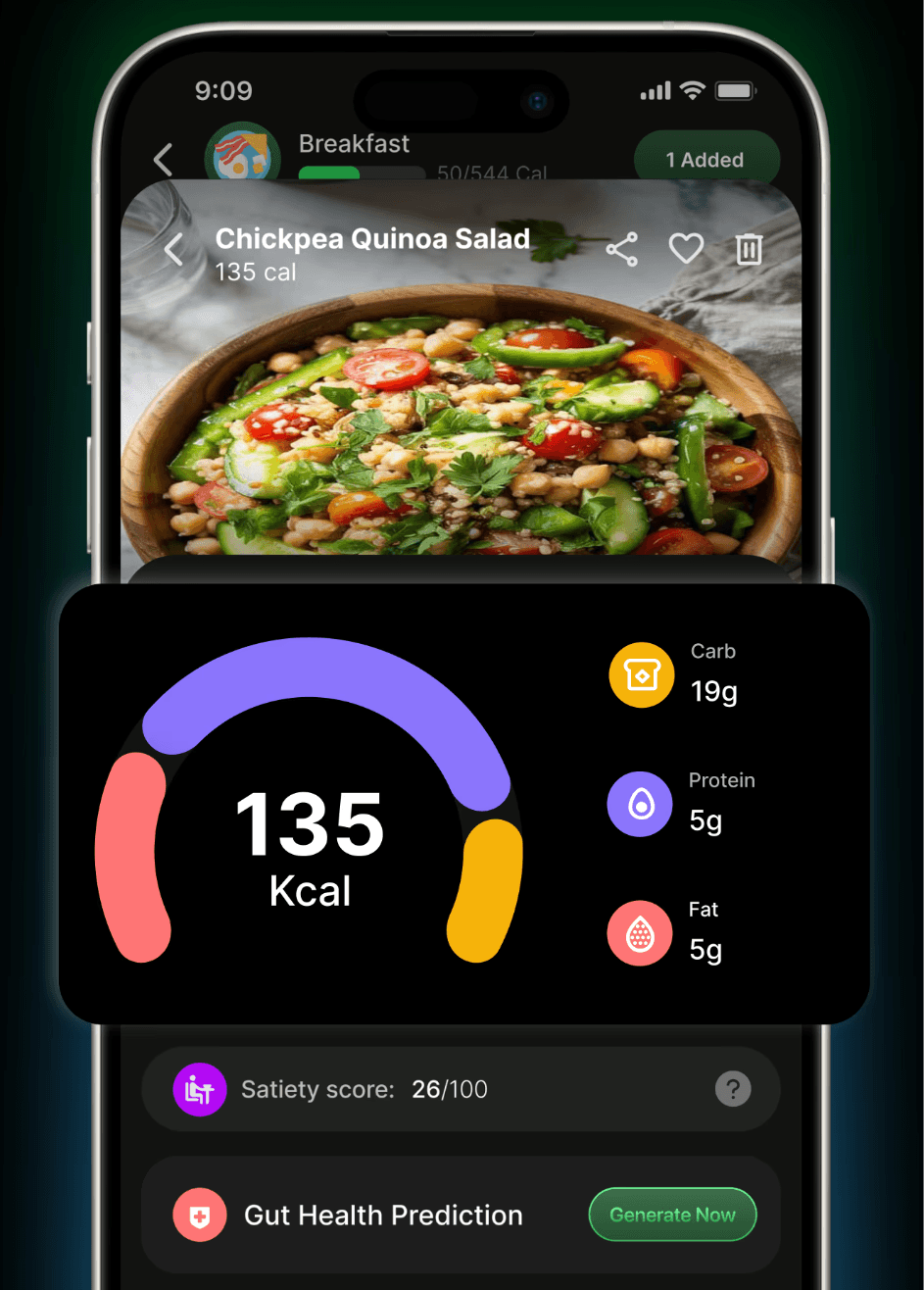
This is one reason protein tracking can be genuinely useful rather than obsessive. I log my meals with Zorest Macro's AI Meal Logger, and a few weeks in, I noticed my plant-heavy lunches were consistently short on leucine — something I never would have caught from a rough mental estimate. Swapping one element (adding a side of edamame plus a small scoop of soy protein) fixed the gap without restructuring my whole diet.
For a broader look at which "high-protein" foods tend to mislead people, our protein trap post is worth reading before you assume your current choices are doing the job.
How protein distribution affects MPS throughout the day
Here's a finding that most people miss entirely: how you spread protein across meals matters almost as much as total daily intake.
A landmark study published in the American Journal of Clinical Nutrition compared three distribution strategies in young men consuming the same daily total of 80 g protein:
Pulse: one large dose (72 g) at one meal, small doses at others
Spread: ~20 g across four meals
Bolus: progressively larger amounts across three meals, with most at dinner
The spread group — ~20 g across four evenly timed meals — produced the highest MPS rates over 12 hours. [Source: https://pubmed.ncbi.nlm.nih.gov/24257722/]
The practical implication: a 200 g protein dinner doesn't make up for protein-empty meals earlier in the day. Your muscle tissue responds to each meal's amino acid signal independently. It can't retroactively "store up" a missed morning dose.
Zorest Macro's Daily Meal Planner accounts for this automatically. It distributes your daily protein target across meals based on your goals, so you're not accidentally front- or back-loading without realizing it.
The "muscle full" effect: why more protein per meal isn't always better
There's a ceiling to how much protein a single meal can redirect toward muscle building. Once the mTORC1 pathway is fully activated — roughly at the 30–40 g threshold in a typical adult — additional protein in that same sitting doesn't stack onto MPS. The excess is simply oxidized for energy.
This is called the "muscle full" effect, and it's one of the stronger arguments for distributing protein across meals rather than concentrating it at one sitting.
Individual thresholds do vary. Larger athletes with greater muscle mass, or people in a calorie deficit where MPB is elevated, may benefit from slightly higher per-meal doses — closer to 40–50 g. [Source: https://pubmed.ncbi.nlm.nih.gov/23739654/] But for most people, trying to hit 80+ g of protein in one meal is an inefficient strategy.
What limits protein synthesis — even when you're doing everything right
Calorie deficit
Being in a calorie deficit reduces MPS because the body is operating in a resource-limited state. This is why people in a prolonged cut often lose some muscle even with adequate protein intake. Eating toward 2.0–2.4 g of protein per kg of body weight during a deficit helps offset this, but MPS won't fully match what it does at maintenance or in a surplus. Our protein and metabolic health guide covers the deficit-specific implications in more detail.
Poor sleep
MPS is most active during sleep, particularly during slow-wave sleep when growth hormone secretion peaks. Research shows that even one night of poor sleep can meaningfully impair the anabolic signaling from the previous day's workout. [Source: https://pubmed.ncbi.nlm.nih.gov/21550729/] Sleep isn't rest from training — it's where the actual rebuilding happens.
Age
Older adults experience what researchers call "anabolic resistance" — a blunted MPS response to the same protein and exercise stimulus that would work well in a younger person. The practical fix is to aim for the higher end of per-meal protein (35–50 g per sitting, leucine-rich sources preferred) and to maintain resistance training consistently. Exercise partially counteracts this age-related decline. [Source: https://pubmed.ncbi.nlm.nih.gov/22552031/]
Low carbohydrate intake in a deficit
Insulin — released in response to carbohydrate intake — inhibits MPB and creates a more anabolic environment. This is one reason very low-carb diets can make muscle retention harder, even when protein is technically adequate. If you've been in an extended cut and are looking to bring calories back up strategically, our reverse dieting guide walks through the approach.
What this means for your training and nutrition
Protein synthesis isn't complicated to act on. Here's the practical framework:
Aim for 30–40 g of protein per meal, across three to four meals per day. Leucine-rich sources first.
Train with progressive overload, then give the 24–48 hour MPS window time to do its work before hitting the same muscle group again.
Distribute protein evenly across the day — don't bank it all at dinner.
Protect sleep — not as a lifestyle perk, but as a biological requirement for MPS to complete its repair cycle.
In a calorie deficit, push protein toward 2.0–2.4 g/kg to compensate for the suppressed anabolic environment.
If you're not sure whether your current diet is actually delivering on these points, logging for even three to four days with Zorest Macro's AI Meal Logger tends to be clarifying. Most people discover one of two gaps: total leucine is lower than expected, or protein is bunched at the back end of the day. Both are easy to fix once you can see them.
Final thoughts
Protein synthesis is a fundamental biological process — not a fitness trend. But understanding it changes how you think about protein as a tool.
It's not just a macro target to clear once a day. It's a signal you send your body multiple times a day, through food and exercise and sleep, to rebuild a little stronger than before. The difference between people who build muscle efficiently and those who spin their wheels is rarely effort. It's usually precision.