
طبيبة مقيمة في الطب النفسي، MD، MBBS
شارك هذه القصة
Most people think about protein the way they think about a gym membership — something you reach for when you want to look better. But the research tells a more interesting story. Adequate protein intake touches nearly every mechanism that determines how well your metabolism functions: how many calories you burn at rest, how stable your blood sugar stays, how hungry you feel between meals, and whether you actually lose fat or lose muscle when you cut calories. This post covers all of it, with the evidence behind each claim.
What metabolic health actually means
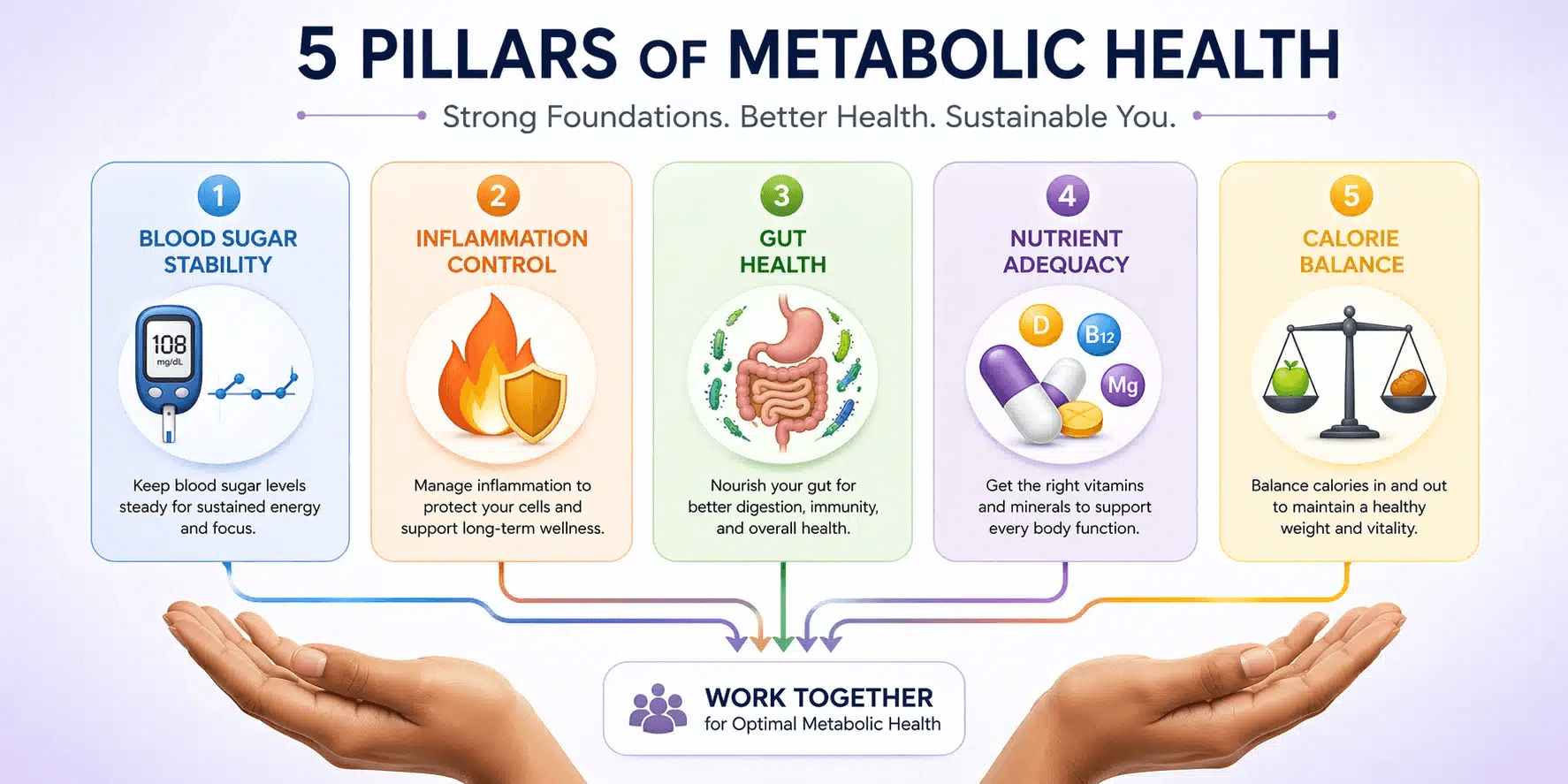
Metabolic health isn't just a wellness buzzword. Clinically, it refers to how efficiently your body produces, uses, and stores energy — measured by five markers: fasting blood glucose, triglycerides, HDL cholesterol, blood pressure, and waist circumference.
What is metabolic health?
Metabolic health is the state in which your body processes and uses energy efficiently, reflected in normal blood sugar, blood lipids, blood pressure, and body composition — without relying on medication to maintain them.
A 2019 study in Metabolic Syndrome and Related Disorders found that only 12.2% of American adults qualify as metabolically healthy by all five criteria. That means roughly 88% of adults have at least one metabolic dysfunction in progress — often without knowing it.
The dysfunction doesn't arrive all at once. It builds quietly: blood sugar creeps up, waist circumference expands slowly, cholesterol shifts the wrong way. By the time a diagnosis appears, the groundwork was laid years earlier.
Protein affects nearly every point in this chain. Let me walk through each mechanism.
Protein burns more calories just being digested
Every macronutrient costs your body some energy to process. But protein's cost is dramatically higher than fat or carbohydrate — a property called the thermic effect of food (TEF).
What is the thermic effect of food?
The thermic effect of food is the energy your body burns to digest, absorb, and metabolize a meal. It varies by macronutrient: protein requires the most energy to process, carbohydrates require a moderate amount, and fat requires almost none.
The numbers are stark:
Protein: 20–30% of calories consumed are used in digestion
Carbohydrates: 5–10%
Fat: 0–3%
Put concretely: eat 200 calories of protein, and you net around 140–160 calories after the thermic burn. Eat 200 calories of fat, and you net 194–200. Same calorie count, meaningfully different outcome.
A meta-analysis in Obesity Reviews confirmed that high-protein diets significantly increase 24-hour energy expenditure compared to lower-protein diets of equivalent calories. [Source: https://pubmed.ncbi.nlm.nih.gov/12439646/] This effect is real and it compounds. Two diets with identical calorie totals but different protein allocations don't produce identical results — and this is one reason why.
Muscle is your metabolic engine
Your resting metabolic rate (RMR) — the calories your body burns just to keep the lights on — is largely determined by how much skeletal muscle you carry. Muscle is energetically expensive tissue.
Research estimates that skeletal muscle burns approximately 13 calories per kilogram per day at rest, compared to roughly 4.5 calories per kilogram for fat tissue. [Source: https://pubmed.ncbi.nlm.nih.gov/11822473/] Five extra kilograms of muscle translates to roughly 42 additional calories burned daily without moving a step — over a year, that's more than 15,000 calories, or roughly four pounds of fat.
Dietary protein provides the amino acids your body uses to repair, maintain, and build muscle through a process called muscle protein synthesis (MPS). Without adequate protein, MPS stalls — particularly when you're in a calorie deficit or doing regular resistance training, both of which increase protein turnover.
The International Society of Sports Nutrition recommends 1.4–2.0 g of protein per kilogram of body weight per day for active individuals. [Source: https://jissn.biomedcentral.com/articles/10.1186/s12970-017-0177-8] For reference, a 70 kg person would need 98–140 g daily — significantly above the 0.8 g/kg minimum the RDA sets, which is designed only to prevent deficiency.
And after age 30, muscle loss accelerates if you don't actively work against it. Low protein intake combined with sedentary habits makes that process significantly faster.
Protein keeps blood sugar steadier
Blood sugar spikes — and the insulin responses they demand — sit at the center of metabolic dysfunction. Chronically elevated insulin promotes fat storage, increases hunger, and, over time, causes cells to become resistant to insulin's signal. That's the physiological basis of prediabetes and type 2 diabetes.
Protein helps prevent this pattern through two mechanisms.
First, it slows gastric emptying. When protein is eaten alongside carbohydrates, digestion takes longer, which means glucose enters the bloodstream more gradually rather than as one rapid surge. A randomized controlled trial in Diabetes Care found that consuming protein before a carbohydrate load significantly reduced post-meal glucose and insulin levels in people with type 2 diabetes. [Source: https://pubmed.ncbi.nlm.nih.gov/26199282/]
Second, protein stimulates glucagon secretion from the pancreas. Glucagon is the counter-regulatory hormone to insulin — it signals the liver to release stored glucose when blood sugar drops too low, preventing the reactive hypoglycemia that triggers intense hunger roughly 60–90 minutes after a carb-heavy meal.
This is why a high-carb, low-protein breakfast leaves many people starving by mid-morning. The blood sugar spike and the corresponding crash both feel like hunger — and technically, the second one is.
Protein reduces hunger at the hormonal level
Hunger isn't a willpower problem. It's a hormonal signal, and protein is one of the most powerful dietary inputs you can use to modulate it.
Multiple studies have demonstrated that high-protein meals suppress ghrelin — the hormone that signals hunger to the brain — more effectively than high-carbohydrate or high-fat meals. Simultaneously, protein increases levels of GLP-1, PYY, and CCK, all satiety-signaling peptides that tell your brain you've had enough. [Source: https://pubmed.ncbi.nlm.nih.gov/16469977/]
One trial published in The American Journal of Clinical Nutrition found that when participants increased protein from 15% to 30% of total calories, they spontaneously reduced daily calorie intake by approximately 441 calories — without any deliberate calorie restriction. [Source: https://pubmed.ncbi.nlm.nih.gov/15466943/] They just ate less because they were less hungry.
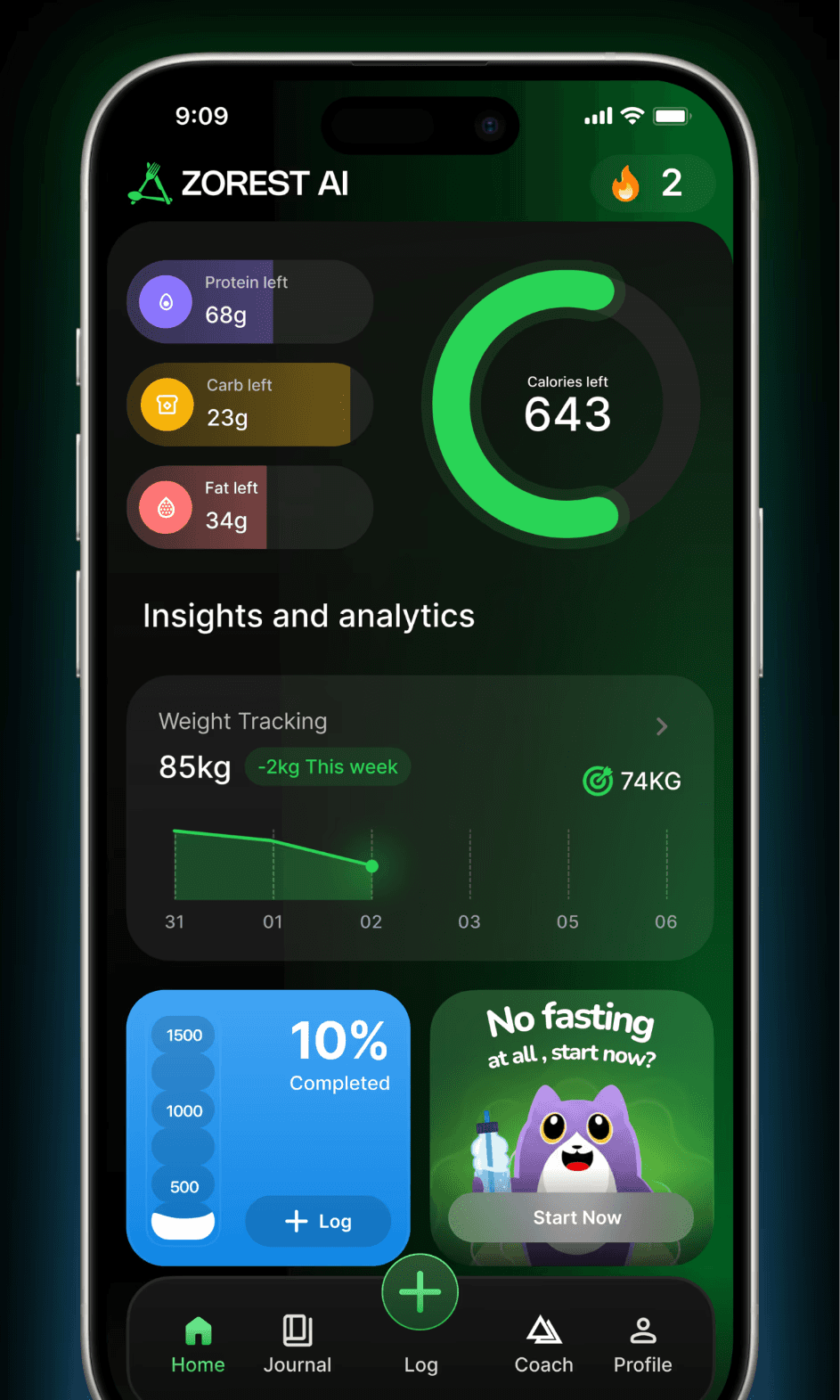
I notice this clearly in my own tracking. On days I log enough protein in Zorest Macro's AI Meal Logger, I'm not hunting for snacks before dinner. On days I fall short — usually when lunch is mostly carbs and salad — I'm raiding whatever's nearby by 4 pm. The hormones are doing exactly what the research says they do.
Protein preserves muscle when you cut calories
Losing weight and losing fat aren't the same thing. Without adequate protein and resistance training, a meaningful portion of the weight lost during a calorie deficit comes from muscle, not fat stores.
This matters for your metabolism because muscle loss reduces your RMR — the very engine that drives continued fat loss. A smaller metabolic engine means you burn fewer calories at rest, making it progressively harder to stay in a deficit. This is one of the core reasons diets stall, and why people regain weight quickly after they end.
A meta-analysis in Nutrition Reviews found that higher protein intake during calorie restriction significantly preserved lean body mass compared to standard protein intakes — even without changes to exercise. [Source: https://pubmed.ncbi.nlm.nih.gov/23097268/]
Put differently: if your goal is fat loss — not just weight loss — protein intake is not optional. If you've recently come off a calorie deficit and are trying to rebuild your metabolic capacity, the same principle holds. (The mechanics of that process are worth understanding in detail — we covered it in our reverse dieting guide.)
How much protein you actually need
The RDA of 0.8 g/kg is a floor, not a target — it prevents deficiency, not dysfunction. For most adults trying to maintain or improve metabolic health, current research supports a substantially higher intake.
A practical framework:
Goal | Daily protein target |
Sedentary adult, maintenance | 1.2–1.6 g/kg |
Active adult, regular training | 1.6–2.0 g/kg |
Calorie deficit / body recomposition | 2.0–2.4 g/kg |
For a 70 kg person doing regular exercise, that's roughly 112–140 g of protein per day. Most people eat significantly less than that without tracking.
One point worth flagging: protein quality matters, not just quantity. Leucine — an essential amino acid concentrated most heavily in animal proteins like chicken, dairy, eggs, and beef — is the primary trigger for muscle protein synthesis. Plant proteins can absolutely cover your needs, but they generally require higher total intake and thoughtful food combining to reach equivalent leucine thresholds per gram of protein consumed. [Source: https://pubmed.ncbi.nlm.nih.gov/24477298/]
Protein timing also matters at the margins. Research suggests that evenly distributing protein across three to four meals is more effective for muscle protein synthesis than consuming the same total in one or two large servings. [Source: https://pubmed.ncbi.nlm.nih.gov/24257722/] Hitting 35–40 g per meal, three to four times a day, tends to be more productive than a massive dinner protein load.
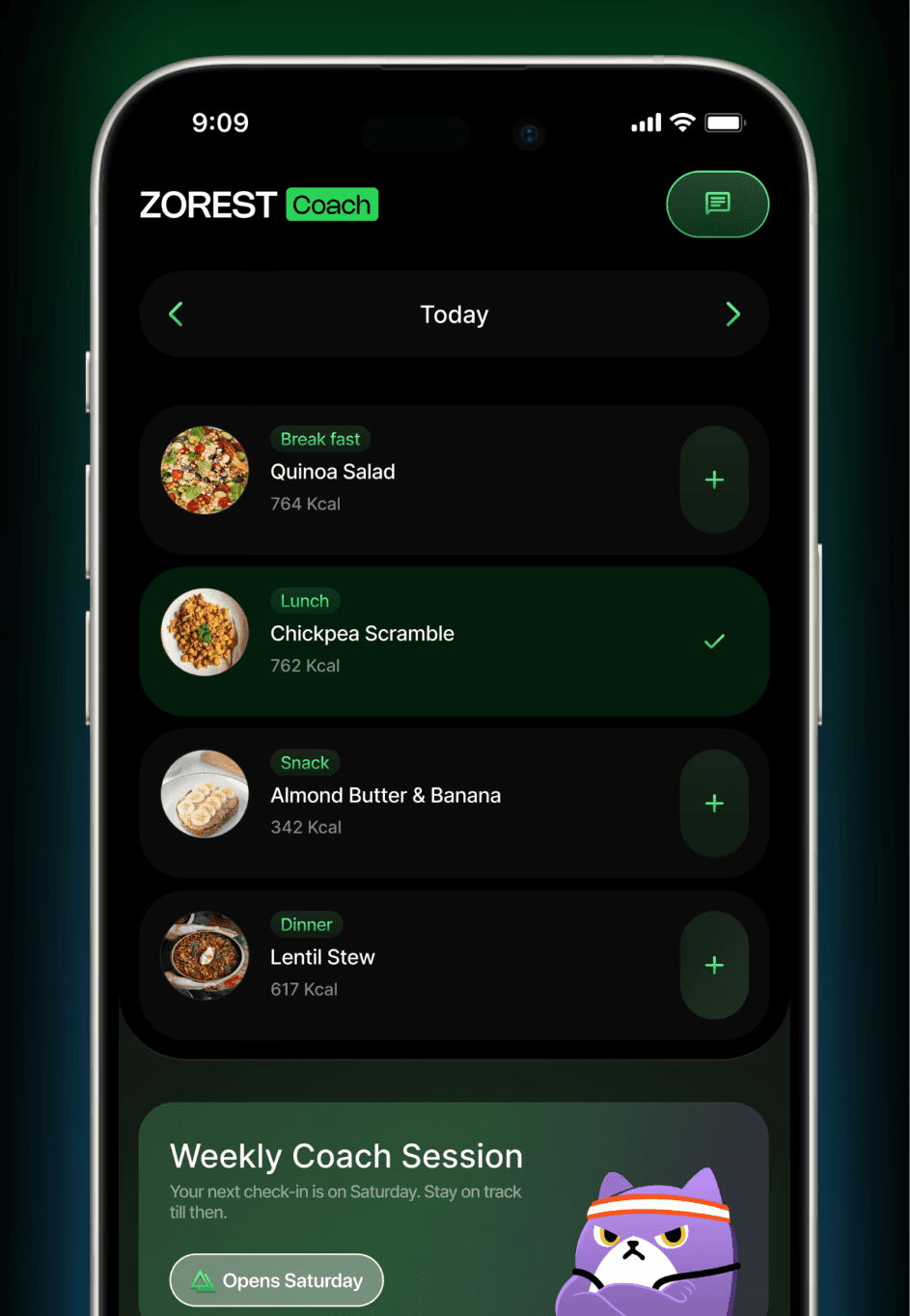
Zorest Macro's Daily Meal Planner accounts for this automatically — it distributes your daily protein target across meals based on your goals, so you don't have to calculate it yourself. For anyone who's been guessing at whether they're hitting their targets, logging for even three or four days tends to be clarifying.
How to hit your protein target without overthinking it
Getting enough protein sounds complicated until you build a few reliable habits around it. A few that consistently work:
Anchor every meal to a protein source first. Before anything else goes on the plate, ask: where is the protein? Aim for 30–40 g per sitting. Reliable sources include eggs, Greek yogurt, cottage cheese, chicken, fish, tofu, tempeh, edamame, and legumes.
Use protein-forward snacks as gap-fillers. If you're between meals and hungry, a hard-boiled egg, Greek yogurt, or handful of mixed nuts closes the gap while contributing to your daily total — rather than a snack that simply bridges the time.
Treat breakfast as your first protein investment. A toast-and-coffee start tends to set off a blood sugar rollercoaster that pulls you toward poor choices by noon. A protein-anchored breakfast — eggs, high-protein yogurt, a smoothie with protein powder — tends to hold you steady significantly longer.
One complication worth acknowledging: for people managing gut conditions, identifying which high-protein foods cause symptoms isn't always straightforward. If digestive responses are making it hard to eat enough protein consistently, it helps to know which foods are the likely culprits — our guide to foods that trigger IBS covers the most common dietary offenders.
And if you've been eating what looks like a protein-rich diet but aren't sure whether you're actually hitting your numbers, the gap is usually in the details. Zorest Macro's AI Meal Logger lets you log a meal by photo, text, or voice — it pulls the macro breakdown instantly, so you can see whether your "high-protein" chicken wrap is actually delivering 40 g or a more modest 18 g once the tortilla, sauce, and fillers are factored in. (Spoiler: it's usually closer to 18. We wrote about exactly this kind of nutritional sleight of hand in our protein trap post.)
Final thoughts
Protein is one of those topics where the gap between what people believe and what the evidence shows is unusually large. Most people underestimate their protein needs, overestimate how much they're already eating, and don't connect their protein intake to metabolic outcomes beyond muscle building.
The evidence points clearly in one direction: adequate protein increases energy expenditure through the thermic effect, maintains the muscle mass that drives your resting metabolism, stabilizes blood sugar by slowing glucose absorption and stimulating glucagon, reduces hunger through multiple hormonal pathways, and preserves lean mass during calorie restriction. These effects don't operate in isolation — they compound.
Improving your metabolic health doesn't require a dramatic intervention. It often starts with asking whether you're eating enough of the right things. Protein is a good place to begin that audit.
Medical disclaimer: This article is for informational purposes only and does not constitute medical advice. Consult a qualified healthcare provider before making significant changes to your diet, particularly if you have existing metabolic conditions or are taking medication.