طبيبة مقيمة في الطب النفسي، MD، MBBS
شارك هذه القصة
Most people ask "how many calories should I eat per day?" and stop there. But daily totals don't explain why you crash at 3 PM, why one lunch leaves you alert for hours while another has you reaching for coffee by 2:30, or why eating the same 600 calories from different foods produces completely different energy outcomes.
The real question isn't how many calories per day. It's how many calories per meal, and what those calories are made of. Get this right, and sustainable energy becomes far more predictable.
Start with your daily target, then divide
The per-meal number you need depends entirely on how many calories your body requires each day. There's no universal answer. A 165 lb sedentary woman has a very different target than a 200 lb man who lifts four times a week.
Your starting point is TDEE (total daily energy expenditure): the total number of calories your body burns across everything, including organ function, movement, digestion, and exercise. Most adults land somewhere between 1,600 and 3,000 calories per day, depending on size, body composition, and activity level. (If you want to understand how your body composition affects the calorie math, our breakdown of how weight gain affects your BMR covers the tissue-by-tissue math.)
Once you have your TDEE, the simplest split for three meals per day looks like this:
Breakfast: 25–30% of daily calories (~375–600 kcal for someone targeting 1,800–2,000 kcal/day)
Lunch: 35–40% of daily calories (~630–800 kcal)
Dinner: 25–30% of daily calories (~375–600 kcal)
Snacks: 10–15% of remaining calories
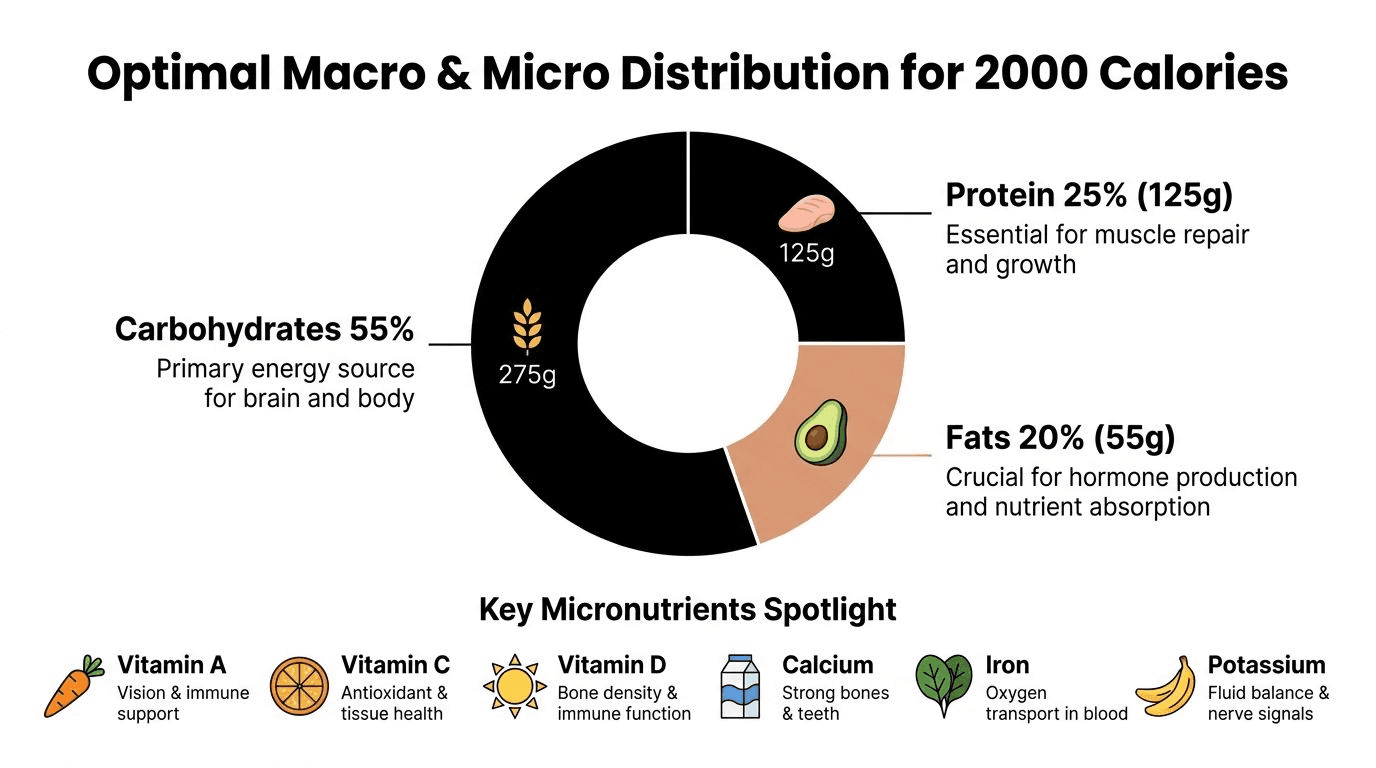
If you eat four meals instead of three, each one naturally becomes smaller, around 400–550 kcal on a 2,000 kcal target. Five meals? You're looking at 300–450 kcal per sitting. The total matters more than the exact number per meal, but structure helps you avoid the common trap of under-eating all day and then consuming 60% of your calories at dinner.
Why the calorie number alone doesn't determine energy levels
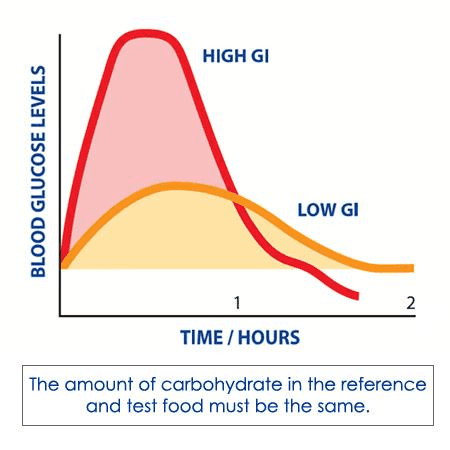
Here's the part most people miss: two meals with identical calorie counts can produce wildly different energy outcomes. A 600-calorie lunch built around white rice and sugar-sweetened sauce will send your blood sugar surging and crashing in under two hours. A 600-calorie lunch with grilled chicken, roasted vegetables, olive oil, and a small portion of brown rice keeps blood sugar relatively stable for three to four hours.
The difference comes down to three things: glycemic response, macronutrient composition, and the thermic effect of food.
Glycemic response: the crash mechanism
When you eat refined carbohydrates, glucose floods your bloodstream quickly. Your pancreas releases insulin to clear it. If the flood is large enough, especially from high-glycemic-index foods, blood sugar drops sharply after the initial spike. That drop is what you feel as the "crash": fatigue, brain fog, cravings for sugar. High-glycemic-index foods eaten in large portions produce bigger insulin swings and more pronounced fatigue in most people.
Glycemic load (the glycemic index multiplied by the grams of carbohydrate) predicts fatigue better than GI alone. Half a serving of white rice produces a smaller glucose response than a full serving. Portion size is part of the equation, not just food choice.
Macronutrient composition: protein stabilizes energy
Protein has a thermic effect of 20–30% of the energy content consumed, compared to carbohydrate at 5–10% and fat at 0–3%. In practical terms, if you eat 100 calories of chicken, your body burns roughly 20–30 of those calories just digesting it. The net energy delivery is slower and more sustained.
Protein also has the strongest and most sustained effect on satiety hormones like peptide YY (PYY) and cholecystokinin (CCK), both of which signal fullness to the brain. This is why a protein-anchored meal keeps you full and focused longer than a carb-heavy one of the same calorie count.
A 2024 systematic review and meta-analysis of over 154 crossover trials confirmed that adding protein to carbohydrate-containing meals reduces postprandial glucose area under the curve. In other words, blood sugar rises less and comes down more gently when protein is present.
The practical takeaway: every meal should include a meaningful protein source. At least 20–30g of protein per meal is where the energy-stabilizing effects become reliable. A meal of plain carbohydrates, even "healthy" ones like oats or fruit, without protein is an energy crash waiting to happen. For a full look at how protein supports energy metabolism beyond just the per-meal level, see our piece on how protein supports metabolic health.
The chrononutrition angle: does meal timing change the answer?
Yes, more than most people expect. Your body processes calories differently at different points of the day, and this affects how much energy you actually get from a meal.
There are benefits to eating more calories at breakfast and lunch than at dinner: when your dietary thermic effect (DIT) is higher earlier in the day, you digest and transport macronutrients more quickly to places like your brain and muscles, and you may absorb more vitamins and minerals.
Research shows that later distribution of energy intake, where dinner is the largest meal, has been associated with increased weight and worse metabolic outcomes, with this pattern now common in many western societies. The "eat light at night" principle isn't a myth. It's supported by chronobiology. Your insulin sensitivity is highest in the morning, which means the same 600 calories eaten at 8 AM is processed more efficiently than the same 600 calories eaten at 9 PM.
Modern chrononutrition research broadly supports the old adage "eat breakfast like a king, lunch like a prince, and dinner like a pauper": consuming a higher proportion of daily calories in the morning is associated with lower hunger throughout the day and better metabolic outcomes.
This doesn't mean you need to eat a massive breakfast if you're not hungry. But it does mean front-loading calories, even slightly, is a better strategy for sustained energy than saving your biggest meal for the end of the day.
How large is too large? The 800+ calorie single-meal problem
Eating in one massive sitting has a cost. Eating 1,500 or more calories in a single meal can cause digestive distress, large insulin spikes, and lethargy. It places a heavy load on the digestive system and makes it very difficult to absorb all required micronutrients at once.
There's also a parasympathetic response to contend with. After a very large meal, your body shifts blood flow toward digestion and activates the "rest and digest" nervous system. This is the mechanism behind post-lunch food coma. And it's not just blood sugar. Even a well-balanced 1,000-calorie meal can leave you wanting a nap, simply because of the volume load on your digestive system.
The practical ceiling for most people: a single meal that exceeds 700–800 calories starts to work against energy rather than for it. Above that, you're more likely to feel heavy and slow than energized and focused.
A realistic per-meal framework by goal
Here's how calorie targets per meal shift depending on what you're trying to achieve on a typical 2,000 kcal/day baseline:
For fat loss (eating in a deficit, e.g., 1,600 kcal/day):
Breakfast: 350–400 kcal
Lunch: 500–550 kcal
Dinner: 400–450 kcal
Snacks: 150–200 kcal
For maintenance or muscle building (e.g., 2,200–2,500 kcal/day):
Breakfast: 500–600 kcal
Lunch: 700–800 kcal
Dinner: 600–700 kcal
Snacks: 200–400 kcal
For sustained energy across the day (any calorie target): The composition rule stays constant regardless of goal: 25–35g protein per meal, fiber from vegetables, a source of healthy fat (olive oil, avocado, nuts), and moderate complex carbohydrates rather than refined ones. This combination slows digestion, blunts glucose peaks, and extends satiety.
The protein trap to watch for
One mistake I see people make a lot: they think they're eating enough protein because they have chicken in their lunch. But one 100g chicken breast only delivers about 30g of protein and roughly 165 calories. If the rest of the meal is mostly rice and sauce, the calorie count looks fine on paper, but the protein-to-calorie ratio is off, and satiety suffers.
The goal isn't just to hit a calorie target. It's to build meals where protein is the anchor, with fat and carbohydrate in supporting roles. Meals that accidentally prioritize carbs while treating protein as a garnish are one of the more common reasons people experience consistent afternoon energy crashes, even when their daily calorie total looks reasonable. We've written more about this specific pattern in our post on the protein trap in seemingly healthy foods.
Putting it into practice with Zorest Macro
Tracking per-meal calorie distribution manually is exhausting work. I used to do it with a spreadsheet — entering everything by hand, calculating ratios, checking whether my lunch protein hit was on track. It wore me out faster than the diet itself.
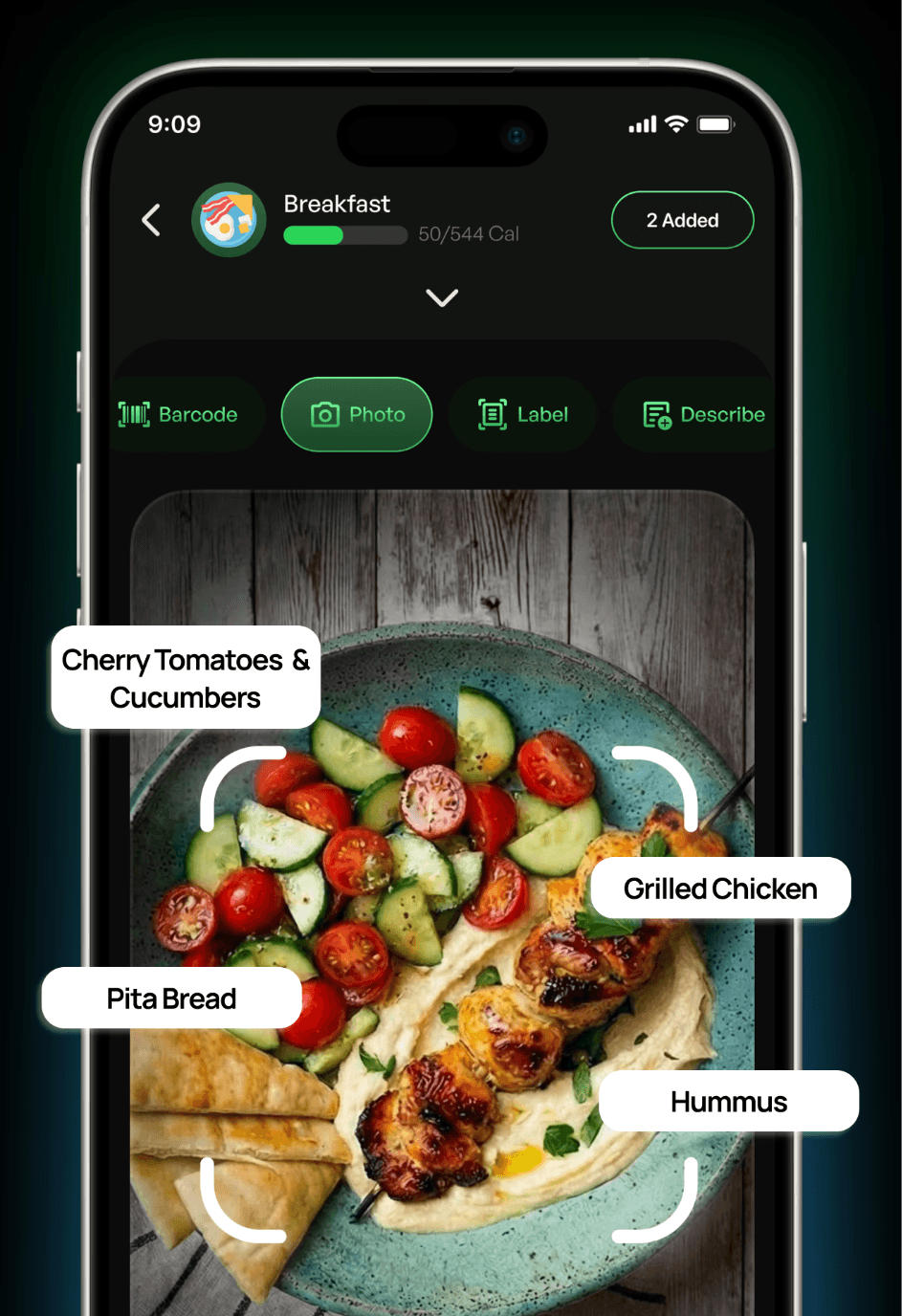
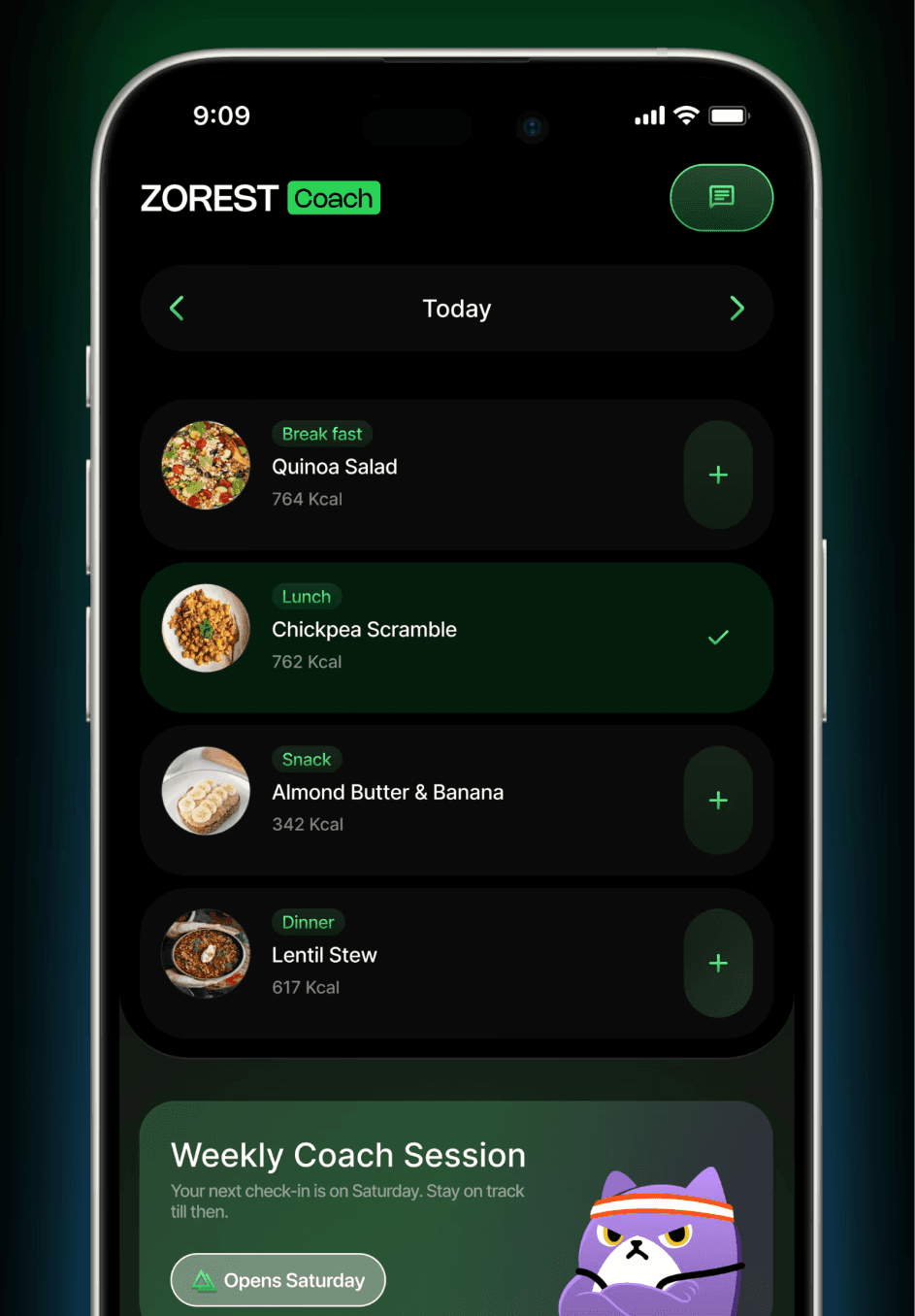
The easier approach is using Zorest Macro's AI Meal Logger. Log your meal by photo, text, voice, or barcode, and you immediately see the calorie count and the macronutrient breakdown: protein, carbs, fat, all in one screen. You can see at a glance whether your meal is protein-anchored or accidentally carb-heavy, and adjust before the next one.
The Daily Meal Planner takes this further by building your next day's meals around your actual progress, not a static template. If yesterday's lunch came in short on protein and high on carbs, the system adjusts tomorrow's suggestions to rebalance.
Final thoughts
There's no single "right" number of calories per meal that works for everyone. But there are reliable principles: start from your TDEE, distribute calories with the largest meals earlier in the day, keep individual meals under 700–800 calories to avoid the food coma effect, and anchor every meal with at least 20–30g of protein.
The calorie number is just a container. What you put inside that container (the protein, fiber, and fat ratio) determines whether that container gives you sustained energy or sends you hunting for a couch.
Got questions? Ping me on LinkedIn.