
طبيبة مقيمة في الطب النفسي، MD، MBBS
شارك هذه القصة
TL;DR:
Intermittent fasting (IF) is an eating pattern that alternates between periods of eating and fasting. It doesn't tell you what to eat but when to eat. Popular methods include the 16:8 method, 5:2 diet, and alternate-day fasting. Research suggests intermittent fasting may help with weight loss, insulin sensitivity, and appetite control, but it's not a magic solution. The best fasting plan is one you can follow consistently.
What is intermittent fasting?
Intermittent fasting is an eating pattern that cycles between eating and fasting windows.
Unlike traditional diets that focus on food restrictions, intermittent fasting focuses on meal timing. For example, someone following a 16:8 fasting schedule may eat only between noon and 8 PM and fast for the remaining 16 hours.
Think of it like giving your digestive system scheduled breaks. Instead of eating from the moment you wake up until bedtime, you compress your meals into a smaller window.
The concept isn't new. Humans have practiced fasting for religious, cultural, and practical reasons for thousands of years. What's new is the growing body of research exploring its effects on weight management and metabolic health.
How does intermittent fasting work?
The main reason intermittent fasting works is surprisingly simple: many people naturally eat fewer calories.
If you normally eat breakfast at 8 AM and stop eating at 10 PM, you're eating across a 14-hour window. Shrinking that to an 8-hour eating window often eliminates late-night snacking and reduces overall calorie intake.
But there's more happening under the hood.
During fasting periods:
Insulin levels decrease
The body begins using stored energy
Hunger hormones may become more regulated
Some people experience improved appetite control
A common misconception is that fasting "switches on fat burning" instantly. In reality, fat loss still depends largely on maintaining a calorie deficit over time.
What are the most popular intermittent fasting methods?
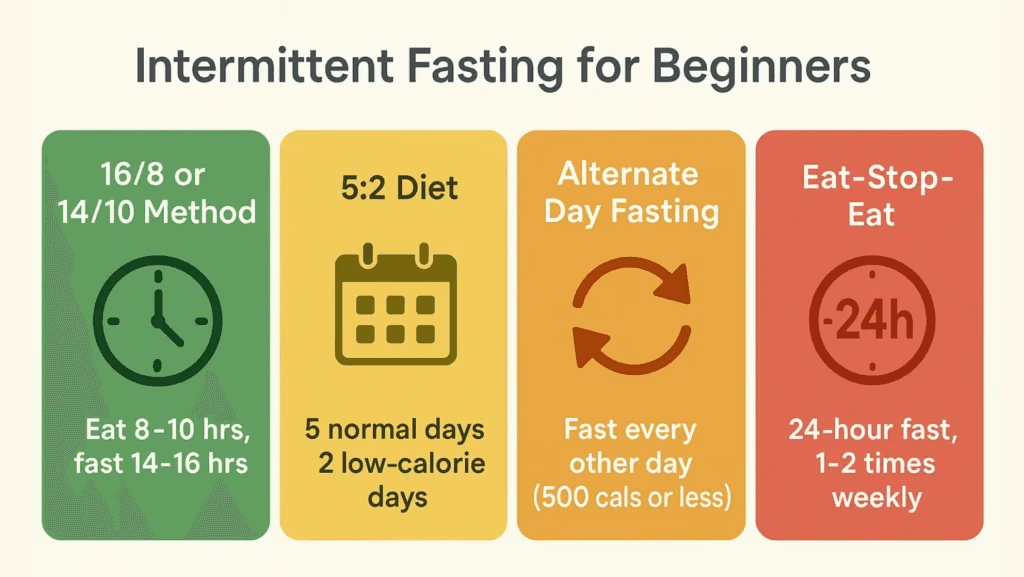
16:8 method
The 16:8 method is the most common and beginner-friendly approach.
You fast for 16 hours and eat during an 8-hour window.
Example:
Fast: 8 PM to 12 PM
Eat: 12 PM to 8 PM
Many people find this sustainable because part of the fasting period occurs while sleeping.
14:10 method
This is often the easiest starting point.
You fast for 14 hours and eat during a 10-hour window.
Example:
Fast: 8 PM to 10 AM
Eat: 10 AM to 8 PM
For beginners, this often feels far less restrictive than jumping straight into 16 hours of fasting.
5:2 diet
With the 5:2 approach:
Eat normally for 5 days each week
Consume around 500–600 calories on 2 non-consecutive days
This method appeals to people who prefer flexibility rather than daily fasting.
Alternate-day fasting
As the name suggests, you alternate between fasting and regular eating days.
This can be effective but is generally harder to sustain long-term than simpler methods like 16:8.
Can intermittent fasting help with weight loss?
Yes, intermittent fasting can help with weight loss.
A review published in the New England Journal of Medicine found that intermittent fasting can support weight loss and improve metabolic health markers in many individuals.
Source: https://www.nejm.org/doi/full/10.1056/NEJMra1905136
However, fasting is not inherently superior to other calorie-controlled diets.
Research consistently shows that when calories and protein intake are equal, weight loss outcomes are often similar between intermittent fasting and traditional dieting approaches.
What intermittent fasting does well is create structure.
Many people find it easier to skip breakfast than to count every calorie they consume.
What happens in your body during a fast?
The body goes through several stages during fasting.
0–4 hours after eating
Food is being digested and absorbed.
Blood sugar and insulin levels are elevated.
4–12 hours
The body begins relying more on stored glycogen for energy.
12–24 hours
Insulin levels continue to fall.
The body increasingly taps into stored energy reserves.
Beyond 24 hours
More substantial metabolic adaptations occur.
This is why longer fasts should be approached carefully and ideally with professional guidance.
It's worth noting that many social media claims exaggerate these effects. You don't need multi-day fasts to see health benefits.
What can you eat while intermittent fasting?
During fasting periods, calorie-containing foods and beverages are typically avoided.
Most fasting plans allow:
Water
Sparkling water
Black coffee
Unsweetened tea
During eating windows, focus on:
Lean protein
Fruits and vegetables
Whole grains
Healthy fats
High-fiber foods
One mistake I often see is people treating their eating window like a reward period. Fasting for 16 hours and then consuming 3,000 calories of ultra-processed food rarely leads to the desired results.
What are the benefits of intermittent fasting?
Weight management
Many people lose weight because fasting naturally reduces calorie intake.
Simpler eating decisions
Some people enjoy having fewer meals to plan and prepare.
Improved insulin sensitivity
Several studies suggest intermittent fasting may improve insulin sensitivity in certain populations.
Appetite awareness
Many people discover they were eating out of habit rather than genuine hunger.
Source: https://www.cell.com/cell-metabolism/fulltext/S1550-4131(19)30248-7
What are the risks of intermittent fasting?
Intermittent fasting isn't suitable for everyone.
Potential drawbacks include:
Hunger and irritability
Reduced training performance
Headaches during adjustment periods
Overeating during eating windows
Social inconvenience
Intermittent fasting may not be appropriate for:
Pregnant or breastfeeding women
Individuals with eating disorder histories
People with certain medical conditions
Children and adolescents
Always consult a healthcare professional if you have underlying health concerns.
How do you start intermittent fasting safely?
Start smaller than you think you need to.
Instead of jumping straight into a 16-hour fast, try:
Week 1:
Finish dinner by 8 PM
Eat breakfast at 8 AM
Week 2:
Delay breakfast until 9 AM
Week 3:
Delay breakfast until 10 AM
This gradual approach tends to be much easier than forcing dramatic changes overnight.
Hydration is also critical. Many people mistake thirst for hunger during fasting periods.
How can Zorest Macro help with intermittent fasting?
Intermittent fasting works best when meal quality matches meal timing.
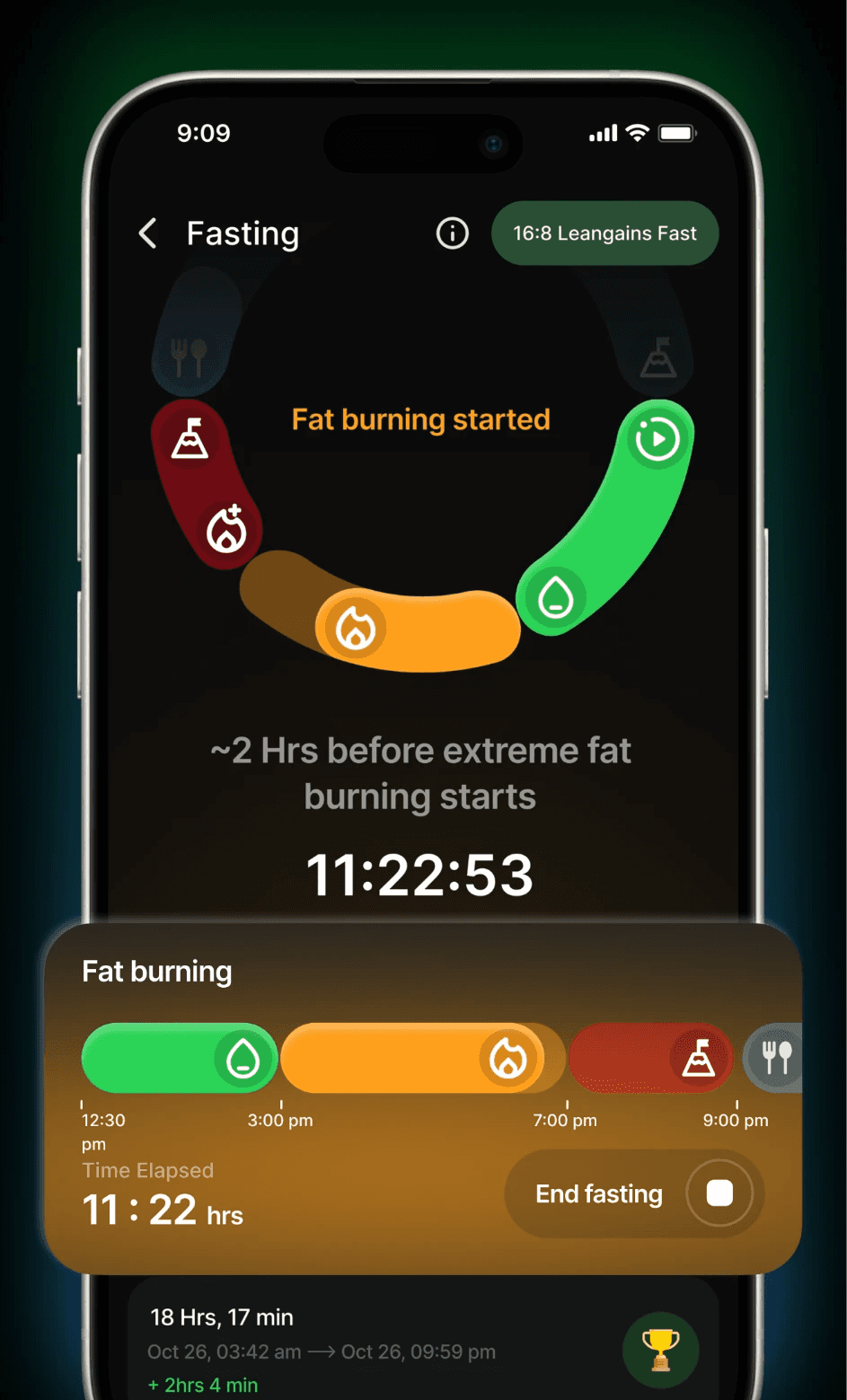
With Zorest Macro, you can:
Use the Adaptive Fasting Planner to generate fasting schedules tailored to your goals rather than following generic internet advice.
Track meals using the AI Meal Logger through text, voice, photos, barcodes, or nutrition labels.
Get personalized meal recommendations from the Daily Meal Planner so your eating window supports fat loss, muscle gain, or maintenance.
Chat with your AI Coach whenever you have questions about hunger, meal timing, or fasting progress.
Review weekly progress during your AI Coach Call to adjust your fasting schedule based on real results.
Instead of guessing whether your fasting approach is working, you can see exactly how your nutrition aligns with your goals.
Is intermittent fasting right for you?
Intermittent fasting is a tool, not a requirement.
Some people love it because it simplifies eating. Others feel better spreading meals throughout the day. Neither approach is inherently superior.
The best nutrition strategy is the one you can maintain consistently while meeting your calorie, protein, and health goals.
If intermittent fasting helps you do that, it's worth considering. If it creates stress, hunger, and frustration, another approach may be a better fit.
Final thoughts
Intermittent fasting is one of the most popular nutrition strategies today because it's simple, flexible, and backed by growing research. But its effectiveness comes less from metabolic magic and more from helping people create sustainable eating habits.
Focus on consistency, nutrient-dense foods, adequate protein, and a fasting schedule that fits your lifestyle. Those fundamentals matter far more than the exact number of fasting hours.
Got questions? Ping me on Linkedin.