
طبيبة مقيمة في الطب النفسي، MD، MBBS
شارك هذه القصة
You're sitting at your desk mid-morning, staring at a sentence you've read four times. You can't find the word you need. You feel like you're thinking through wet sand. Nothing is wrong, exactly. You slept, you ate, you're not sick. And yet.
That's brain fog. It's one of the most common cognitive complaints people have, and one of the least understood. What most people don't realize is that what you eat (and what you don't eat) can directly drive it. This isn't a vague wellness claim. There's a specific, biological chain between your plate and your ability to think clearly.
What brain fog actually is
Brain fog is a symptom cluster, not a clinical diagnosis. It refers to a group of cognitive difficulties: difficulty concentrating, memory lapses, slow thinking, trouble finding words, and a pervasive sense of mental dullness that interferes with daily function without having an obvious acute cause.
Brain fog overlaps with tiredness and depression, but they're not the same thing. A 2026 review published in Current Nutrition Reports describes it as "a common, poorly understood condition with symptoms like forgetfulness, mental slowness, difficulty concentrating, word-finding issues, and mental cloudiness" that disrupts daily life and reduces quality of life. The review notes that neuroinflammation, dysregulation of the gut-brain axis, and poor sleep quality are key contributors to its underlying mechanism.
Crucially, all three of those pathways are influenced by diet.

The blood sugar connection
Your brain runs almost exclusively on glucose. It accounts for about 2% of your body weight but consumes roughly 20% of your daily energy. That fuel dependency makes it extremely sensitive to supply disruptions.
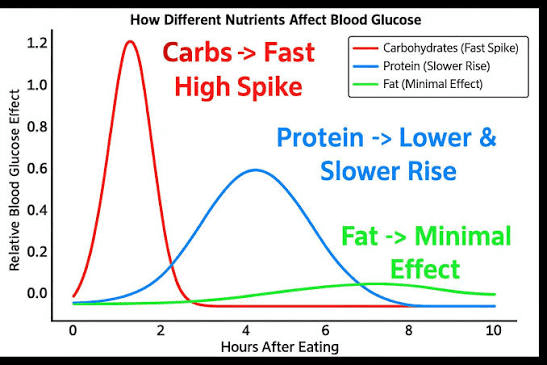
When you eat a high-sugar meal or a lot of refined carbohydrates, your blood glucose spikes sharply and then crashes. During the spike, your body releases insulin to clear glucose from the bloodstream. During the crash, the brain is briefly undersupplied, and you get that familiar mid-afternoon fog that sets in 90 minutes after lunch.
But the crash isn't the only problem. Chronic high blood sugar does structural damage to brain function. Research published in Diabetes Care found that fluctuating blood glucose levels (not just consistently high ones) were linked to impaired attention, slowed reaction times, and worse memory performance. Acute glucose spikes trigger the release of pro-inflammatory cytokines in the brain, which slow neural signaling and impair neurotransmitter production.
There's also a longer-term structural concern. High blood sugar reduces the expression of GluT1, the transporter that carries glucose across the blood-brain barrier. Less GluT1 means the brain literally receives less fuel even when blood glucose is high, creating a paradox where you have too much sugar and too little brain energy at the same time.
I've noticed this pattern personally. On days when I eat a carb-heavy lunch without much protein or fat, I'm essentially useless between 2 and 4 pm. Adding protein to that same meal (even just 25g from chicken or eggs) and the afternoon fog lifts. The mechanism isn't complicated: protein slows gastric emptying, which flattens the glucose curve and keeps fuel delivery to the brain steady rather than spiked.
Nutrient deficiencies that directly impair cognition
The brain needs specific raw materials to function. When those materials are missing, cognitive performance degrades, often before any other symptom appears.
Vitamin B12
B12 deficiency is one of the most underdiagnosed causes of persistent brain fog, especially in people eating plant-based diets, older adults, and anyone taking proton pump inhibitors (which reduce the stomach acid needed to absorb B12).
B12 is essential for myelin synthesis, the protective sheath around nerve fibers that allows signals to travel quickly. Without enough of it, neural transmission slows. Low B12 has been linked to impaired concentration, insomnia, and disorganized thinking. It also contributes to elevated homocysteine, a methylation byproduct strongly linked to brain atrophy and accelerated cognitive decline.
A 2023 clinical study in Alzheimer's & Dementia examined 25 patients with B12 deficiency and cognitive complaints. Memory and attention were the most affected domains in 80% of the sample, and 92% reported subjective improvement after B12 supplementation. That's a meaningful signal even in a small cohort.
Standard blood tests for B12 are also notoriously imprecise. Clinical deficiency thresholds are based on population averages, not neurological outcomes. That means you can have "normal" B12 on a lab panel while still experiencing functional deficiency. If brain fog is persistent and unexplained, B12 is worth investigating with a clinician.
Iron
Iron is required for the synthesis of dopamine and serotonin. It's also critical for delivering oxygen to brain tissue via hemoglobin. Iron deficiency anemia is among the most common nutritional deficiencies worldwide, and Cognitive fatigue and difficulty concentrating are frequently its first recognizable symptoms, often appearing before the classic signs of pale skin or breathlessness.
Women of reproductive age, vegetarians, and people with high athletic training loads are at the highest risk. If you're frequently foggy and also frequently exhausted, iron is worth checking.
Omega-3 fatty acids (DHA in particular)
Your brain is approximately 60% fat by dry weight. Of that, DHA accounts for more than 40% of the omega-3 polyunsaturated fatty acids in neuronal tissue, particularly in the gray matter. DHA is what keeps neuronal membranes fluid and responsive, directly affecting how efficiently signals pass between brain cells.
A 2025 systematic review and dose-response meta-analysis published in Scientific Reports found that omega-3 supplementation showed significant improvements in attention and perceptual speed, with each 2,000 mg/day dose associated with measurable cognitive gains. Mechanically, DHA also helps preserve hippocampal volume (the brain region most directly involved in memory consolidation) and counters neuroinflammation by competing with pro-inflammatory omega-6 fatty acids.
Western diets are chronically low in DHA and high in omega-6. The ratio matters. A brain running on mostly omega-6 is an inflamed, signaling-compromised brain.
Magnesium and vitamin D
Both are quietly important for cognitive clarity. Magnesium is a cofactor in hundreds of enzymatic reactions and directly regulates NMDA receptors, the glutamate receptors central to learning and memory. Deficiency is common (estimates suggest 45–50% of Americans don't meet the RDA) and can manifest as difficulty concentrating, irritability, and fatigue.
Vitamin D receptors are found throughout the brain, including in the hippocampus, and low vitamin D is associated with increased neuroinflammation and cognitive impairment. Healthline's clinical overview notes that deficiencies in vitamin D, B12, iron, omega-3s, and magnesium are among the most commonly linked micronutrients to brain fog.

Ultra-processed food and neuroinflammation
Beyond specific deficiencies, the overall pattern of what you eat shapes the inflammatory environment in your brain.
A 2026 review confirmed what earlier epidemiological research had been pointing at: Western-style diets high in fat, sugar, and ultra-processed foods have a negative effect on brain fog by promoting neuroinflammation and gut-microbiome disruption. Anti-inflammatory diets, by contrast, show a protective effect.
Ultra-processed foods work against brain clarity through multiple pathways at once. They spike blood sugar (the glucose problem), displace nutrient-dense foods (the deficiency problem), drive gut dysbiosis (the microbiome problem), and supply high loads of refined seed oils that shift the omega-6/omega-3 ratio in the wrong direction (the inflammation problem).
A 2023 study in Nutrients followed 2,000 adults for 12 months and found that those eating the highest glycemic-load diets scored significantly lower on attention, working memory, and cognitive flexibility tests compared to low-glycemic-diet eaters. This wasn't a small effect.
The gut-brain axis and mental clarity
The gut is deeply involved in cognitive function, and that connection is more than metaphorical. Your gut produces more than 90% of the body's serotonin and hosts the enteric nervous system, which communicates bidirectionally with the brain through the vagus nerve and immune signaling pathways. A disrupted gut microbiome can impair mood, slow neural signaling, and increase systemic inflammation that crosses the blood-brain barrier.
Gut dysbiosis is an imbalance between beneficial and harmful bacteria, typically triggered by ultra-processed foods, low fiber, and antibiotic use. It's increasingly recognized as a driver of cognitive symptoms. Research published in Frontiers in Neuroscience (2024) confirms that specific microbial populations and their metabolites, particularly short-chain fatty acids like butyrate, regulate neuroinflammation and neural barrier integrity. When fiber intake is low, butyrate production drops, and the gut-brain axis destabilizes.
Fermented foods (yogurt, kefir, kimchi, sauerkraut) and fiber-rich diets that feed beneficial gut bacteria are the two most evidence-backed dietary interventions here. I covered the mechanics of this pathway in detail in an earlier post on the gut-brain connection. Worth reading if this is where your fog is coming from.
What to actually do about it
The nutritional levers for brain fog are relatively well-defined. Here's what the evidence supports:
Stabilize blood sugar. Eat protein at every meal. Protein slows gastric emptying, which flattens the glucose curve and prevents the post-meal cognitive crash. Aim for at least 25–30g per meal. The effect is same-day, making this the fastest lever most people have.
Check your B12 and iron. If brain fog is chronic and otherwise unexplained, don't guess. Get serum B12, ferritin, and a full blood count from your doctor. If you're eating a predominantly plant-based diet, B12 supplementation (1,000 mcg/day cyanocobalamin or methylcobalamin) is widely recommended.
Eat fatty fish twice a week. Salmon, sardines, and mackerel are the best whole-food sources of DHA and EPA. If you don't eat fish, a high-quality algae-based omega-3 supplement delivers DHA directly without the mercury concerns. Aim for at least 250–500mg of combined DHA/EPA daily.
Reduce ultra-processed food. Perfection isn't the goal. Replacing one ultra-processed meal per day with something whole-food-based is enough to shift the inflammatory burden over weeks.
Feed your gut bacteria. Add one serving of fermented food and at least 25–30g of fiber daily. Legumes, oats, and vegetables provide the prebiotic substrate your gut microbiome runs on.
Consider magnesium. Magnesium glycinate or malate are well-absorbed forms. 200–400mg in the evening can help sleep quality and reduce neurological irritability, both of which independently affect next-day cognitive function.
Final thoughts
Brain fog is real, and it's frustrating. But in most people without an underlying medical condition, the nutritional contributors are specific and addressable. Blood sugar instability, a handful of key deficiencies, ultra-processed food driving neuroinflammation, and a disrupted gut microbiome are the four most common dietary drivers, and each one has a concrete dietary fix.
Start with the simplest: add protein to every meal and watch what happens in the afternoon. Then work backwards from there.
Got questions? Ping me on LinkedIn.