
طبيبة مقيمة في الطب النفسي، MD، MBBS
شارك هذه القصة
Pilates studios are everywhere right now. And with that boom comes a question I hear constantly: "But does it actually burn enough calories to matter?"
It's a fair thing to ask. If you're logging 4-5 sessions a week hoping to lose fat, you need honest numbers — not reassuring wellness-speak. So here's the real picture: how many calories Pilates burns, what drives that number, and what you should realistically expect from your sessions.
What Pilates actually burns per session
The honest range for a 60-minute Pilates session is 170 to 450 calories, and that spread isn't vague — it maps directly to workout type and intensity level.
The clearest data comes from exercise physiologist Dr. Michele Olson's study on mat Pilates, which measured calorie burn across experience levels in real time:
Beginner mat Pilates: ~4 calories per minute (240 cal/hour)
Intermediate mat Pilates: ~6 calories per minute (360 cal/hour)
Advanced mat Pilates: ~7.5 calories per minute (450 cal/hour)
For context, a 2024 study puts reformer Pilates at 300–400 calories per hour for a 150-pound person. The MET (Metabolic Equivalent of Task) framework supports this: mat Pilates has a MET of approximately 3.0, while reformer work sits at 4.0–4.5.
So in plain terms: reformer burns more than mat, and advanced burns more than beginner. Nothing revolutionary, but it's good to have actual numbers to anchor your expectations.
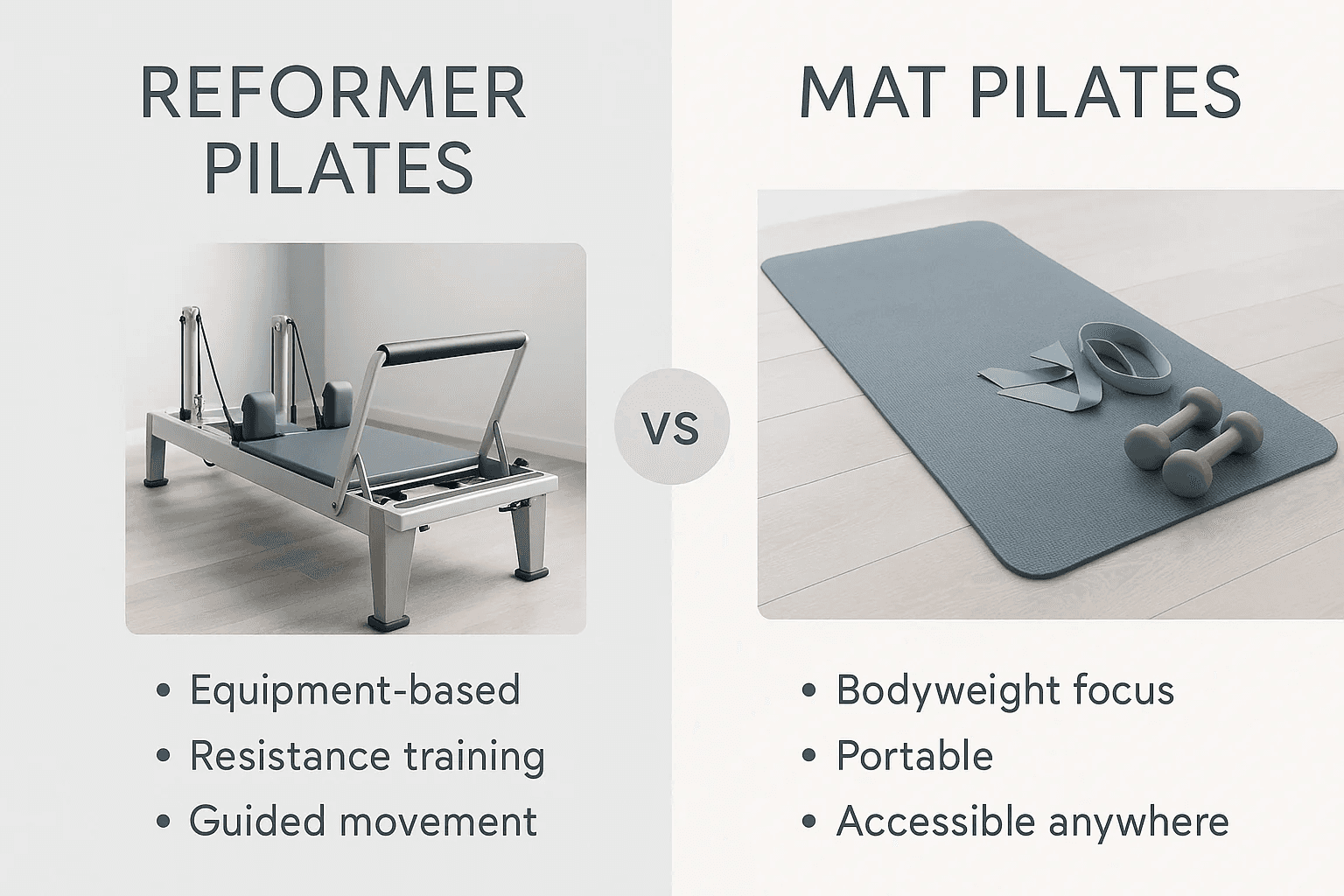
Mat Pilates vs. reformer Pilates: what the difference means for you
Mat Pilates relies entirely on body weight and gravity. You're not adding external resistance, which keeps heart rate moderate. For a 150-pound person doing a beginner mat class, research estimates around 175–250 calories per hour. At an advanced level, that number climbs toward 350.
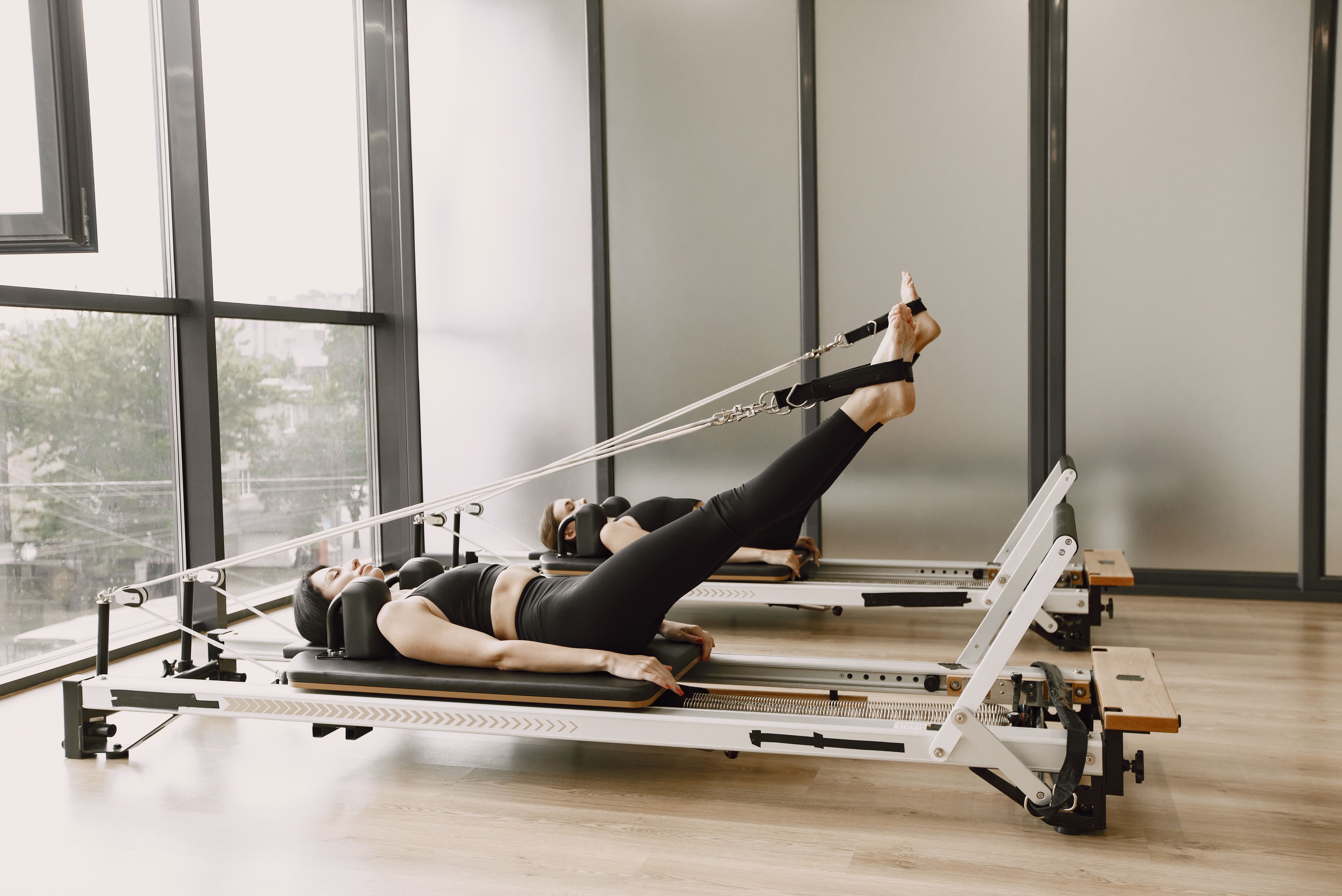
Reformer Pilates adds spring-loaded resistance, which forces muscles to work harder through both concentric and eccentric contractions. That extra load elevates energy expenditure to 300–450 calories per hour depending on body weight and class intensity.
I switched from mat to reformer about six months ago and noticed two things: I was more fatigued after sessions, and I needed more protein to recover. The muscle engagement really is different — not just anecdotally, but measurably so in studies looking at muscular activation during reformer work.
If calorie burn is a priority for you, reformer wins by a clear margin. But mat Pilates still builds the movement foundation you need to get the most out of reformer later.
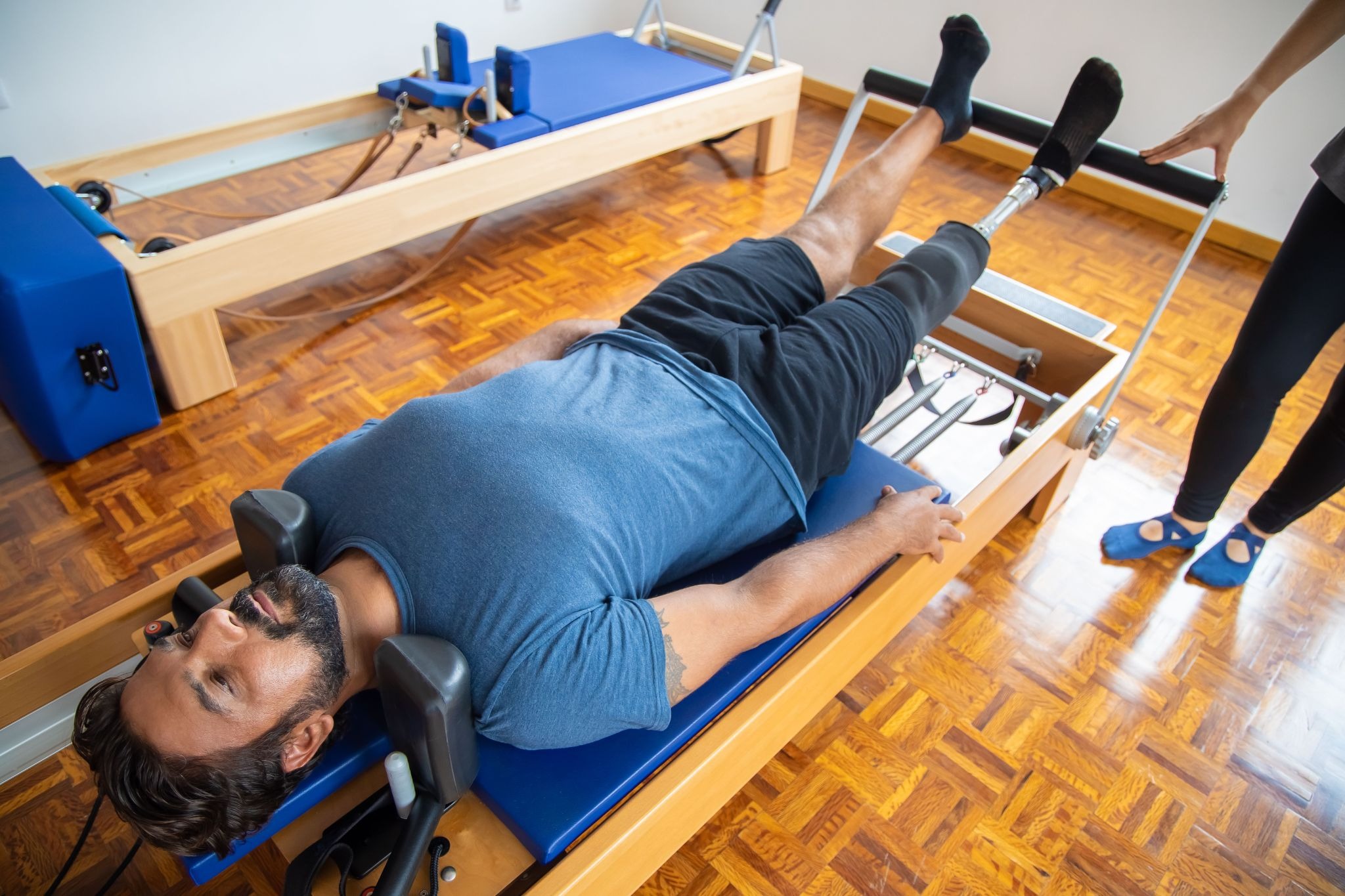
Five factors that move your calorie burn up or down
The 170–450 calorie range is wide for a reason. Here's what actually determines where you land:
1. Body weight Heavier bodies require more energy to move through the same exercises. A 200-pound person doing the same beginner mat class as a 125-pound person will burn roughly 40–60% more calories, just from the physics of displacement.
2. Fitness level This one cuts both ways. Beginners often burn slightly more calories because their muscles are inefficient — they recruit more motor units to complete movements that an experienced practitioner does smoothly. Over time, your body gets better at Pilates, which means you burn fewer calories doing the same routine. That's a sign of progress, but it also means you need to increase difficulty to keep driving calorie expenditure.
3. Session format A low-volume session with long rest periods between exercises (traditional classical Pilates) burns significantly fewer calories than a high-volume circuit with minimal rest. A 2020 study by Almeida et al. confirmed that high-repetition, low-rest formats meaningfully increase total energy output compared to traditional pacing.
4. Class duration A 30-minute session doesn't deliver half the benefit of 60 minutes — it delivers less, because the metabolic elevation compounds over time. Research suggests that after 30 minutes of sustained exercise, your body continues burning calories at an elevated rate as long as you keep moving. So a 45-minute class delivers disproportionately more than two 22-minute sessions would suggest.
5. How hard you're actually working This sounds obvious, but Pilates has a habit of making you feel like you're working harder than your heart rate suggests. An ACE study found that even when participants felt they were exerting themselves, average heart rate during beginner Pilates was only 54% of maximum — well below the 64–94% range recommended for cardiovascular improvement. If you want to burn more calories, you need to actively increase intensity: reduce rest time, go for more reps, or choose a faster-paced class.
If you're serious about understanding your actual energy balance, tracking is worth doing. Logging your meals alongside your Pilates sessions in Zorest Macro lets you see whether your calorie intake aligns with what you're actually burning — not what you hope you're burning. I use the photo logging feature post-session when I'm too tired to type, and it still gets the macros right.
What Pilates actually does for your body composition
Pilates won't out-burn a spin class. A 60-minute indoor cycling session at moderate intensity burns around 400–600 calories. Running at a 10-minute-mile pace burns roughly 360 calories in just 30 minutes — nearly double what an hour of mat Pilates delivers.
But measuring Pilates only by hourly calorie burn misses the point of what it does to your body over time.
It builds lean muscle, which raises your resting metabolic rate. Muscle tissue is metabolically active — your body burns more calories maintaining it than it does maintaining fat. A 2021 meta-analysis published in Frontiers in Physiology looked at 11 randomized controlled trials with 393 participants and found that Pilates significantly reduced body weight (mean difference: –2.40 kg), BMI (–1.17), and body fat percentage (–4.22%) in adults with overweight or obesity. These aren't cosmetic tweaks — they're meaningful body composition shifts.
It reduces the injury risk that kills calorie-burning streaks. One of the most underrated things about Pilates is that it keeps you training. If you're running 4 days a week and your knees give out, your weekly calorie deficit disappears. Pilates builds the joint stability and posterior chain strength that keep your other workouts sustainable. I've personally used a 2x/week Pilates routine to recover from a hamstring strain without losing the rest of my training, which would have been impossible if I'd been doing more impact-heavy work.
It shifts what you eat — sometimes without realizing it. The mindfulness emphasis in Pilates carries over. Research on college students who practiced Pilates found that they developed greater self-efficacy and body awareness, which often translates to better food decisions over time. That's a harder thing to quantify, but it's real.
How many sessions per week you need to see results
The research is fairly consistent here: three sessions per week, 45–60 minutes each, is the threshold where meaningful changes in body composition start to appear.
Dr. Michele Olson's study found that practitioners who wanted to use Pilates for weight loss needed at least four sessions per week at 45–60 minutes each. A separate 8-week reformer study on sedentary women showed measurable improvements in flexibility, lean mass, and resting metabolism from three 60-minute sessions per week.
So the short answer: 2 sessions a week will give you flexibility and core gains. 3–4 sessions a week, combined with a sensible nutrition plan, is where you start seeing body composition changes.
One practical thing I've found useful: let your weekly Pilates schedule anchor the rest of your activity. If I know I have reformer on Tuesday, Thursday, and Saturday, I'll plan lighter cardio on the off days rather than trying to cram everything into the gym. The Daily Meal Planner in Zorest Macro adjusts your next-day macro targets based on what you've eaten and done that day, which makes this kind of mixed-modality planning less guesswork.
Pilates and weight loss: the honest picture
Pilates alone, without a calorie deficit, won't reliably produce fat loss. That's just physics — energy balance governs fat loss regardless of the exercise modality. A 250-calorie mat session doesn't create much of a deficit on its own, especially if you eat back the calories from hunger afterward.
But paired with a nutrition strategy that keeps you in a modest deficit, Pilates is genuinely effective — and the Frontiers in Physiology meta-analysis backs this up. The body composition improvements it drives (lower body fat percentage, preserved lean mass) are the kind that compound. More muscle means a higher resting metabolic rate, which makes the same calorie target easier to maintain over time.
It also compares favorably to sitting still, which is what many people default to when they want "low-impact" options. Regular Pilates is associated with significant decreases in body weight, BMI, and body fat percentage — more so than no structured exercise, and often more so than inconsistent cardio that people abandon due to injury or boredom.
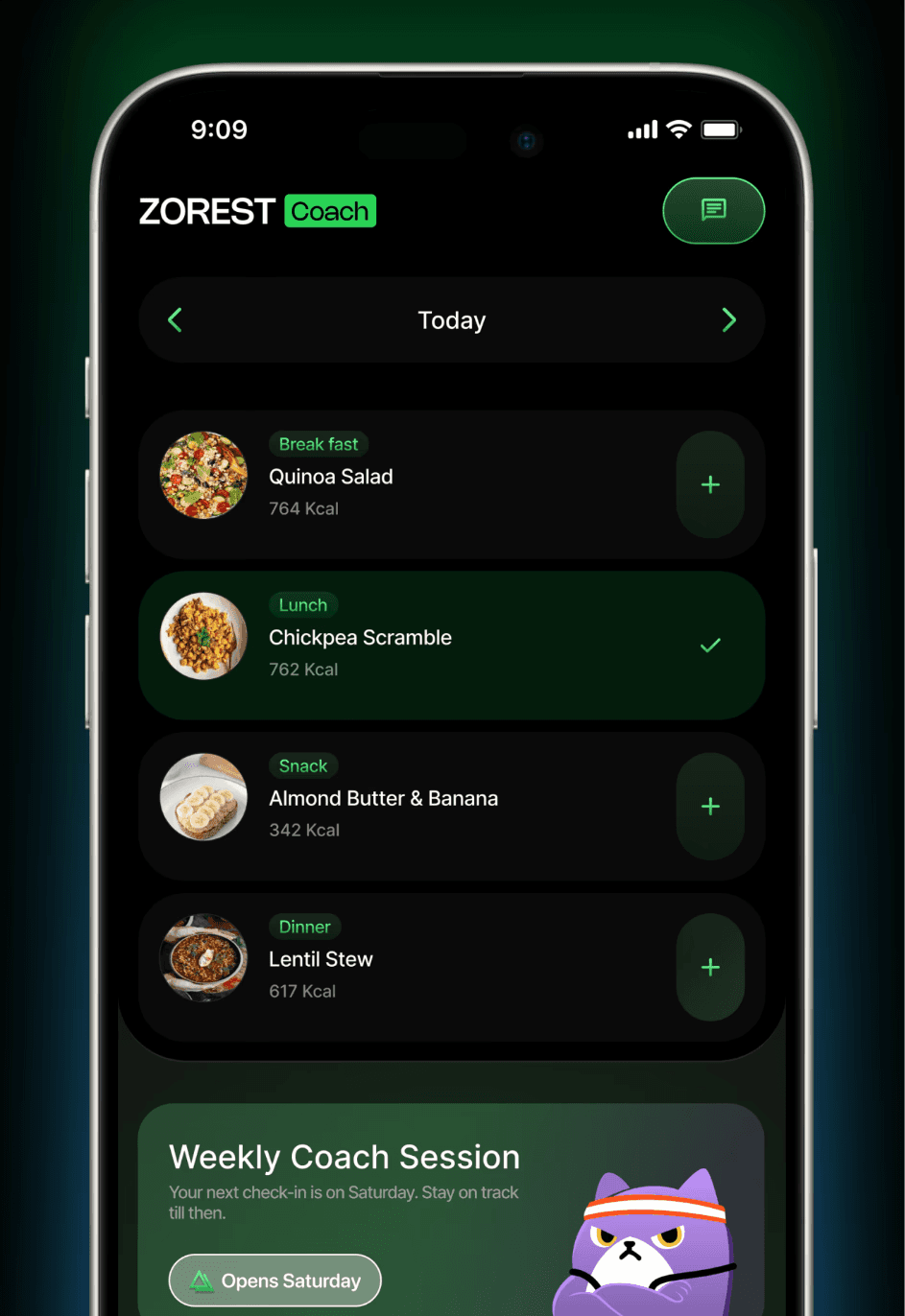
If you want to understand how Pilates fits into your actual calorie picture, I'd recommend tracking both sides of the equation. Zorest Macro's AI Meal Logger handles the food side automatically from a photo or a quick voice note. It won't track your reformer class, but once you know your typical burn (say, 320 calories for your Wednesday session), you can factor it into your daily targets. Knowing that number, precisely, changes how you eat around training.
For a deeper look at how exercise affects your total energy output, see our post on how many calories are burned running a mile — the same principles around body weight, fitness level, and effort apply across modalities.
Final thoughts
Pilates burns 170–450 calories per session, depending on format, intensity, and body weight. Reformer burns more than mat. Advanced burns more than beginner. Three to four sessions per week is the threshold for meaningful body composition change.
But the real case for Pilates isn't the per-hour calorie number. It's that it builds the lean muscle, joint resilience, and movement quality that make everything else you do more effective. I've seen this in my own training — and the research on long-term body fat reduction backs it up.
If you're combining Pilates with a nutrition strategy and want to track whether your intake actually aligns with your output, Zorest Macro gives you the tools to do that accurately, without spending 20 minutes logging a meal.