
طبيبة مقيمة في الطب النفسي، MD، MBBS
شارك هذه القصة
Fitness apps used to live on your phone.
Today, they're moving onto your wrist.
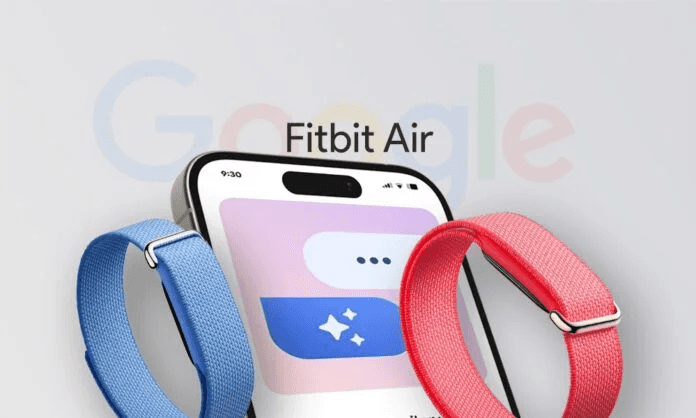
The launch of products like Fitbit Air—a lightweight, screenless fitness tracker backed by Google's growing health ecosystem—signals something bigger than just another wearable release. It highlights a shift in how people collect health data, interact with fitness software, and make decisions about exercise, sleep, recovery, and nutrition.
For fitness app companies, that's both an opportunity and a threat.
The next generation of winners may not be the apps with the best interface. They may be the apps that can turn continuous streams of wearable data into meaningful, personalized guidance.
Why Fitbit Air is different from traditional fitness trackers
The biggest innovation behind Fitbit Air isn't the hardware.
It's the philosophy.
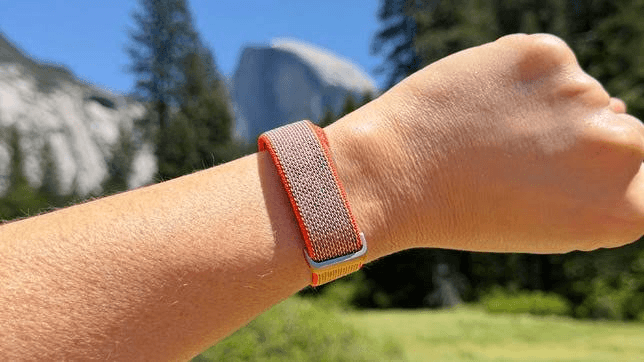
Unlike many smartwatches that compete for your attention with notifications, messages, and apps, Fitbit Air removes the screen entirely and focuses on collecting health data in the background. It tracks metrics like heart rate, sleep, temperature, activity levels, and recovery while relying on the companion app for insights.
This represents a growing trend in fitness technology:
Less interaction with devices
More passive health tracking
Greater emphasis on AI-generated insights
Higher-quality behavioral data
Many users don't want another screen demanding attention. They want useful recommendations without constantly checking a dashboard.
That changes what fitness apps need to deliver.
Fitness apps are becoming intelligence platforms
For years, fitness apps focused on logging.
Users manually entered:
Meals
Workouts
Weight
Water intake
Sleep
The problem was consistency.
Most people stop tracking after a few weeks because data entry becomes tedious.
Wearables solve part of that problem by automating data collection.
As devices like Fitbit Air continuously monitor activity and recovery, fitness apps can spend less time asking users for information and more time analyzing it.
This creates a new competitive landscape.
The value is no longer in collecting data.
The value is in interpreting data.
Imagine two apps receiving identical information:
Heart rate trends
Sleep duration
Activity levels
Recovery metrics
One app shows charts.
The other explains:
"Your sleep quality dropped 12% after three consecutive days of high-intensity training. Consider a recovery workout tomorrow."
The second app wins.
AI will become the new fitness coach
One of the most significant developments surrounding Fitbit Air is Google's push toward AI-powered health coaching. The company's new health platform includes AI-generated recommendations and personalized wellness guidance.
Whether users love it or hate it, the direction is clear.
Fitness apps are evolving from trackers into coaches.
Historically, coaching required:
Human trainers
Nutritionists
Health professionals
Today, AI can analyze thousands of data points instantly.
Research has already shown that combining wearable data with large language models can help users better understand health patterns and make more informed lifestyle decisions.
The future fitness app experience may look something like this:
Instead of opening an app to check your stats, you simply ask:
"Why am I feeling tired this week?"
The app analyzes:
Sleep patterns
Activity trends
Recovery data
Training volume
Then provides a personalized explanation.
That's a dramatically different user experience from traditional calorie counters and workout logs.
The importance of data ecosystems
Fitness apps no longer operate in isolation.
The companies with the strongest ecosystems often have the strongest competitive advantage.
Google's integration of Fitbit into its broader health strategy demonstrates this clearly. Fitbit data increasingly connects with larger health platforms, AI tools, and wearable ecosystems.
This creates a network effect.
The more devices feeding into an ecosystem:
The richer the data becomes
The more accurate predictions become
The more personalized recommendations become
For independent fitness apps, this presents a challenge.
Apps that cannot integrate with wearables risk becoming disconnected from the growing flow of real-time health information.
Users increasingly expect their fitness apps to work seamlessly with:
Smartwatches
Fitness trackers
Smart scales
Sleep monitors
Health platforms
Interoperability is becoming a necessity rather than a bonus feature.
Privacy will become a competitive differentiator
Whenever wearable devices collect more health data, privacy concerns follow.
Google's acquisition of Fitbit sparked widespread discussion around health data ownership and usage. Regulatory bodies closely examined the deal due to concerns about how personal health information could be used.
As wearable adoption grows, users are becoming more aware of questions such as:
Who owns my health data?
How is it stored?
Can it be sold?
Can it be used for advertising?
Fitness apps that provide transparent answers may gain a significant trust advantage.
The companies that balance personalization with privacy are likely to earn stronger long-term loyalty.
In many ways, trust may become just as important as features.
Smaller fitness apps face a new challenge
A decade ago, a startup could launch a workout tracker and compete fairly effectively.
That environment is changing.
Large technology companies now control:
Wearable hardware
Operating systems
Health platforms
AI infrastructure
Massive health datasets
Companies such as Google, Apple, Samsung, and Garmin have advantages that smaller developers struggle to match.
This doesn't mean smaller fitness apps will disappear.
Instead, they may need to specialize.
Some opportunities include:
Niche sports training
Women's health
Running analytics
Strength coaching
Recovery optimization
Chronic disease management
The most successful smaller apps will likely focus on solving highly specific problems better than large general-purpose platforms.
What the future of fitness apps could look like
Products like Fitbit Air point toward a future where fitness tracking becomes increasingly invisible.
The technology fades into the background while intelligence moves to the foreground.
Over the next five years, we may see:
More passive tracking
Users will manually log less information as wearables collect more data automatically.
More predictive insights
Apps will increasingly predict health outcomes rather than simply report historical metrics.
More personalized recommendations
AI will generate advice based on individual behavior instead of generic fitness guidelines.
More ecosystem integration
Health, fitness, sleep, nutrition, and recovery data will merge into unified experiences.
More focus on prevention
Apps may shift from helping users achieve fitness goals toward helping them avoid health problems before they develop.
The winners will not necessarily be the companies with the most features.
They will be the companies that transform data into decisions.
Final thoughts
Fitbit Air is more than a new wearable.
It represents the next phase of digital health.
As wearables become smaller, smarter, and more passive, fitness apps will need to evolve from simple tracking tools into intelligent health companions. The industry is moving toward a future where data collection happens automatically and personalized guidance becomes the primary product.
For fitness app developers, the challenge is clear: collecting data is no longer enough.
The real opportunity lies in helping people understand what that data actually means.
Got questions? Ping me on Linkedin.