
طبيبة مقيمة في الطب النفسي، MD، MBBS
شارك هذه القصة
Collagen supplements have exploded in popularity. Walk into any nutrition store and you'll find collagen powders promising healthier skin, stronger nails, better joints, and even improved body composition.
But if you're tracking macros, a common question comes up:
Does collagen actually count as protein? Or should it be treated differently from foods like chicken, eggs, whey protein, and Greek yogurt?
The answer is more nuanced than most people realize.
Technically, collagen contains protein. But when it comes to building muscle and hitting your protein goals, collagen isn't equivalent to complete protein sources.
Let's break down what collagen is, how it affects your protein macros, and whether supplementation is worth it.
What is collagen?
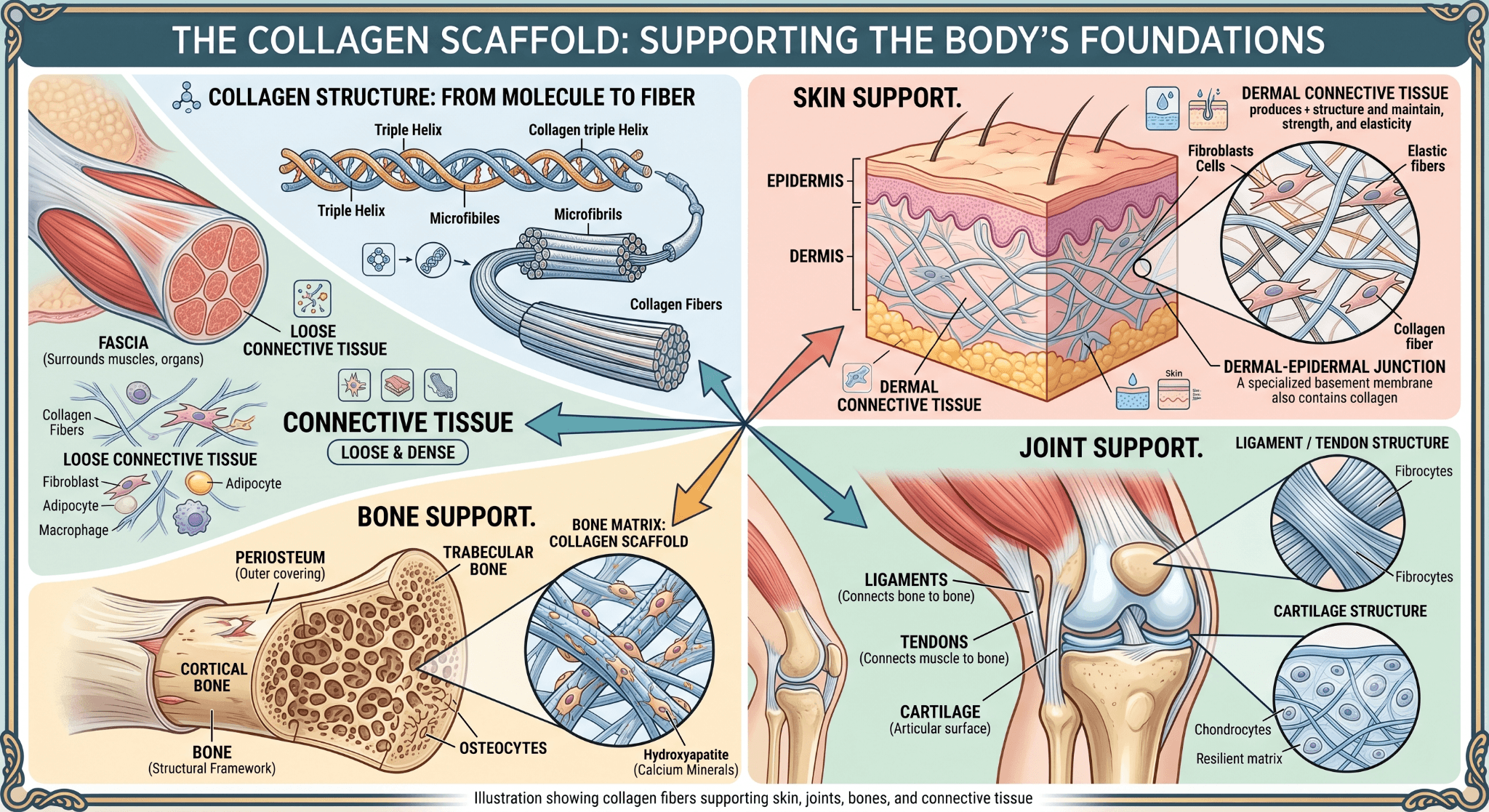
Collagen is the most abundant protein in the human body.
It acts as the structural framework for your skin, tendons, ligaments, cartilage, bones, and connective tissues.
Think of collagen as the scaffolding that helps hold your body together.
Your body naturally produces collagen from amino acids obtained through dietary protein. However, collagen production gradually declines with age. Research suggests collagen synthesis starts decreasing in your twenties and continues throughout adulthood.
This decline is one reason why people begin noticing:
Wrinkles and reduced skin elasticity
Joint stiffness
Slower recovery from injuries
Changes in hair and nail strength
Collagen supplements aim to provide the building blocks needed to support these tissues.
Does collagen count toward your protein macros?
Yes, collagen counts toward your daily protein intake.
A scoop of collagen peptides typically contains around 10–20 grams of protein, depending on the brand.
From a calorie and macronutrient perspective:
1 gram of collagen protein = 4 calories
It contributes to your total protein intake
Most macro-tracking apps classify it as protein
If your daily goal is 150 grams of protein and you consume 20 grams from collagen, your total protein intake becomes 20 grams closer to that target.
However, this is where things become important.
While collagen counts as protein on paper, it doesn't provide the same muscle-building value as complete proteins.
Why collagen is different from other proteins
Collagen lacks several essential amino acids needed for muscle growth.
Protein quality matters just as much as protein quantity.
The body requires nine essential amino acids from food because it cannot produce them itself.
One of the most important is leucine.
Leucine acts like the ignition key for muscle protein synthesis, the process responsible for building and repairing muscle tissue.
Collagen is naturally low in leucine and completely lacks tryptophan.
Compared with whey protein, collagen provides significantly fewer amino acids involved in muscle growth.
For example:
Protein Source | Approximate Leucine Content per 20g Protein |
Whey Protein | ~2.2g |
Chicken Breast | ~1.7g |
Greek Yogurt | ~1.8g |
Collagen Peptides | ~0.6g |
This means 20 grams of collagen and 20 grams of whey may appear identical in your macro tracker, but they produce very different physiological effects.
If your primary goal is muscle gain, collagen should not replace complete protein sources.
Should collagen count toward your protein target?
For general nutrition, yes. For muscle-building goals, only partially.
This distinction is where many people get confused.
I usually think about protein intake in two buckets:
Bucket 1: Total protein
This is the total amount of protein consumed during the day.
Collagen contributes here.
Bucket 2: High-quality protein
This refers to complete proteins that contain all essential amino acids in sufficient quantities.
Examples include:
Whey protein
Eggs
Fish
Chicken
Beef
Greek yogurt
Soy protein
For someone trying to maximize muscle growth, most protein intake should come from Bucket 2.
Many sports dietitians recommend limiting collagen to roughly 10-20% of total daily protein intake.
For example:
If your protein target is 160 grams daily:
130-145 grams from complete proteins
15-30 grams from collagen
This approach allows you to enjoy collagen's potential benefits without compromising muscle-building nutrition.
What does the research say about collagen supplementation?
The strongest evidence for collagen relates to skin and joint health, not muscle growth.
Research has found potential benefits in several areas.
Skin health
Multiple studies suggest collagen peptide supplementation may improve:
Skin hydration
Skin elasticity
Skin texture
The effects are generally modest but measurable after several weeks of consistent use.
Joint support
Athletes and active adults sometimes report reduced joint discomfort after collagen supplementation.
Some studies suggest collagen may support cartilage health and joint function, particularly when combined with exercise.
Tendon and ligament health
Emerging research indicates collagen supplementation before specific rehabilitation exercises may support connective tissue adaptation.
This area remains promising but is still developing.
Muscle growth
Collagen is not particularly effective as a standalone muscle-building protein.
When researchers compare collagen to whey protein, whey consistently produces greater increases in muscle protein synthesis due to its superior amino acid profile.
If your goal is maximizing muscle growth, whey protein remains the better supplement.
Who should consider taking collagen?
Collagen supplementation makes the most sense when connective tissue health is the primary goal.
You may benefit from collagen if you:
Are over 30 and interested in skin health
Experience frequent joint discomfort
Participate in high-impact sports
Are recovering from tendon or ligament injuries
Want additional support for connective tissue health
You may not need collagen if:
You already consume collagen-rich foods regularly
Your supplement budget is limited
Muscle gain is your only goal
In that case, prioritizing high-quality protein sources usually delivers better returns.
Can you get collagen from food?
Yes. Many traditional foods naturally contain collagen.
Examples include:
Bone broth
Slow-cooked meats
Chicken skin
Fish skin
Beef tendons
Pork skin
These foods provide collagen alongside additional nutrients that support collagen production.
Vitamin C is particularly important because your body requires it to synthesize collagen effectively.
Good sources include:
Oranges
Strawberries
Kiwi
Bell peppers
Broccoli
A common mistake is focusing exclusively on collagen supplements while ignoring the nutrients needed to actually build collagen.
How to track collagen in your macros
Track collagen as protein, but remember its limitations.
If you're using a nutrition tracking app, collagen should generally be logged as protein.
The important thing is maintaining perspective.
For example:
150g protein entirely from complete proteins = excellent for muscle gain
150g protein with 40-50g from collagen = less effective for muscle gain
One practical approach is to ensure you hit your complete-protein target first, then count collagen as additional protein afterward.
Using a nutrition app like Zorest Macro can make this easier. The AI Meal Logger breaks down protein sources automatically and helps you see whether most of your daily protein comes from complete food sources such as meat, dairy, eggs, fish, or plant proteins rather than relying heavily on supplements.

Should you supplement with collagen?
Supplement with collagen if you want potential skin, joint, or connective tissue benefits. Don't use it as your primary protein source.
That's the simplest answer.
If your goal is:
Muscle gain
Prioritize:
Lean meats
Eggs
Dairy
Soy
Whey protein
Skin and joint support
Collagen can be a useful addition. Many people successfully use both:
Whey protein for muscle recovery
Collagen peptides for connective tissue support
They solve different problems.
Final thoughts
Collagen does count toward your protein macros, but not all protein is created equal.
From a calorie-tracking perspective, collagen is protein. From a muscle-building perspective, it's an incomplete protein that lacks key amino acids needed for optimal muscle growth.
If you're trying to build muscle, focus most of your protein intake on complete sources such as meat, fish, eggs, dairy, soy, or whey protein.
If you're interested in healthier skin, stronger connective tissues, or joint support, collagen may be a worthwhile supplement alongside a well-balanced diet.
The best approach isn't choosing collagen instead of quality protein. It's understanding what each does and using them for the right purpose.